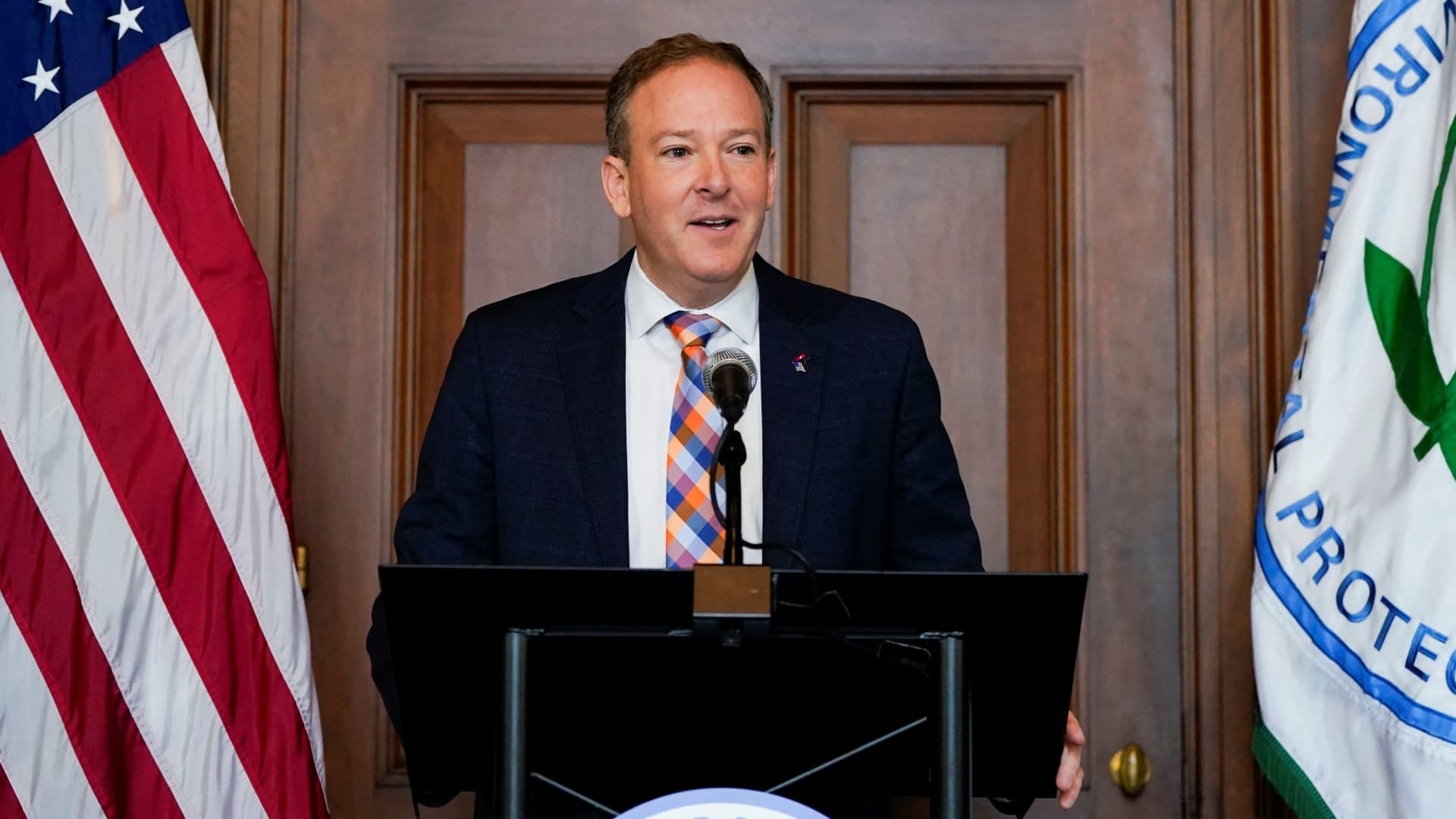
EPA Administrator Lee Zeldin makes a water policy announcement and holds a signing ceremony with members of the West Virginia Congressional Delegation at the EPA headquarters in Washington, D.C., U.S., Feb. 18, 2025.
Kent Nishimura | Reuters
The U.S. Environmental Protection Agency proposed on Friday a rule to end a mandatory program requiring 8,000 facilities to report their greenhouse gas emissions – an effort the agency said was burdensome to business,but which leavesthe public without transparency around the environmental impact of those sources.
The agency said mandatory collection of GHG emissions data wasunnecessary because it is “not directly related to a potential regulation and has no material impact on improving human health and the environment.”
“The Greenhouse Gas Reporting Program is nothing more than bureaucratic red tape that does nothing to improve air quality,” saidEPAAdministrator Lee Zeldin.
The rule responds to a day-one executive order issued by President Donald Trump aimed at removing barriers to unleashing more U.S. energy, particularly fossil fuels. It is the latest in a series of major regulatory rollbacks undoing previousU.S. efforts to combat climate change.
Earlier this summer, theEPAannounced plansto repeal the “endangerment finding” that enabledthe agency to regulate greenhouse gas emissions from vehicles and stationary sources.
If finalized, the proposal would remove reporting obligations for most large facilities, all fuel and industrial gas suppliers, and CO2 injection sites.
The Trump administration has also said it would withdraw the U.S. from the Paris climate agreement, which requires countries to reduce their greenhouse gas emissions and report their progress.
The Trump administration has also taken steps to end the collection of key environmental databases at theEPAas well as other federal agencies like the National Oceanic and Atmospheric Administration and end greenhouse gas-monitoring satellites operated by NASA.
The Greenhouse Gas Reporting Program requires 47 source categories covering 8,000 facilities and suppliers to calculate and submit their greenhouse gas emissions annually. The agency will still require submission of methane emissions data for large oil and gas operations for companies subject to a waste emissions charge.
About The Author