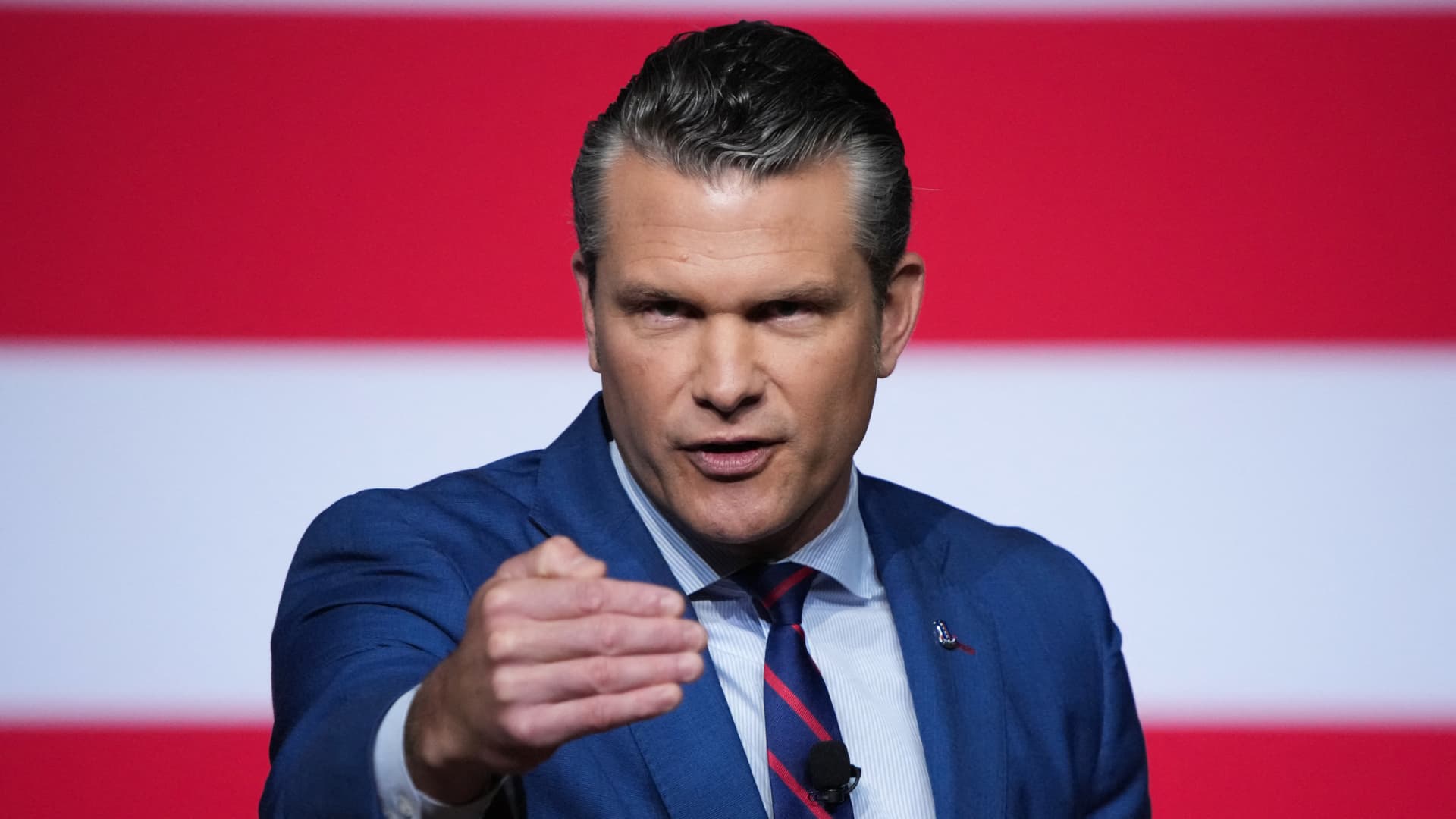
US Secretary of Defense Pete Hegseth addresses senior military officers at Marine Corps Base Quantico in Quantico, Virginia, on September 30, 2025.
Andrew Harnik | Afp | Getty Images
U.S.military officials involved with PresidentDonald Trump’sexpanding operations inLatin Americahave been asked to sign non-disclosure agreements, threeU.S.officials say, a development that raises new questions about a military buildup thatVenezuelafears may lead to an invasion.
The step is highly unusual, given thatU.S.military officials are already required to shield national security secrets from public view, and comes as lawmakers inCongresssay they are being kept in the dark about key aspects of themission.
The officials who spoke to Reuters on condition of anonymity did not know how many members of theU.S. Defense Departmenthad been asked to sign the agreements and did not offer further details on the scope of the NDAs.
While theDefense Departmenthas turned to NDAs from time to time sincePete Hegsethbecame defense secretary in January, the Pentagon’s use of non-disclosure agreements specific to activities inLatin Americahas not been previously reported. The Pentagon announced last week the deployment of the Gerald Ford aircraft carrier group toLatin America, escalating a military buildup that experts say far exceeds any requirement for counter-narcotics operations — the stated intent of theU.S.missionso far. TheU.S.military has carried out at least 13 strikes against alleged drug vessels, mostly in theCaribbean, since early September, killing about 57 people. The Pentagon has provided few details about the people targeted but has acknowledged some of them include people fromVenezuela,ColombiaandEcuador.
The carrier strike group adds another roughly 10,000 troops and enormous firepower to a buildup that already includes guided missile destroyers, F-35 fighter jets, a nuclear submarine and around 6,500 troops.
The Pentagon has not explained why such firepower is required for the counter-narcotics operations.
Hegseth has taken a series of steps to try to control the flow of information since taking over the Pentagon in January. He told Pentagon staff they must obtain permission before interacting with members ofCongress, according to anOct. 15memo. He has also launched leak investigations and demanded Pentagon-based journalists sign a new press access policy, taking away the credentials of those who did not.
The Pentagon did not immediately respond to a request for comment.
Drug trade
Trump’s administration has been tying the governments ofVenezuelaand, more recently, neighboringColombiadirectly to the drug trade, allegations denied by both governments. The claims, however, have raised concerns that theU.S.military might be tasked with carrying out attacks in both countries.
SenatorLindsey Graham, a senior Republican lawmaker with close ties to Trump, suggested in a television interview onSunday Trumpwould soon outline toCongress”future potential military operations againstVenezuelaandColombia.”
Washingtonin August doubled its reward for information leading to Maduro’s arrest to$50 million, accusing him of links to drug trafficking and criminal groups that Maduro denies. Tensions betweenthe United StatesandVenezuela’sneighbor,Colombia, have also spiked in recent days, with Trump accusing Colombian PresidentGustavo Petroof being an “illegal drug leader” and a “bad guy” – language Petro’s government says is offensive.Washingtonon Friday imposed sanctions on Petro.
Graham said Trump had all the authority he needed to carry out operations inLatin America.
“These military assets are moving forward to deal with a country that’s got blood on its hands when it comes to Americans by flooding our country with drugs fromVenezuelaandColombia,” Graham toldCBS News'”Face the Nation” withMargaret Brennan.
“So, I hope Maduro would leave peacefully, but I don’t think he’s going to stay around much longer.”
About The Author