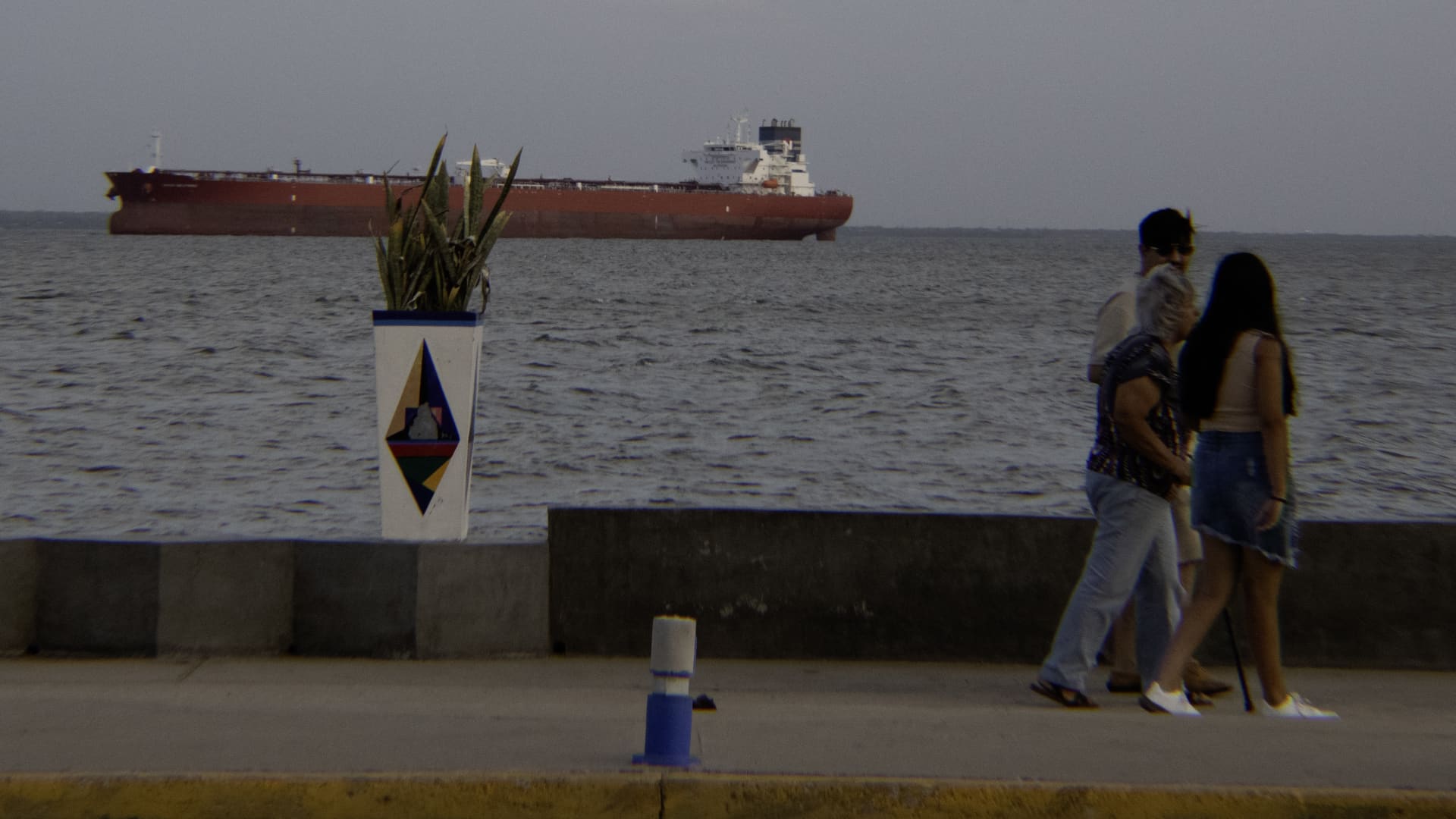
People walk in front of a crude oil tanker at Maracaibo Lake in Maracaibo, Venezuela, on January 12, 2026. After the US raid that deposed Nicolas Maduro as Venezuela’s leader, citizens hope the ensuing talks on selling its oil to US may improve their dire economic fortunes. (Photo by Margioni BERMÚDEZ / AFP via Getty Images)
Margioni Bermudez | Afp | Getty Images
The United States ishandingovertoVenezuelaatankerthat itseizedthis month, two U.S.officialstold Reuters on Wednesday.
The United States has been carrying out a months-long effort to seize oiltankers linked toVenezuela- carrying out seven apprehensions since late last year.
Theofficials, who were speaking on the condition of anonymity,identified the vessel being handedovertoVenezuelan authorities as the Panama-flagged supertankerM/T Sophia. They did notsaywhy thetankerwas returned.
The U.S. Coast Guard, which leads interdiction and seizure operations, did not immediately respond to a request for comment.
TheVenezuelan communications ministry, which handles all press queries for the government, did not immediately respond to a request for comment.
The Sophia wascarrying oil when it wasinterdicted on Jan. 7 by the Coast Guard and U.S. military forces. At the time, the administration said the Sophia, which is under sanctions, was a “stateless, sanctioned dark fleet motortanker.”
One of the sources did not know if the Sophia still had oil on board.
Trump has focused his foreign policy in Latin America onVenezuela, initially aiming to pushVenezuelan President Nicolas Maduro from power. After failing to find a diplomatic solution, Trump ordered U.S. forces to fly into the country to grab him and his wife in a daringovernight raid on Jan. 3.
Since then, Trump has said the U.S. plans to controlVenezuela’s oil resources indefinitely as it seeks to rebuild the country’s dilapidated oil industry in a $100 billion plan.
Earlier this months, the Sophia and anotherseizedtankerwereseen near Puerto Rico.
Along with mosttankers under Western sanctions or part of the so-called shadow fleet, many of theVenezuela-linkedtankersseizedwere builtover20 years ago and pose hazards to shipping because they lack safety certification and adequate insurance, experts said.
That means that if they have a collision or oil spill, establishing insurance claims or liability is very difficult to impossible, shipping and insurance industry sources said.
Dubai-run GMS has applied for a U.S. license to buy and scrap shipsseizedby the U.S. government linked toVenezuelan oil trading.
About The Author