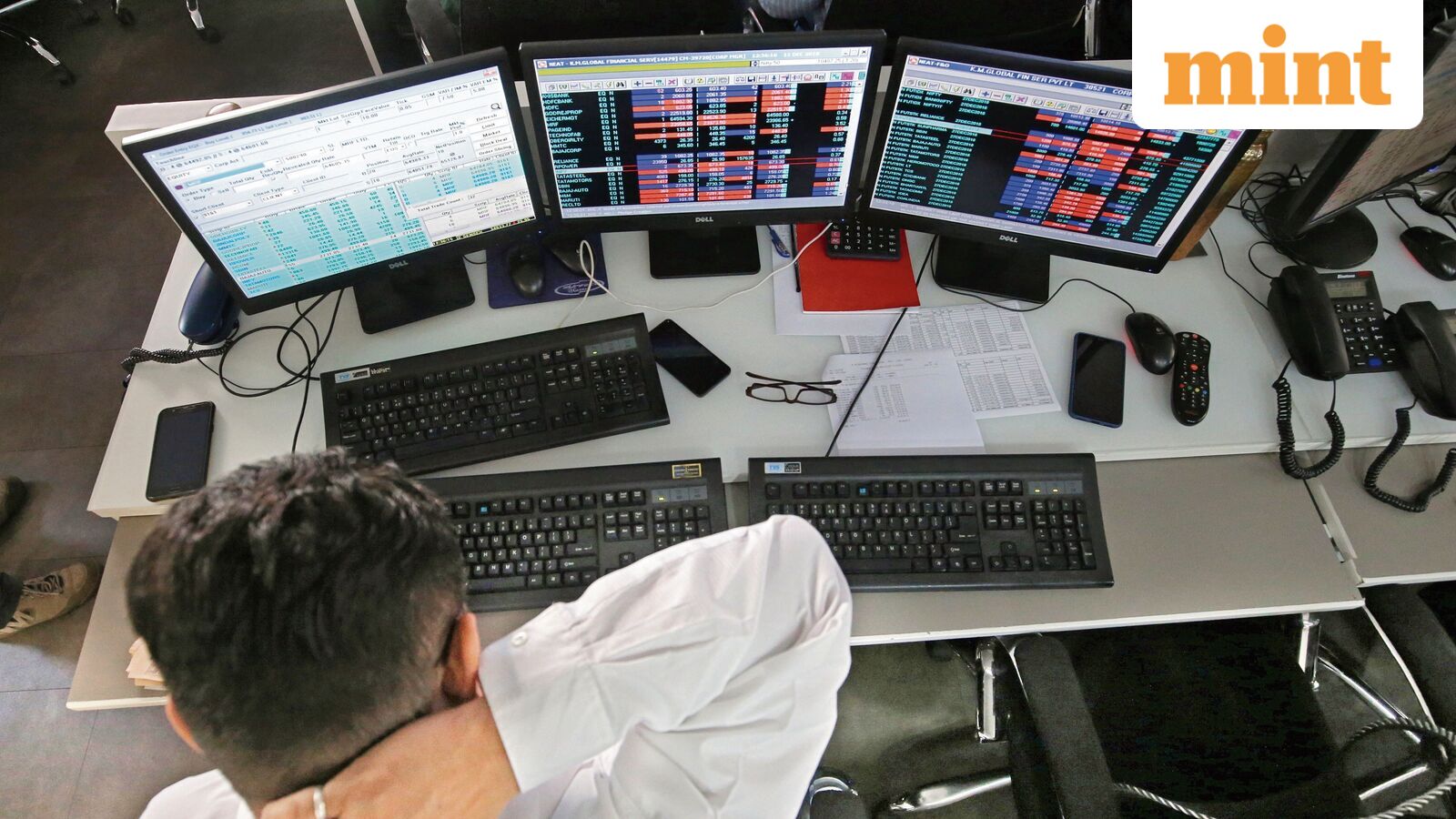
Finance Minister Nirmala Sitharaman, in her Budget 2026 speech, proposed to increase Security Transaction Tax (STT) on Futures & Options (F&O) transactions.
FM Sitharaman proposed to raise the STT by 150% on futures to 0.05% from 0.02% and by 50% on options transactions to 0.15% from 0.01% earlier.
“To provide reasonable course correction in F&O segment in the capital market and generate additional revenues for the Government, it is proposed to raise the STT on Futures to 0.05% from present 0.02%. STT on options premium and exercise of options is proposed to be raised to 0.15% from the present rate of 0.1% and 0.125% respectively,” said Nirmala Sitharaman in her Budget 2026 speech.
The announcement led to a sharp fall in the equity market, with the benchmark Sensex crashing more than 2,000 points, and Nifty 50 slipping below 24,600 level during the session.
Meanwhile, BSE share price and Angel One shares declined as much as 10% each, Groww shares declined over 9% and IIFL Finance stock price fell 4.9% after FM Sitharaman announced proposal to raise securities transaction tax on futures and options trading.
Analysts View
Shripal Shah, MD & CEO, Kotak Securities believes the steep increase in STT on futures and options (F&O), coming on top of last year’s hike, is likely to raise impact costs for traders, hedgers, and arbitrageurs.
“This could cool derivative activity and lead to a reduction in volumes. The intent appears to be volume moderation rather than revenue maximisation, as any potential revenue gain could be offset by lower derivative volumes,” said Shah.
Aakash Shah, Technical Research Analyst at Choice Equity Broking noted that the hike in STT on F&O is likely to act as a marginal negative for foreign portfolio investor (FPI) flows in the near term, particularly for high-frequency and derivative-focused global funds.
“A higher STT further reduces post-tax returns, making India relatively less competitive for short-term and derivative-oriented foreign flows. However, for long-only, fundamentally driven FPIs, the STT hike is unlikely to be a deal-breaker. Their investment decisions are more influenced by earnings visibility, currency stability, and policy predictability. That said, at the margin, higher transaction costs could tilt some global allocators towards other Asian markets, especially at a time when India is already facing pressure from AI-led capital shifts to the US, Taiwan and Korea,” said Shah.
Overall, while the STT hike may help boost tax collections, it risks dampening trading volumes and could slow tactical FPI participation, he added.
“To meaningfully revive sustained FPI inflows, investors will be looking more closely at macro stability, rupee movement, and consistency in tax policy rather than just growth optics,” Shah said.
Disclaimer: The views and recommendations made above are those of individual analysts or broking companies, and not of Mint. We advise investors to check with certified experts before making any investment decisions.
About The Author