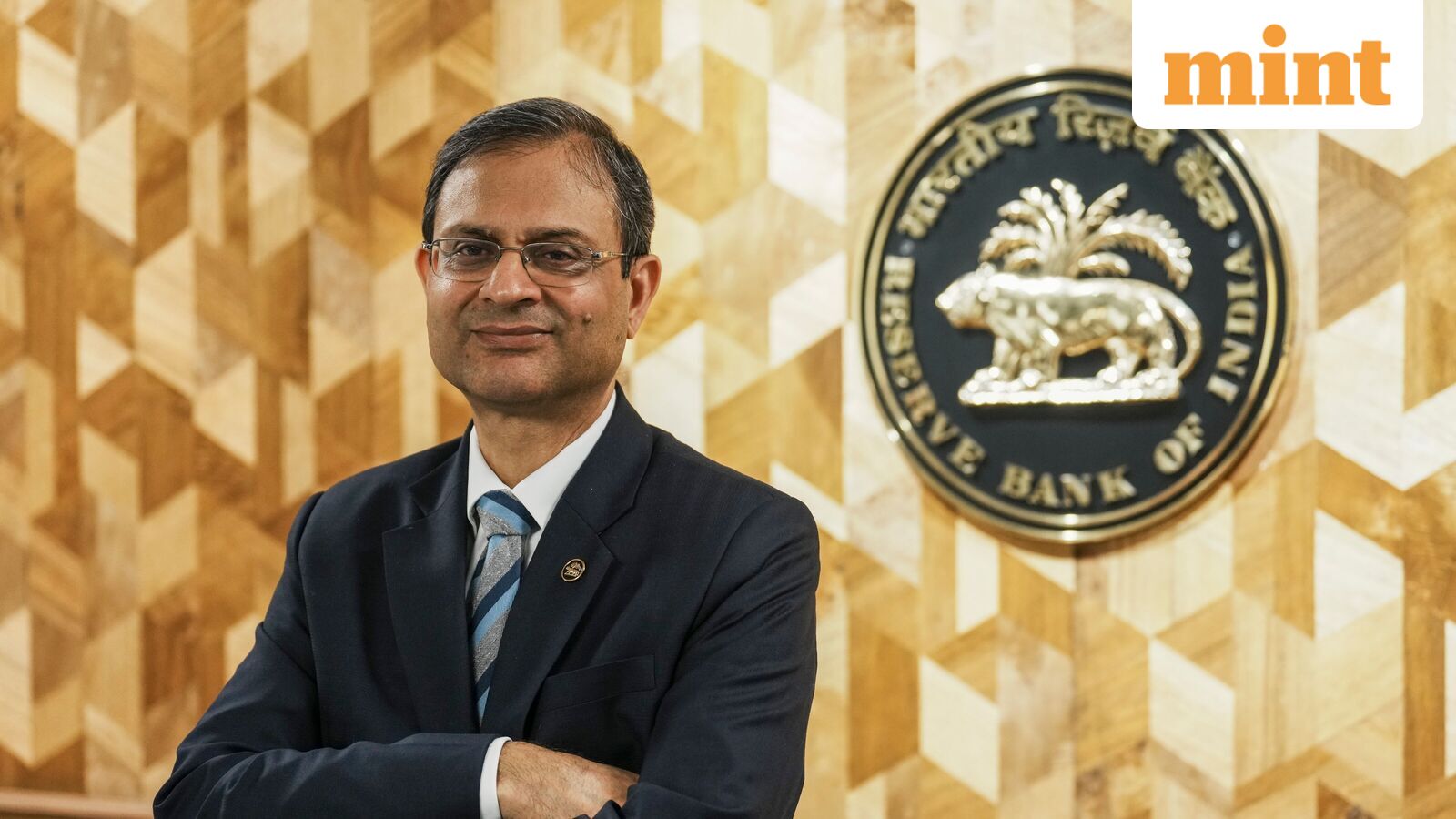
RBI MPC meeting: The Monetary Policy Committee (MPC) of the Reserve Bank of India (RBI), on Friday, February 6, decided to keep the repo rate unchanged at 5.25%, while maintaining a “neutral” policy stance. RBI governor Sanjay Malhotra announced the status quo on the policy interest rate, highlighting that the Indian economy remains on a strong footing.
In December, the central bank cut the repo rate by 25 basis points, bringing the benchmark rate down to 125 basis points since February last year.
“Amidst heightened geopolitical tensions and elevated uncertainty, the Indian economy is in a good spot with strong growth and low inflation. With the signing of a landmark trade deal with the European Union and the US trade agreement in sight, growth momentum is likely to be sustained for a longer period,” RBI Governor Sanjay Malhotra stated.
The RBI Governor said the MPC, going forward, will be guided by evolving macro conditions, guided by the new series of GDP and inflation.
RBI monetary policy: Key highlights
1. Repo rate, policy stance maintained
The central bank’s MPC took note of the healthy growth outlook of the country, in light of the recent trade deals with the European Union and the US, and voted unanimously to keep rates steady at 5.25%.
Consequently, the standing deposit facility (SDF) rate, or the rate at which banks can now deposit extra money with the RBI, remains at 5%. The rate at which banks can borrow money from the RBI in an emergency will remain at 5.50% (this is called the MSF or marginal standing rate).
The Committee also maintained its policy stance as neutral.
Read more: RBI MPC: Repo rate unchanged
2. Inflation to stay within the tolerance band
The RBI expects an uptick in retail inflation, but believes that it may remain well within its tolerance band of 2-6%.
The central bank projected Consumer Price Index (CPI)-based inflation, or retail inflation, for FY26 at 2.1% from 2% earlier. Inflation for Q4FY26 is projected at 3.2% from 2.9%, while for Q1FY27, it may rise to 4% and for Q2FY27 to 4.2%.
“Unfavourable base effects stemming from a large decline in prices observed during Q4FY25 would lead to an uptick in year-on-year inflation in Q4FY26. CPI inflation for FY26 is now projected at 2.1% with Q4 at 3.2%. CPI inflation for Q1FY27 and Q2FY27 is projected at 4% and 4.2%, respectively,” the RBI Governor announced.
The RBI Governor added that the central bank will present CPI inflation projection for the full year FY27 in the April 2026 policy statement after the new CPI series (base 2024=100) takes effect on February 12.
3. Growth outlook improves
The central bank has revised its real GDP growth projections for FY26 and the first half of FY27 upwards.
The central bank revised its growth outlook for FY26 to 7.4% from the earlier projection of 7.3%.
RBI projected real GDP growth for Q1FY27 and Q2 to 6.9% (from 6.7% earlier) and 7% (from 6.8% earlier), respectively.
“We are deferring the projections for the full year to the April policy as the new GDP series will be released later in the month,” said the RBI Governor.
4. Measures for banks, NBFCs
RBI Governor said the central bank will move ahead with a new set of regulatory measures to strengthen customer protection, expand financial inclusion, and improve the ease of doing business for non-banking financial companies (NBFCs) and urban cooperative banks (UCBs).
For customer protection, the RBI will issue three draft guidelines: one, relating to mis-selling; two, regarding recovery of loans and engagement of recovery agents; and three, on limiting the liability of customers in unauthorised electronic banking transactions.
“It is also proposed to introduce a framework to compensate customers up to an amount of ₹25,000 for loss incurred in small-value fraudulent transactions,” said the RBI Governor.
The central bank will also publish a discussion paper on possible measures to enhance the safety of digital payments.
The RBI proposed increasing the limit for collateral-free loans to MSMEs from ₹ 10 lakh to ₹20 lakh.
Moreover, it proposed to allow banks to lend to REITs with certain prudential safeguards to further promote financing to the real estate sector.
The RBI also announced measures to promote ease of doing business for NBFCs.
It said NBFCs having no public funds and customer interface, with asset size not exceeding ₹1000 crore, may be exempted from the requirement of registration. Moreover, it also proposed to dispense with the requirement for certain NBFCs to obtain prior approval to open more than 1000 branches.
5. Liquidity management
The Governor announced that the central bank will remain “proactive in liquidity management and ensure sufficient liquidity in the banking system to meet the productive requirements of the economy and to facilitate monetary policy transmission.”
“Liquidity management would be pre-emptive with sufficient allowance for unanticipated fluctuations in government balances, changes in currency in circulation, forex intervention, etc.,” said the RBI Governor.
About The Author