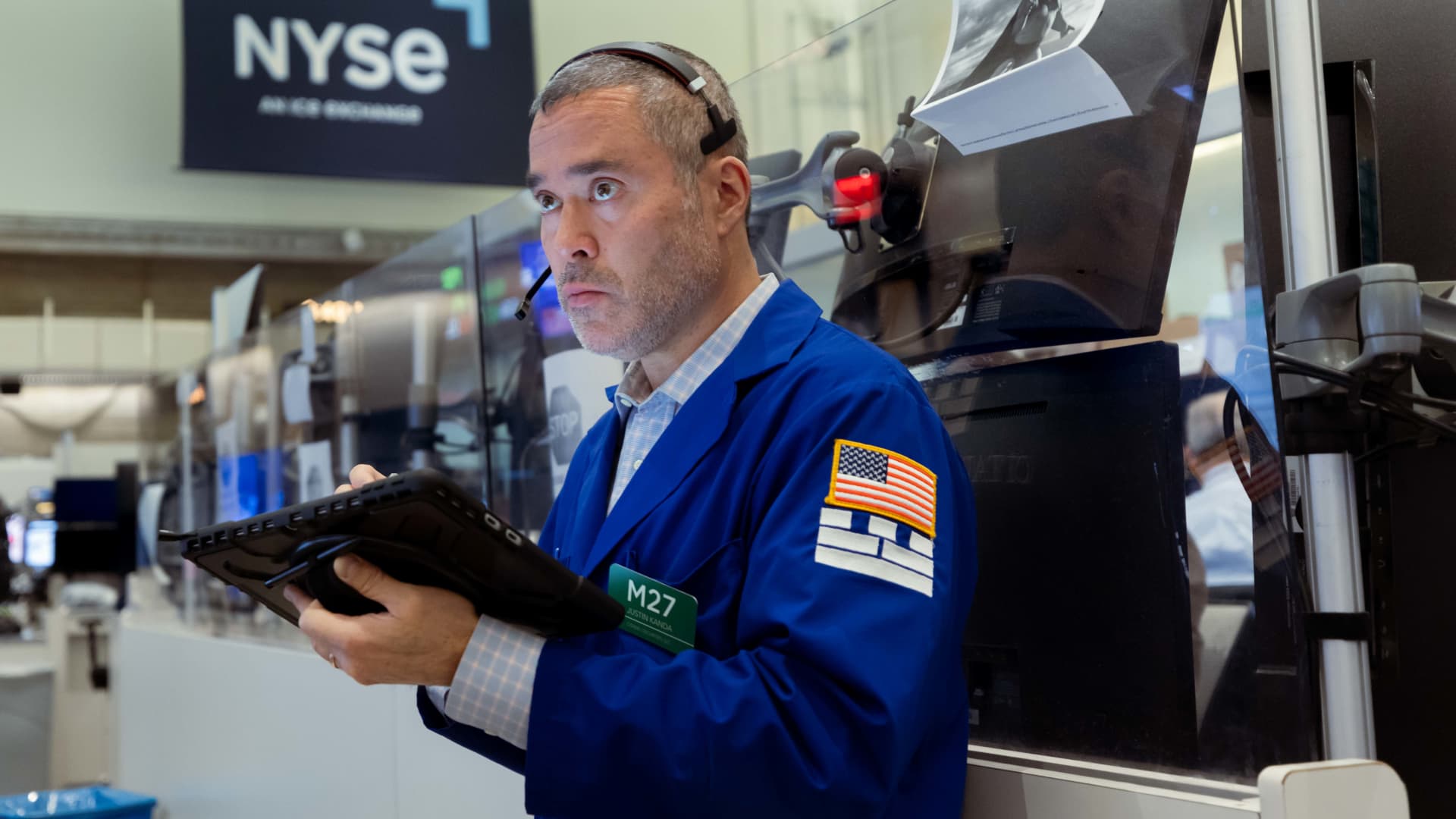
Traders work at the New York Stock Exchange on March 3, 2026.
NYSE
Stock futures fell Tuesday night after a volatile session for U.S. equities.
Futures tied to the Dow Jones Industrial Average lost 74 points, or nearly 0.2%. S&P 500 futures fell 0.2%, while Nasdaq 100 futures dropped about 0.2%.
Major stock averages closed the previous session in the red, albeit far off of their lows of the day. TheS&P 500slipped about 0.9%, while theDowlost about 403 points, or 0.8%. At one point, the Dow Industrials fell more than 1,200 points. TheNasdaq Compositeclosed down 1%.
Each of the S&P 500’s 11 sectors closed lower. Materials was the worst-performing sector, dropping 2.7%, followed by industrials, down nearly 2%. Investors throughout the session weighed concerns about how rising oil prices could potentially affect the U.S. economy and future monetary policy decisions.
President Donald Trump said on Tuesday that the U.S. would provide risk insurance to all maritime trade through the Persian Gulf, in an effort to get tankers moving through the Strait of Hormuz. Tanker traffic through the Strait— the world’s most vital transit route for crude oil — came to a halt after the Iranian Revolutionary Guard commander threatened to set fire to ships attempting the route.
Brent crude oil futures settled up 4.71%, while West Texas Intermediate crude futures advanced 4.68%. Both ended Tuesday’s trading off their session highs.
“Amid all the noise we might be seeing some opportunities start toemergein markets for longer term investors, in our view, especially if we start to see energy prices stabilize and potentially moderate in days and weeks ahead,” said James McCann, senior economistat Edward Jones, in a note.
Heading into Wednesday, traders will be watching the ADP private payrolls report. The Dow Jones consensus calls for 48,000 jobs added in February, up from 22,000 in January.
On the earnings front, traders will watch for quarterly results from Abercrombie & Fitch, Broadcom and Okta.
About The Author