(Bloomberg) – OPEC’s crude oil production climbed last month as group leader Saudi Arabia bolstered production amid rising regional tensions, a Bloomberg survey showed.
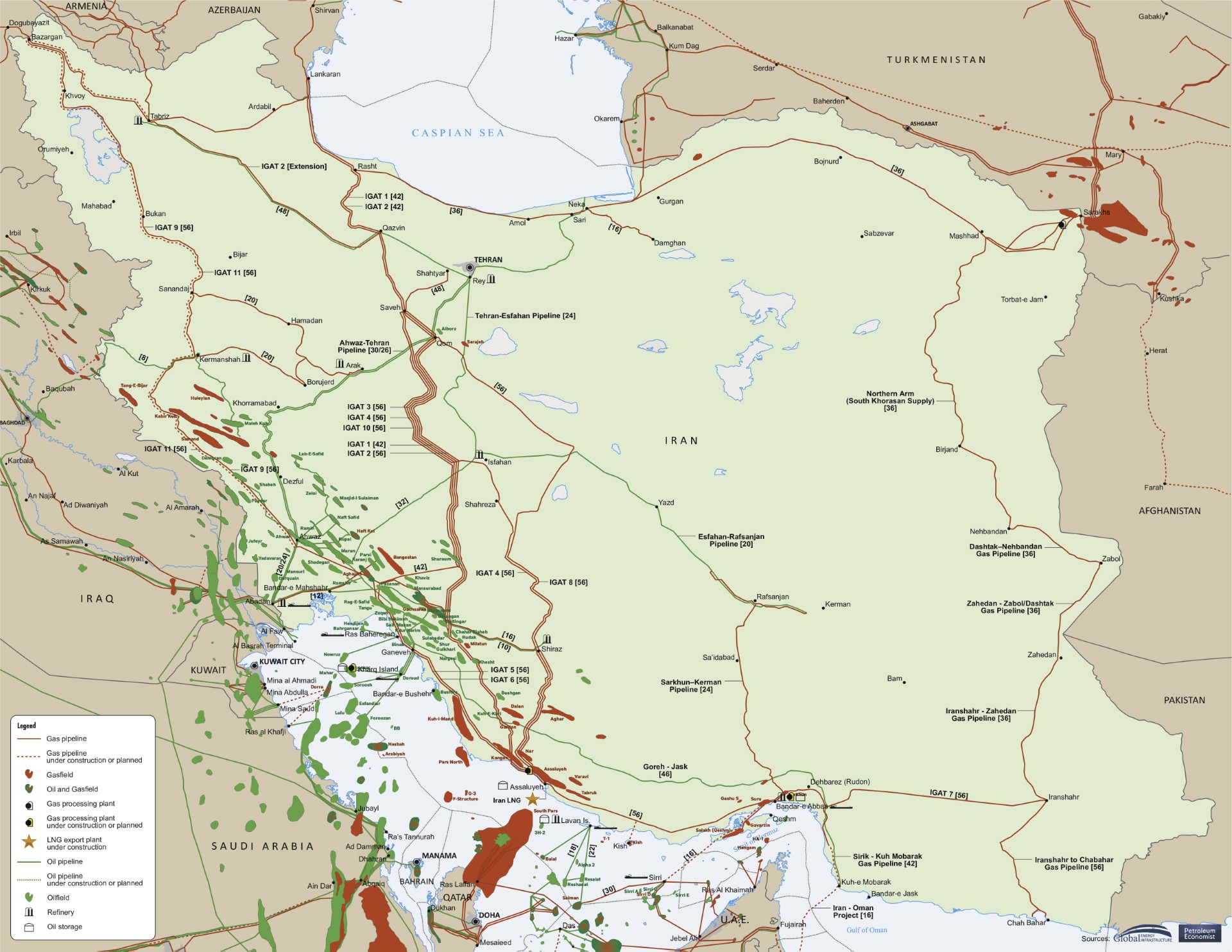
Map provided by Global Energy Infrastructure
Output from the Organization of the Petroleum Exporting Countries increased by 640,000 bpd, the biggest hike since June, with the Saudis accounting for about half of the addition, according to the survey. The 12 members collectively pumped 29.52 MMbpd.
Tanker tracking data has shown that Riyadh and other producers around the Persian Gulf ramped up exports in the weeks leading up to the joint U.S.-Israeli attack on Iran, which has thrown the region into chaos and effectively halted tanker flows through the vital Strait of Hormuz. Since then, oil prices have surged to trade near $100 a barrel in London.
While key nations from the OPEC+ alliance had agreed to freeze production during the first quarter, the prospect of a looming conflict may have shifted their calculations. Last month’s output increase resembles a surge the kingdom and some other Gulf producers made before the US attacked Iran’s nuclear facilities last June.
Saudi Arabia raised production by 340,000 bpd to 10.34 MMbpd in February, the survey showed. Riyadh notified OPEC of an even bigger boost, of about 782,000 bpd, according to a report published by the group’s secretariat on Wednesday. Still, the increases have done little to cushion a market that has now lost access to flows coming through Hormuz.
The suspension of tanker shipments via the strait has forced Gulf countries to shutter output. Countries that rely on the corridor — including Saudi Arabia, the United Arab Emirates and Iraq — have halted 8 MMbpd of crude production, and a further 2 million of condensate and natural gas liquids, according to the International Energy Agency.
To alleviate the supply shock, IEA nations — which include the U.S., Japan and Germany — agreed this week to release an unprecedented 400 million barrels from emergency oil reserves.
Bloomberg’s production survey is based on ship-tracking data, information from officials and estimates from consultantsRapidan Energy Group,FGE NexantECA, Kpler and Rystad Energy.
About The Author