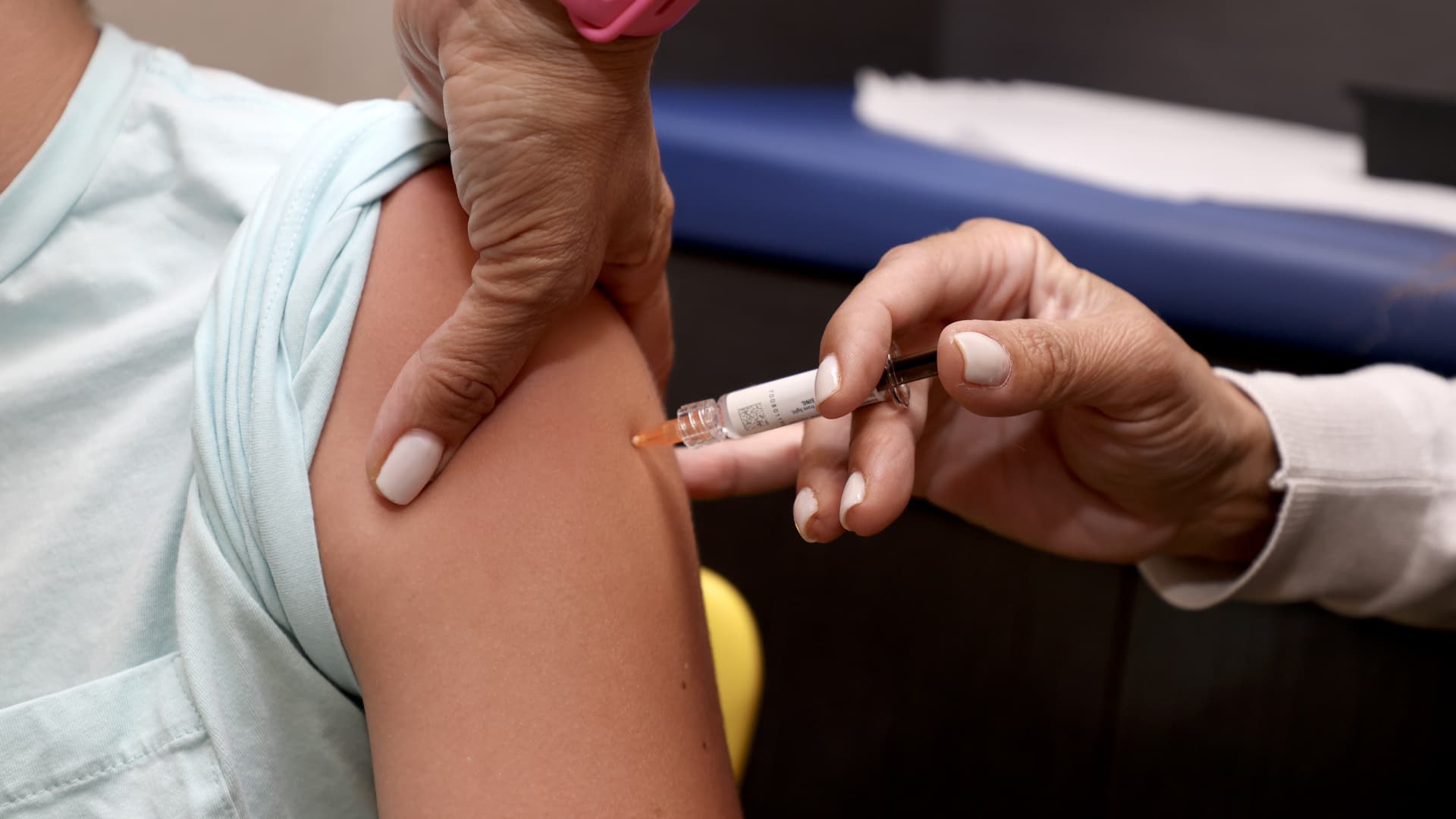
A child receives a standard immunization at Doctor Gary M. Kramer, MD, PA’s Pediatric office on September 15, 2025, in Coral Gables, Florida.
Joe Raedle | Getty Images
A federal judge on Monday blocked key parts of Health Secretary Robert F. Kennedy Jr.’s effort to reshape U.S. vaccine policy, including a move to reduce the number of shots routinely recommended for children.
U.S. District Judge Brian Murphy in Boston sided with the American Academy of Pediatrics and other medical groups, which said health regulators had acted unlawfully to carry out Kennedy’s agenda of upendingimmunization policiesand warned the changes will reduce vaccination rates and harm public health.
Vaccine makers havegrown increasingly waryof U.S. vaccine policy, including the makers of mRNA COVID-19vaccinesPfizer, BioNTech, and Moderna. Companies that make other shots on the U.S. childhood vaccine schedule include Merck, Sanofiand GSK.
As Kennedy’s policies have taken hold, pediatricians have facedparents increasingly skepticalaboutvaccinesand medical treatments, whilenearly a dozen stateshave begun considering legal changes that would relax vaccine requirements for school enrollment.
Members of the CDC’s Advisory Committee On Immunization Practices at the Center for Disease Control (CDC) headquarters in Atlanta, Georgia, US, on Thursday, Dec. 4, 2025.
Megan Varner | Bloomberg | Getty Images
The judge, who was appointed by Democratic President Joe Biden, has earned the scorn of Republican PresidentDonald Trumpand his allies for repeatedly blocking administration initiatives, including core parts of Trump’s hardline immigration agenda.
The plaintiffs had argued the U.S. Centers for Disease Control and Prevention acted unlawfully when on January 5 it cut the number of routinely recommended childhood vaccinations to 11 and downgraded the immunization recommendations for six diseases, including rotavirus, influenza and hepatitis A.
They also challenged Kennedy’s decision last year to remove and replace all 17 independent experts who previously served on the Advisory Committee on Immunization Practices, or ACIP, which makes recommendations that shape U.S. vaccine practices and insurance coverage.
About The Author