
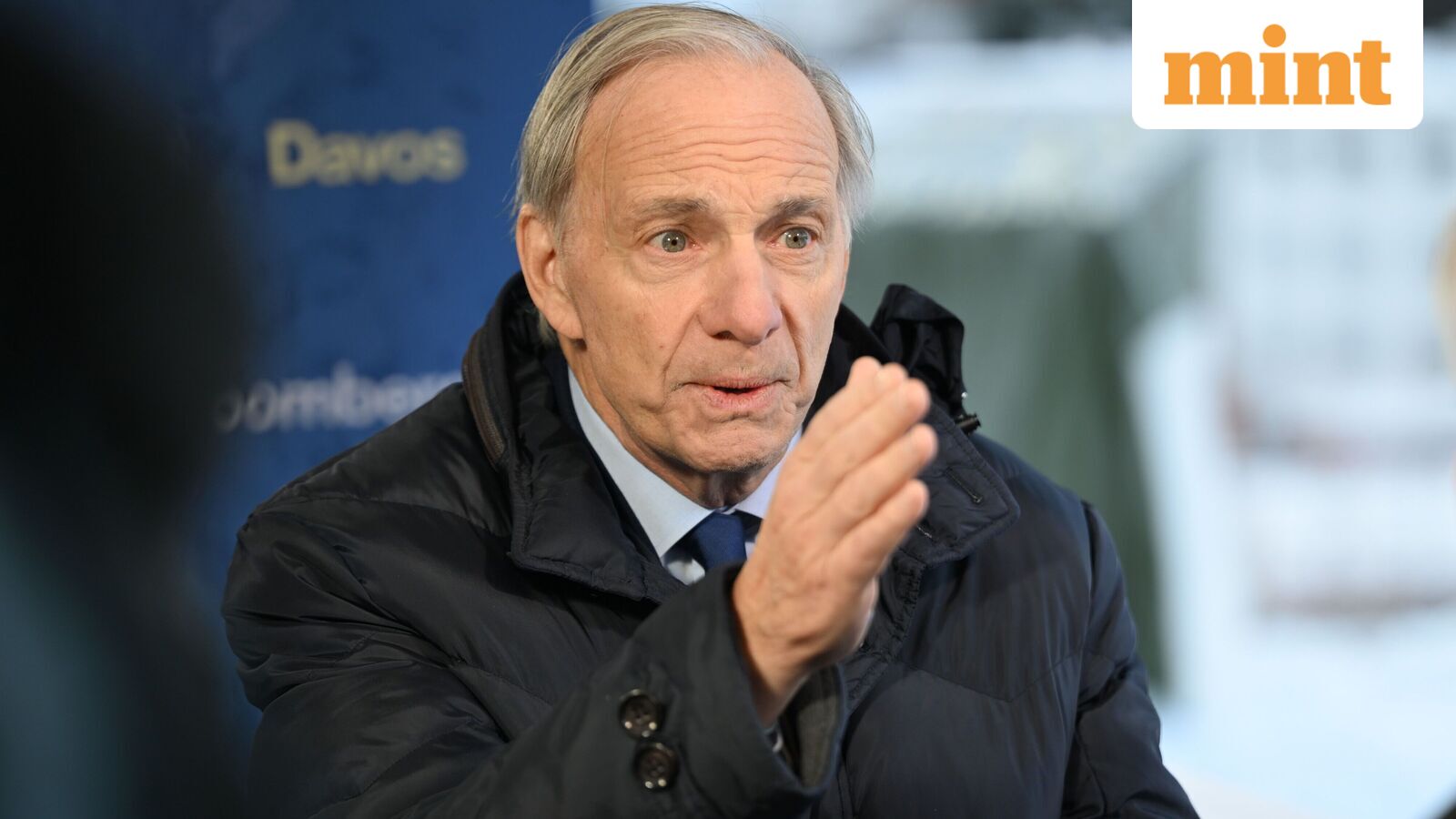
Hedge fund legend Ray Dalio is raising an alarm over the US-Iran war. The founder of Bridgewater Associates warns that the Strait of Hormuz, not just oil prices, will determine who wins the war. According to Dalio, this narrow waterway will determine if the US-led global order survives.
In a detailed post on X, Ray Dalio explained that the war between the US-Israel alliance and Iran has reached a turning point. The focus is now on who controls the world’s most vital shipping lane.
“If Iran keeps control over who passes through the Strait, or even the power to negotiate its use, the United States will have lost,” Dalio stated. He argued that if Iran “weaponises” the Strait of Hormuz, it proves the US lacks the power to fix the situation.
Dalio believes the stakes are massive.
“The consequences of allowing Iran to shut down the most important strait in the world, through which the right of passage must be ensured at all costs, would be hugely damaging to the United States, its allies in the region (especially its Gulf allies), countries that depend most on its oil flow, the world economy, and the world order,” he said.
Lessons from 500 years of history
Comparing the US failure to the fall of the British Empire, Dalio noted that if America does not gain control of the Strait of Hormuz and keep it open, along with a consortium of other countries, President Trump and the US will have lost.
Drawing on patterns from 500 years of history, Ray Dalio argued that a “decisive final battle” will be the ultimate arbiter of whether an empire falls or survives, and the shift thereafter.
“Watch out for allies and creditors losing confidence, the loss of its reserve currency status, the selling of its debt assets, and the weakening of its currency, especially relative to gold,” he wrote.
“Conversely, when the world’s dominant power demonstrates its military and financial strength, that bolsters confidence in it and the willingness to hold its debt and currency,” Dalio added.
Why Strait of Hormuz matters
If Iran gains control of the Strait of Hormuz to threaten American allies and the world economy, everyone will be “hostage to the Iranians”, as per Dalio.
“Donald Trump will be perceived to have picked a fight and lost. He will have left U.S. allies in the region with a huge problem, and he will lose credibility, especially given what he has said,” he said.
According to Dalio, it will be very difficult for the US and Israel alone to ensure the safe passage of ships without making sure the Strait of Hormuz is cut out from Iranian control. He predicted a ground battle to do so.
“The outcome is existential for the Iranian leaders and the largest and most powerful segment of Iran’s population. To the Iranians, this war is very much about revenge and commitment to what matters more than life,” he said.
Existential battle
Ray Dalio compared the stakes of Iran and the US in the conflict, calling Tehran’s war existential, while Americans will be worried about high gas prices.
“They are willing to die as a demonstrated willingness to die is essential for one’s self-respect and showing the devotion that brings about the greatest reward, while Americans are worrying about high gas prices and America’s leaders are worrying about midterm elections,” he said.
Dalio’s comments come at a point when the Strait of Hormuz has become the focus of the ongoing US-Iran conflict, with Iran trying to block ships carrying oil and gas from passing through the area.
The final battle
The US on Tuesday hit Iranian missile sites near the critical waterway with 5,000-pound bunker buster bombs in its first major military action in the Strait of Hormuz. Meanwhile, Trump has expressed his dissatisfaction over the past few days about countries rejecting his call to send their military powers to regain control of the strait.
Dalio described the current situation as a conflict with no diplomatic exit.
“While there is talk of ending this war with an agreement, everyone knows that no agreement will resolve this war because agreements are worthless. Whatever happens next—i.e., leaving Hormuz in Iranian hands or taking control away from them—is likely to be the worst phase of the conflict,” he said.
He predicted that a ‘final battle’, which will make it clear who won and who lost still lies ahead.
“This ‘final battle’, which will make crystal clear which side won and which side lost control, is likely to be a very big one,” Dalio said.
About The Author
