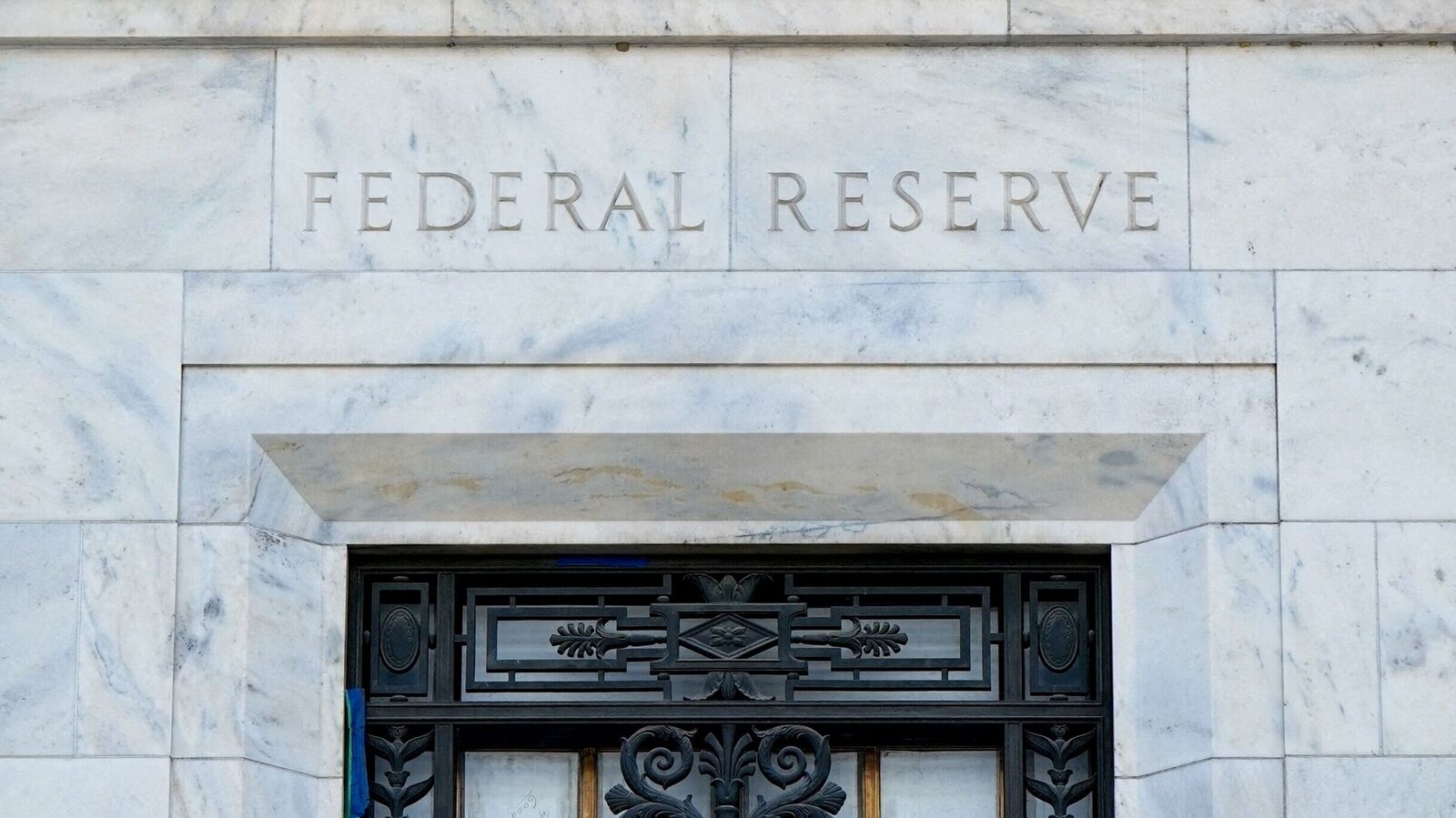
The US Federal Reserve announced its second monetary policy decision for 2026 after a two-day Federal Open Market Committee (FOMC) meeting, keeping its benchmark interest rate steady for the second consecutive time on Wednesday, March 18.
The Fed’s 11-1 vote kept rates steady at a range between 3.50% and 3.75%, with officials flagging one expected rate cut by the end of the year.
The decision was widely expected amid uncertain outlook driven by ongoing tensions in the Middle East, which have pushed energy prices to multi-year highs, prompting the US Federal Reserve to raise its preferred inflation gauge (PCE) to 2.7% by the end of 2026—up from its December forecast of 2.5%.
Prior to the Middle East war, the inflation had remained well above the Fed’s target at 2.4%. In a statement, the central bank said that the “implications of developments in the Middle East for the US economy are uncertain.”
Policymakers expect the US-Israel conflict with Iran to push inflation higher this year, but anticipate price pressures to ease gradually, with inflation projected to moderate to around 2.1% by 2027.
However, despite acknowledging that elevated energy prices could lift consumer inflation, policymakers see only a limited impact on economic growth.
The Fed officials had reduced short-term interest rates three consecutive times, before pausing them in January.
The US Federal Reserve operates under a dual mandate of keeping inflation near its long-term 2% target while ensuring maximum employment. However, rising energy prices driven by the Iran conflict have increased inflationary pressures, prompting the central bank to adopt a wait-and-watch approach before making any immediate policy moves.
1.US Fed holds key interest rates steady for second time
The US Federal Reserve maintains the federal funds rate in a target range of 3.5%–3.75%, leaving it unchanged for the second time to balance economic growth with inflation control.
Policymakers noted that economic activity has been expanding at a solid pace, job gains have remained low while inflation remains somewhat elevated
About The Author