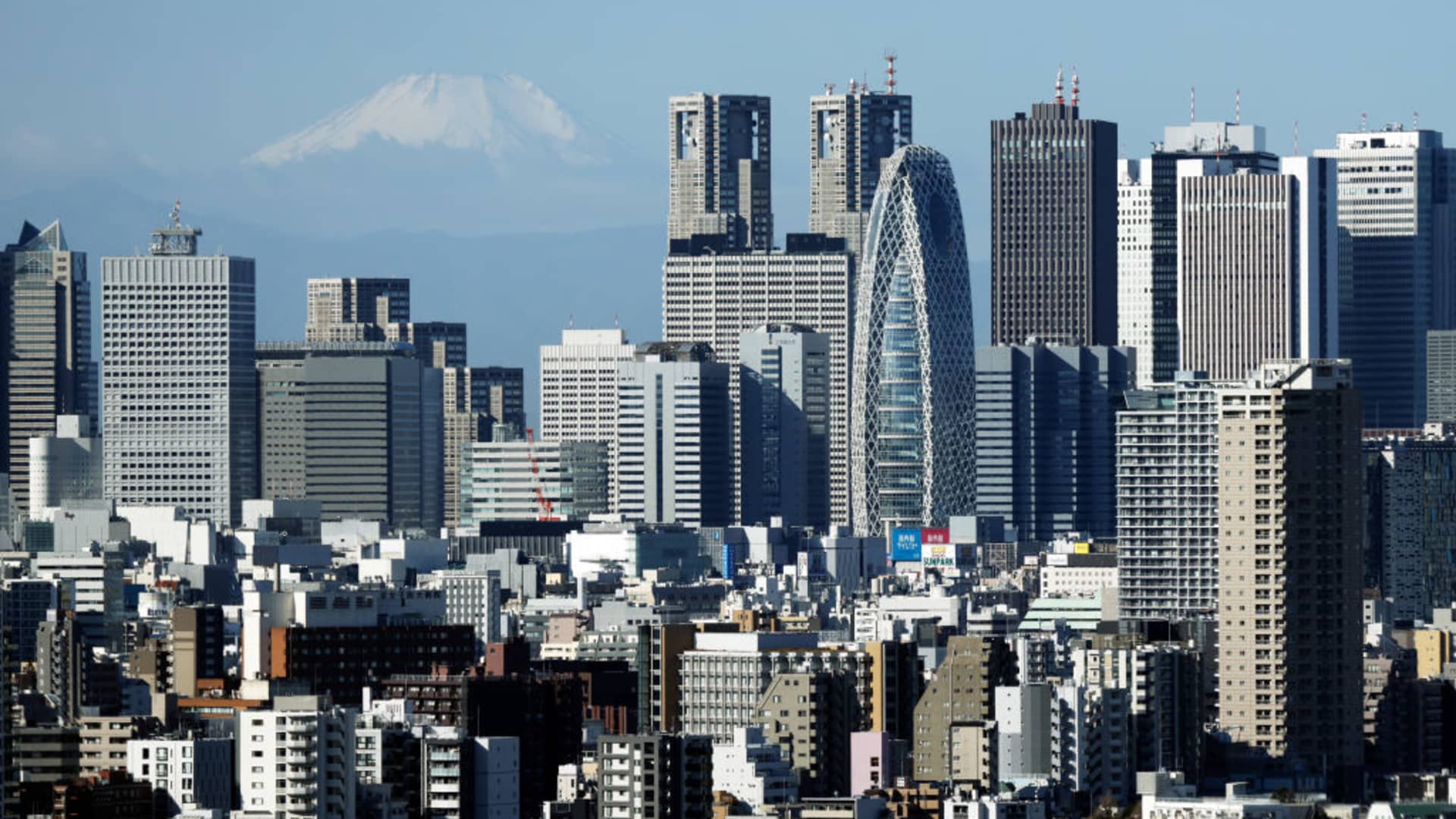
Mount Fuji and the Shinjuku skyline in Tokyo, Japan, on Friday, Feb. 14, 2025. Photographer: Kiyoshi Ota/Bloomberg via Getty Images
Bloomberg | Bloomberg | Getty Images
Asia-Pacific markets jumped Tuesday, with South Korean equities leading regional gains after a sharp drop in oil prices eased investor concerns following signs of de-escalation in the Middle East conflict.
South Korea’s Kospi surged 3.5%, while the small-cap Kosdaq was 3.29% higher. Japan’s Nikkei 225 rose 2.2%, while the Topix added 2.47%.
Australia’sS&P/ASX 200 rose by over 0.74%.
Hong Kong Hang Seng index futures were at 25,020, compared with the index’s last close of 24,382.47.
U.S. President Donald Trump said that he had instructed the U.S. military to delay planned strikes on Iran’s power plants and energy facilities for five days, after discussions with Iranian officials.
However, Iranian state media, citing an unnamed senior security official in a Telegram post, disputed Trump’s account, denying that any talks had taken place between Washington and Tehran.
Oil prices tumbled on Monday following Trump’s comments.
“I AM PLEASE TO REPORT THAT THE UNITED STATES OF AMERICA, AND THE COUNTRY OF IRAN, HAVE HAD, OVER THE LAST TWO DAYS, VERY GOOD AND PRODUCTIVE CONVERSATIONS REGARDING A COMPLETE AND TOTAL RESOLUTION OF OUR HOSTILITIES IN THE MIDDLE EAST,” Trumpsaid Monday in a Truth Social post.
Crude prices were largely stable in early trading in Asia on Tuesday. The U.S.West Texas Intermediate was about 1.5% higher at $89.5 per barrel.
Overnight in the U.S., stocks rallied Monday.
TheDow Jones Industrial Averagejumped 631 points, or 1.38%, to close at 46,208.47. TheS&P 500rose 1.15% and ended at 6,581.00, while theNasdaq Compositegained 1.38% and settled at 21,946.76.
Before Trump’s comments, posted onTruth Socialearly Monday, futures pointed to more losses for equity markets under siege from skyrocketing oil prices and uncertainty about the duration of the Iran conflict. But after Trump’s comments, Dow futures briefly surged more than 1,000 points.
—CNBC’s Sean Conlon and John Melloy contributed to this report.
About The Author