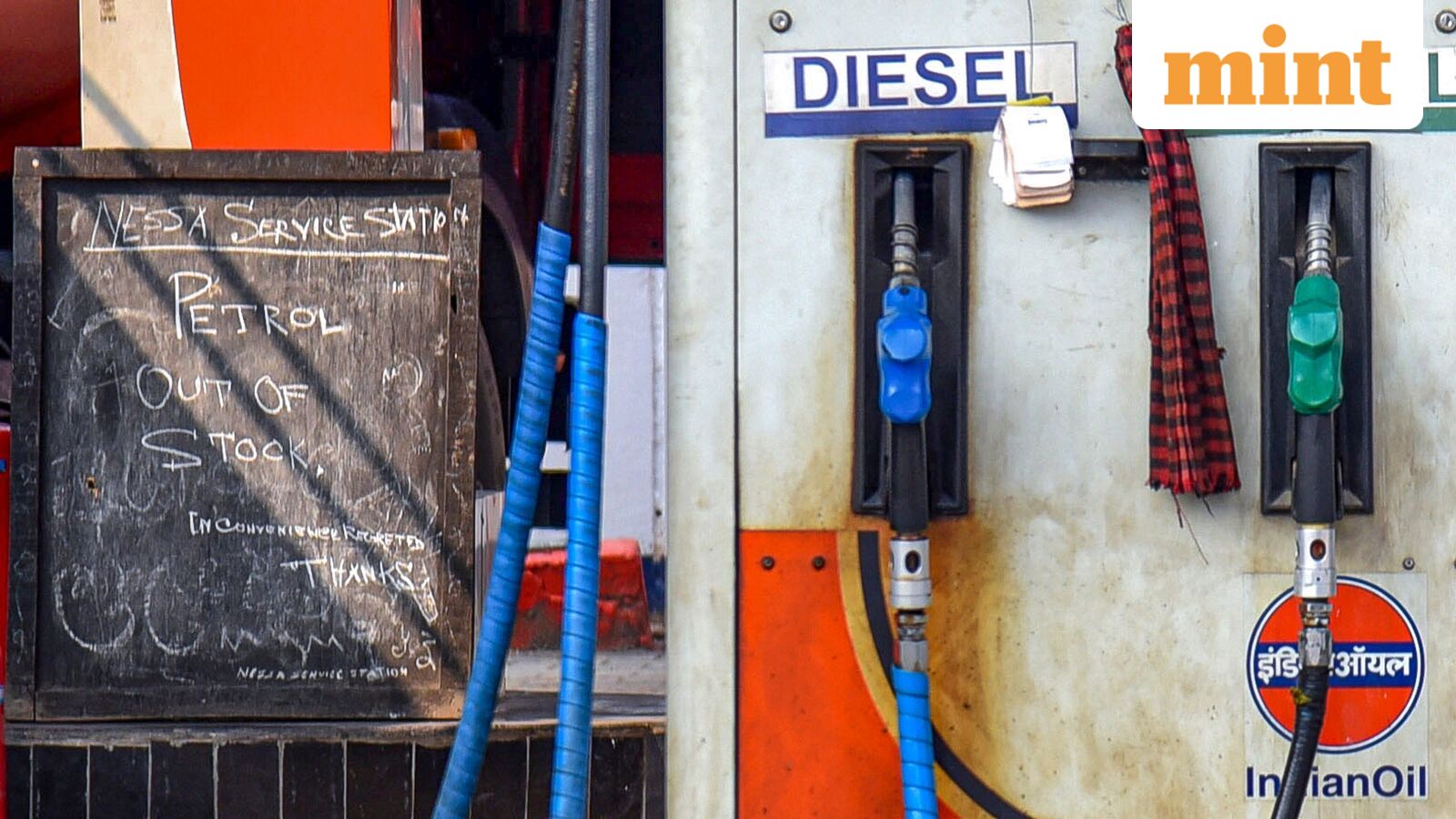
Shares of oil marketing companies (OMCs) faced selling pressure on Monday, April 13, following a sharp surge in crude oil prices, which rose above $100 amid fresh developments in the war in the Middle East after the failure of US-Iran truce talks in Islamabad over the weekend.
Since crude oil forms a major input cost for oil PSUs like Indian Oil Corporation (IOC), Bharat Petroleum Corporation Limited (BPCL) and Hindustan Petroleum Corporation Limited (HPCL), any spike in the prices weighs on these OMCs’ margins, making investors cautious.
HPCL share price declined the most by 5.4%, followed by BPCL (down 5%) and IOCL (down 3.7%) on the National Stock Exchange (NSE) in morning trade today. Since the onset of the US-Iran war on February 28, OMC stocks have tumbled between 23-25% amid escalating crude oil prices.
Oil prices spike 8% as US threatens to block Hormuz
The closure of the Strait of Hormuz, a critical chokepoint for 20% of global oil passage, since the conflict in the Middle East has driven crude prices higher.
After recording a loss last week amid hopes of a ceasefire in the US-Iran war, the prices once again jumped as the truce talks between the two nations fell apart and US President Donald Trump said the US Navy would start blockading the Strait of Hormuz.
He added that the price of oil and gasoline may remain high through November’s midterm elections, signalling the war is unlikely to end soon. The closure of Hormuz will block Iranian oil exports and could further boost prices.
IG market analyst Tony Sycamore told Reuters the move would effectively choke off the flow of Iranian oil, forcing Tehran’s allies and customers to apply the necessary pressure to get the waterway reopened.
At one point, Brent crude prices had reached $120 per barrel last month, while West Texas Intermediate (WTI) crude prices rose to $109. In today’s trade, Brent crude futures were trading at $102, up 7.5% after settling 0.75% lower on Friday. US WTI was up 8.4%, at $104.69 a barrel, following a 1.33% loss in the previous session.
How do higher crude oil prices impact OMCs?
Any spike in crude oil prices weighs on OMCs’ earnings, especially when retail fuel prices are frozen.
While physical crude volumes may be sustained through alternate sourcing, the cost structure tends to deteriorate sharply due to higher crude procurement prices, elevated freight and insurance costs and longer shipping routes.
Kotak Institutional Equities, in a report last month, has said that emergency LPG imports will be expensive and further weigh on OMCs, more so since the compensation from the government takes time and is usually partial.
The negative public sentiment amid LPG shortages makes near-term petrol/diesel price hikes very difficult. “Since retail prices were not cut at lower oil prices, OMCs have benefited in the last few years. Now, amid higher oil prices, this cushion built over the years can vanish quickly,” it opined.
Disclaimer: This story is for educational purposes only. The views and recommendations made above are those of individual analysts or broking companies, and not of Mint. We advise investors to check with certified experts before making any investment decisions.
About The Author