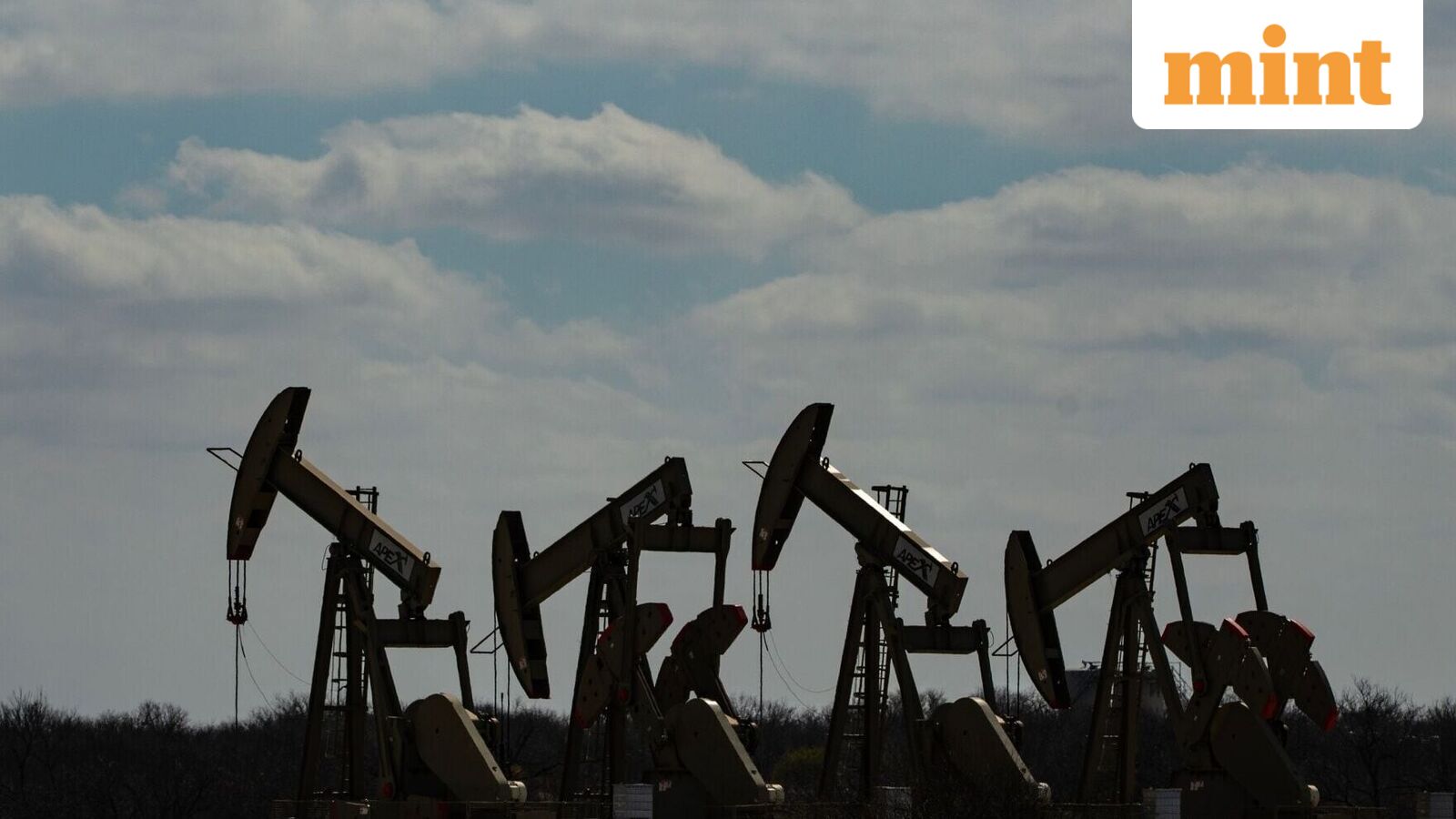
US-Iran war: Oil prices were mostly unchanged on Wednesday, 22 April, after an initial rise of around $1 in early Asian trading, as investors evaluated the prospects of US-Iran peace negotiations following Washington’s decision to extend the ceasefire.
Brent crude hovered near $98 per barrel after gaining nearly 9% in the previous two sessions, while West Texas Intermediate traded around $89 today.
Back home, crude oil prices on the Multi Commodity Exchange (MCX) were down marginally by 0.33% at ₹8,401 per barrel.
What’s driving crude oil prices today?
According to Kaynat Chainwala, AVP, Commodity Research, Kotak Securities, prices softened slightly today as US President Donald Trump extended the ceasefire, but persistent uncertainty around the proposal, marked by the absence of a clear timeline and no confirmation from Iran, is keeping markets cautious.
Trump said on Tuesday that the US would pause any new attacks on Iran for now, but would continue restricting vessels tied to the Islamic Republic until negotiations are resolved “one way or the other.”
In a post on Truth Social, the American president added that if the US were to ease its blockade and reopen the Strait of Hormuz, “there can never be a deal with Iran, unless we blow up the rest of their country, including its leadership.”
Oil markets have been highly volatile amid unfolding developments in the Persian Gulf and the sharp disruption to shipping through Hormuz — a crucial route that typically handles around one-fifth of global crude supply.
Shipping activity through the Strait of Hormuz remained largely suspended on Tuesday, with shipping data mentioned in a Reuters report indicating that only three vessels transited the route over the previous 24 hours.
Furthermore, Volodymyr Zelenskyy said that the Druzhba pipeline, which transports Russian oil to Europe, is prepared to restart operations. According to Reuters, Russia plans to halt oil shipments from Kazakhstan to Germany through the Druzhba pipeline from May 1.
Crude oil prices outlook
On the near-term outlook of crude oil prices, Chainwala added that the price retracement appears more like a tactical consolidation than a shift in sentiment.
“Near-term direction will depend on whether tensions intensify further or if last-minute negotiations succeed in preventing additional supply disruptions. Overall, markets remain driven by geopolitical risk and policy uncertainty, with direction likely to be dictated in the near term by US–Iran developments and incoming US macro data,” she said.
On the technical outlook, Ponmudi R, CEO of Enrich Money, MCX Crude Oil is currently trading near the ₹8,400 zone, having broken above the prior ₹8,000– ₹8,350 consolidation range and surging to a peak near ₹8,600 before pulling back.
“Price action remains volatile, with ₹8,530 now acting as immediate resistance. A sustained move above this level could reopen the path toward ₹8,650– ₹8,860. On the downside, ₹8,200 serves as the key support; a decisive break below could expose the ₹8,120– ₹7,945 zone. The near-term bias remains cautiously bullish driven by ongoing disruptions in the Strait of Hormuz,” Ponmudi said.
Disclaimer: This story is for educational purposes only. The views and recommendations above are those of individual analysts or broking companies, not Mint. We advise investors to check with certified experts before making any investment decisions.
About The Author