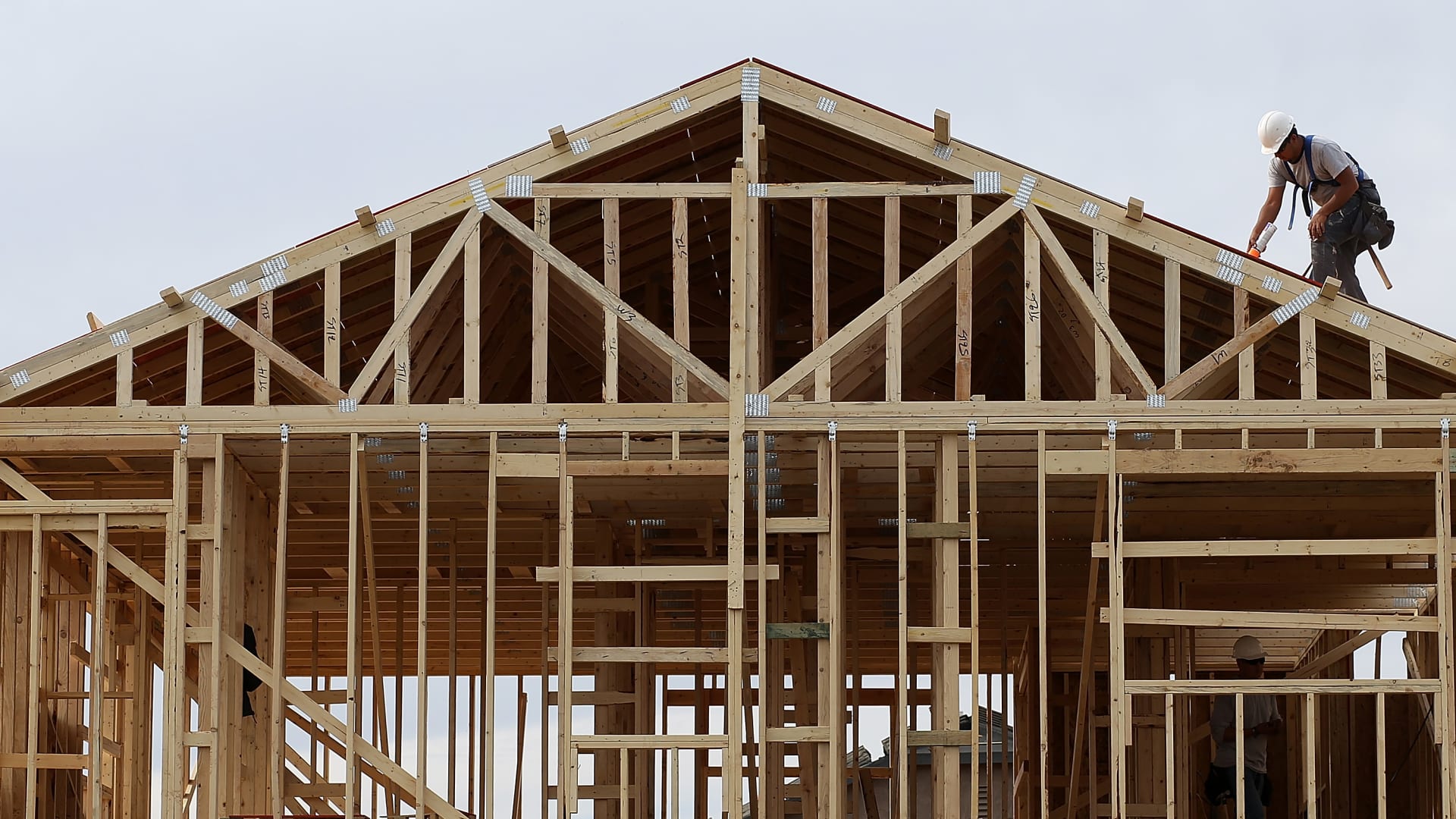
A version of this article first appeared in the CNBC Property Play newsletter with Diana Olick. Property Play covers new and evolving opportunities for the real estate investor, from individuals to venture capitalists, private equity funds, family offices, institutional investors and large public companies. Sign up to receive future editions, straight to your inbox. U.S. homebuilders had hoped for a robust spring market this year after the winter brought falling mortgage rates and rising homebuyer demand. The war with Iran threw a wrench into that optimism, pushing rates higher and layering on big increases in costs for materials and transportation due to the spike in oil prices. Homebuilder sentiment in April, the heart of the spring housing market, dropped sharply, according to a monthly index from the National Association of Home Builders. “With oil prices higher in the U.S., 62% of builders reported suppliers have increased building material costs due to higher fuel prices, including gas and diesel,” said Robert Dietz, NAHB’s chief economist, in a release. “Energy costs make up approximately 4% of residential construction material input and service costs. With near-term economic risks elevated, 70% of builders reported challenges pricing homes given uncertainty about material costs.” A slew of building suppliers reported price hikes in April on everything from foam insulation and roofing to windows and doors. The cost of both manufacturing these products and transporting them has increased quickly. “We’re starting to hear more about subcontractor and supplier price increases along with freight and fuel surcharges,” said Rick Palacios, director of research at John Burns Research and Consulting. JBRC surveyed homebuilders on this topic in early April and found 38% of builders nationally indicated supplier delays or price increases due to rising fuel costs. Regionally, some increases were higher. In Florida and Texas, for example, builders reported price increases of 47% and 45%, respectively. And nearly every product is getting hit. Mohawk Industries , the world’s largest flooring manufacturer, announced it would implement an 8% price increase on residential and mainstreet commercial soft surfaces (carpet, carpet tile and pad) and select hard surface products effective April 27. Cornerstone Building Brands is increasing prices on windows and doors, from vinyl to aluminum products. That goes into effect June 1. In a March 30 letter to suppliers , Cornerstone wrote: “Over the past several months, our industry has experienced increased volatility driven by ongoing economic and political developments. These factors have led to sustained increases in the cost of raw materials, transportation, and labor.” Paint giant Sherwin-Williams increased prices on paint by 9% and on bulk solvent products, thinners and reducers by 18%. That led to an analyst downgrade by Wells Fargo earlier this month. “The war in Iran has led to broad-based inflation across most commodity chains, flowing down to coatings raw materials,” Wells Fargo analyst Michael Sison said in a note to clients. “We believe margins will be pressured by rising raw material costs as the conflict in the Middle East persists.” Even spray polyurethane is taking a hit. In a message on its website, Performance Pro Supply, an insulation products company, wrote: “We don’t jack up our prices and blame others. We show you the amount of the increases as we receive them from manufacturers.” It then listed multiple manufacturers showing price increases anywhere from 6% to 15%. “Bottom line, so not only does the housing industry have subdued buyer traffic, builders are now thrown a whole new set of raw material and procurement challenges,” wrote Peter Boockvar, an economist and market strategist, in a research note.