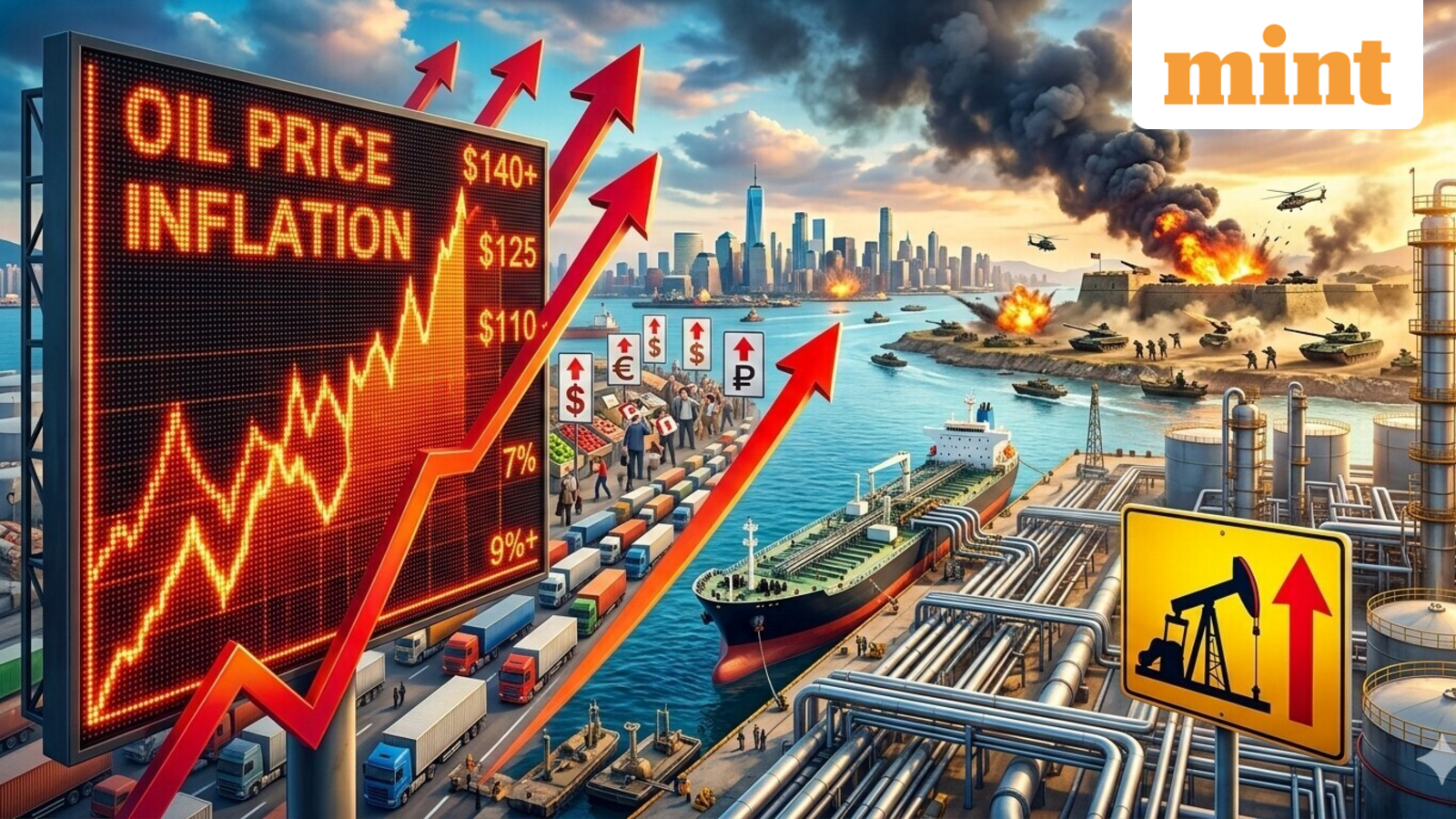
US-Iran war: Despite a rise in international crude oil prices, petrol and diesel prices have not risen in India. However, the market is estimating a rise in fuel prices in India once the important state assembly polls, especially in West Bengal and Assam, are over.
However, this delay comes at a cost. Oil marketing companies have been operating under margin pressure, as they have not fully passed on higher crude costs. If international crude oil prices remain elevated, the Government of India (GoI) may increase petrol and diesel prices after these state assembly elections. For a market investor who always discounts an event well before it occurs, upstream refiners tend to benefit as their realisations improve with rising oil prices.
Are petrol and diesel prices set to rise due to the US-Iran war?
Speaking on the possibility of petrol and diesel price rise in India due to the US-Iran war, Abhinav Tiwari, Research Analyst at Bonanza, said, “On the domestic front, fuel pricing remains closely linked to political timing. While a broader national election cycle may be behind, key state elections, particularly in West Bengal and Assam, are still pending. Historically, governments have avoided fuel price hikes ahead of elections due to their direct impact on consumer sentiment. This suggests that despite rising crude prices, immediate pass-through to retail fuel prices could remain limited in the near term.”
Opportunity for stock market investors
Dhaval Popat, Analyst — Energy at Choice International, said, “If the US-Iran war extends into the summer season, stronger jet fuel demand and broader distillate tightness in Europe could lift cracks globally, including in Asia, driving robust year-on-year EBITDA growth for pure-play refiners. We therefore prefer pure-play refiners in the current market.”
Analysing the expected petrol and diesel price rise from an investor perspective, Dhaval Popat said the opportunity lies less in retail fuel and more in refining margins. The disruption is tightening global supplies of diesel and jet fuel, supporting stronger product cracks. This creates a favourable setup for complex pure-play refiners in India, with elevated realisations more than offsetting the impact of government-led discounts for OMCs.
Stocks to buy amid petrol and diesel price hike buzz
On how stock market investors can make money amid buzz for the petrol and diesel price rise, Gaurav Udani, Founder of Thincredblu Securities, said, “When oil prices go up, upstream oil producers like ONGC and Oil India usually do better because they can get more money for their oil. Companies that refine and sell things, like Reliance Industries, can see an increase in their margins; however, that depends on how much they make from refining.”
Gaurav Udani said that aviation (IndiGo, SpiceJet), paints (Asian Paints, Berger Paints), and chemicals are under pressure due to rising input costs, which could hurt their margins.
US-Iran war: Money-making strategy
Unveiling the stock market strategy amid the US-Iran war, Gaurav Udani of Thincredblu Securities advised investors to follow the sector rotation trick, saying, “If crude oil price stays high, stocks linked to energy may do better than those linked to consumption. Traders can also look at short-term chances in oil-sensitive stocks based on how prices move.”
Petrol, diesel price in Delhi
Prices of regular petrol and diesel have largely remained unchanged since March 2024. In the national capital, petrol is priced at ₹94.77 per litre by state-run oil marketing companies, while diesel is sold at ₹87.67 per litre.
Private refiners and oil marketing companies—Nayara and Shell, which operate around 8,500 of the above 1 lakh petrol pumps in the country —have already raised fuel prices. Other retailers have so far not raised the prices of regular petrol and diesel.
State-run OMCs have increased the prices of premium diesel and petrol, which account for 4% of total fuel sales, as well as the rate of industrial diesel, which is purchased in bulk by industries and the agriculture sector.
Disclaimer: This story is for educational purposes only. The views and recommendations above are those of individual analysts or broking companies, not Mint. We advise investors to check with certified experts before making any investment decisions.
About The Author