The US Federal Reserve is expected to keep interest rates unchanged at 3.50%-3.75% on Wednesday, 29 April, for the third consecutive time as the stalled US-Iran talks have kept crude oil prices in the higher orbit, raising inflationary pressure globally.
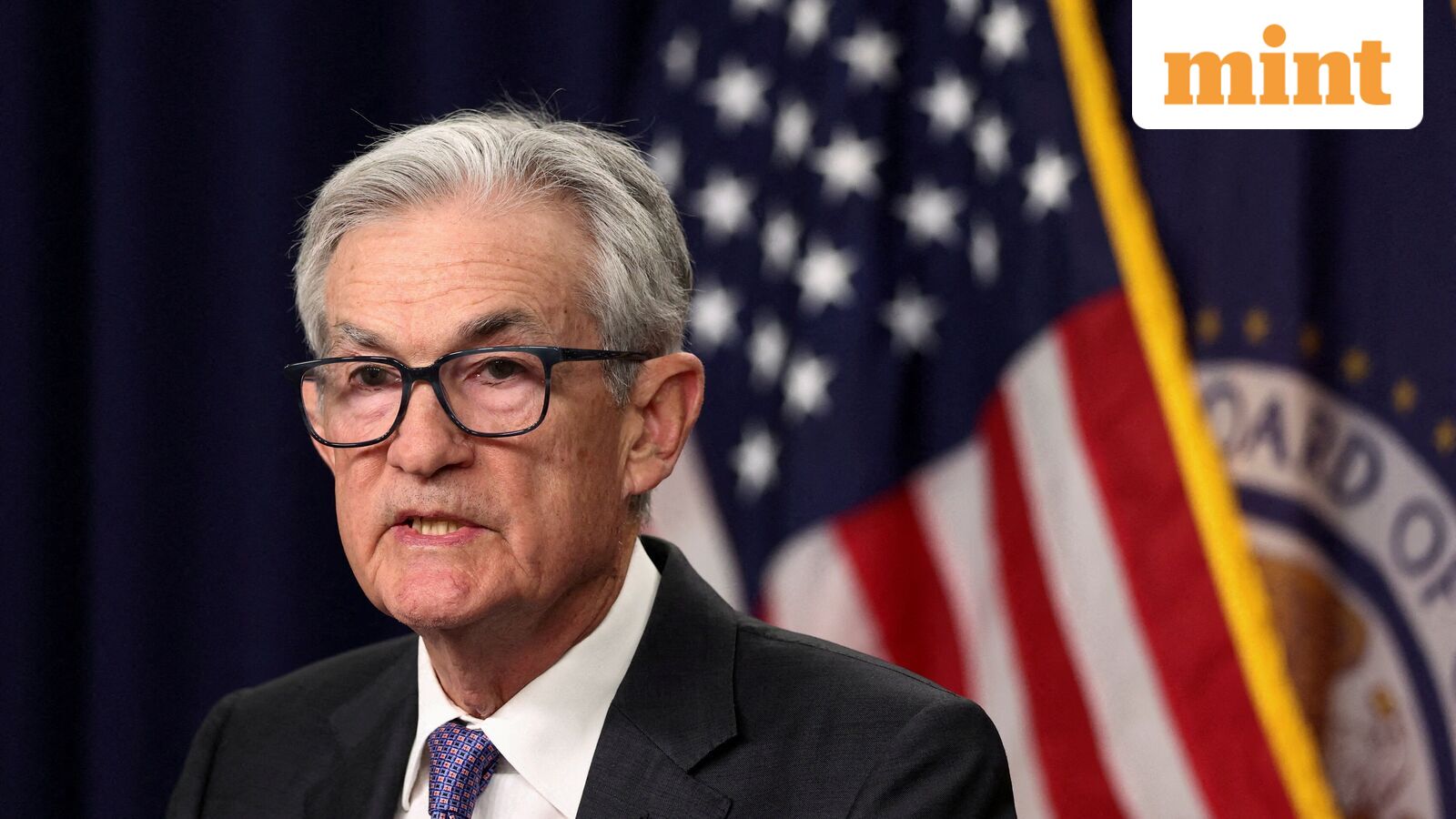
The meeting of the US Federal Open Market Committee (FOMC) is scheduled for April 28-29. While a status quo on interest rates is widely expected, investors’ focus is on Fed Chair Jerome Powell’s comments after the policy decision. There will be no fresh economic projections or dot plot in the April policy meeting.
This could be Powell’s last policy meeting as the Federal Reserve Chairman, with his term expiring on 15 May. The US Department of Justice (DOJ) has ended its probe of Powell, potentially paving the way for the confirmation of his successor.
US President Donald Trump has picked Kevin Warsh to lead the Federal Reserve after Powell. Fed’s next policy meeting is scheduled for June 16-17.
“The Fed is widely expected to hold the federal funds rate steady at 3.50%-3.75%. With no fresh economic projections or dot plot to guide markets, attention will shift to Powell’s tone and the statement’s language. With first-quarter GDP, PCE inflation, the employment cost index and April’s ISM manufacturing survey all arriving within two days, officials have every reason to avoid dramatic guidance,” said Ajitabh Bharti, co-founder and executive director, CapitalXB.
Fed policy: A non-event for the market?
The monetary policy decision of the US Federal Reserve impacts markets globally. Elevated rates boost dollar and yields, triggering outflow from equity markets. A hawkish Fed can trigger risk-off sentiment, making investors move to safe-haven assets.
Moreover, most central banks, including the Reserve Bank of India, usually follow the Fed’s lead as a wider rate differential can trigger more foreign capital outflows, weaken the rupee further, and push inflation higher. In simple terms, a hawkish Fed can trigger a global tightening cycle.
“The Fed holding rates at 3.50–3.75% amid the Iran conflict is a reality check for emerging markets. For India, the near-term math is straightforward. A wider RBI-Fed rate differential means FPI outflows, a weaker rupee, and imported inflation through crude prices that are already above $100 a barrel,” Tushar Badjate, Director of Badjate Stock & Shares, observed.
However, this time, the market has bigger worries to deal with.
The US-Iran conflict remains unresolved even as the ceasefire remains in effect. Brent Crude is near the $110-per-barrel mark, posing a serious risk to India’s growth-inflation setup, as the country imports about 85-90% of its total crude oil requirements.
A prolonged period of higher crude oil prices will feed into inflation, denting corporate profitability by increasing input costs.
At this juncture, the market is more focused on the US-Iran situation. Everything else, even the Fed policy meeting, is secondary.
“The Iran situation has completely reshuffled the deck. No US-Iran deal means no oil relief, no relief on inflation, and no relief from the Fed. For India and emerging markets broadly, ‘higher for longer’ is basically a slow bleed and bad for markets,” Sidharth Sogani Jain, founder, CEO and fund manager at Blue Aster Capital and CREBACO Global, noted.
Vinit Bolinjkar, the head of research at Ventura, underscored that the prospect of the US Federal Reserve keeping interest rates unchanged amid stalled US-Iran peace talks and higher oil prices presents a complex challenge for emerging markets like India.
Bolinjkar believes that to anchor capital flows and manage the threat of imported inflation, the RBI will likely sustain its 5.25% repo rate and ‘neutral’ stance well into the year.
“With external commercial borrowing becoming significantly more expensive, we expect a strategic recalibration across Indian boardrooms. Corporations will likely pivot toward domestic debt markets and prioritise balance sheet liquidity, deferring aggressive capex and major capacity additions until the global geopolitical outlook stabilises,” said Bolinjkar.
Read all market-related news here
Read more stories by Nishant Kumar
Disclaimer: This story is for educational purposes only. The views and recommendations expressed are those of individual analysts or broking firms, not Mint. We advise investors to consult with certified experts before making any investment decisions, as market conditions can change rapidly and circumstances may vary.
About The Author