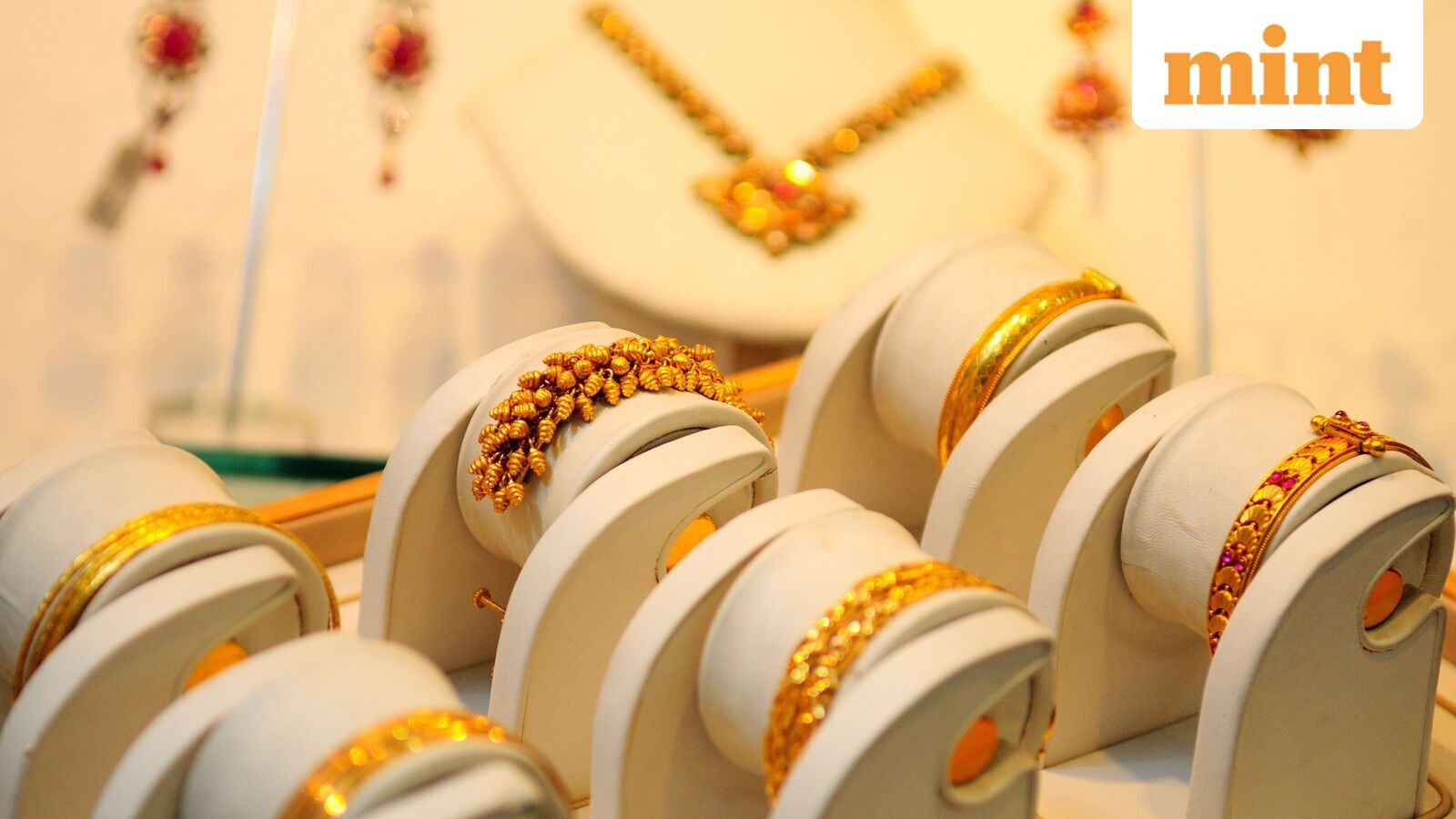
Jewellery stocks came under sharp selling pressure on Wednesday, 13 May, after the government raised customs duties on gold and silver to 15% from 6%, a move expected to dampen demand and weigh on sector margins.
Shares of key players such as Kalyan Jewellers India, PC Jeweller, P N Gadgil Jewellers, Senco Gold, Thangamayil Jewellery, and Titan Company declined up to 6%, reflecting concerns over higher input costs and potential demand slowdown.
Rajesh Bhosale, Equity Technical and Derivative Analyst at Angel One, said that post the appeal by Prime Minister Narendra Modi urging citizens to avoid buying gold for a year, jewellery stocks have remained under pressure. Until there is any positive development or respite, this underperformance is likely to continue.
People also ask
AI powered insights from this story
•5 QUESTIONS
Jewellery stocks slumped due to the government raising customs duties on gold and silver to 15% from 6%. This move is expected to dampen demand and impact sector profit margins.
The increased import duty on gold and silver to 15% is expected to dampen demand for these precious metals. This could lead to higher prices for consumers and potentially temper discretionary jewellery purchases.
The hike in import duties increases input costs for jewellery companies. This, combined with potential demand slowdown, is expected to weigh on their profit margins.
The government increased import duties on gold and silver to curb precious metals imports, narrow the trade deficit, and support the rupee amid rising oil prices and geopolitical tensions.
Analysts advise a wait-and-watch approach for jewellery stocks due to worries over reduced demand and the negative sentiment following the duty hike and the Prime Minister’s appeal.
“One should avoid aggressive bets in the space for now; however, upon any positive trigger, counters like Titan Company and Senco Gold could outperform, as these stocks were showing relative strength prior to the announcement,” advised Bhosale.
Further, Ruchit Jain, Head – Equity Technical Research, Wealth Management, Motilal Oswal Financial Services, added that Jewellery stocks have corrected amid worries over a possible reduction in demand due to the rise in duties and PM’s appeal to citizens to reduce gold buying. This could keep sentiment negative in the near term, so one should adopt a wait-and-watch approach for the time being.
According to a Business Today report, shares in the jewellery sector have faced challenges this week amid growing concerns about possible government actions on gold imports, as Kotak Institutional Equities noted. These concerns have now come to fruition, with the government implementing a 10% basic customs duty and a 5% Agricultural Infrastructure and Development Cess (AIDC) on gold and silver, raising the total import tax from 6% to 15%.
This decision aligns with earlier market expectations. Business Today reported that Nomura had noted the likelihood of restrictions on non-essential imports, such as gold, including a potential increase in duties. The brokerage also noted that shipments of gold have been delayed at customs since March due to administrative issues.
PM Modi calls for a cut in gold purchases
During a rally on Sunday, PM Modi urged citizens to help safeguard the foreign exchange reserves. His request encompassed refraining from unnecessary international travel, foreign vacations, and destination weddings, while promoting domestic tourism. He also urged individuals to refrain from making non-essential gold purchases in the upcoming year to help alleviate the strain on foreign-exchange outflows.
Jateen Trivedi, VP Research Analyst – Commodity and Currency, LKP Securities, said that Prime Minister Narendra Modi’s remarks on delaying gold purchases should be viewed in the context of macroeconomic stability and import management. He noted that India, being one of the world’s largest gold importers, faces added pressure on its trade deficit and the rupee during periods of elevated crude prices and global uncertainty.
He added that the timing of the appeal is significant, given the current backdrop of rising oil prices, US–Iran geopolitical tensions, and pressure on the currency due to higher import bills. Since gold imports lead to substantial dollar outflows, discouraging non-essential imports becomes a key policy lever to stabilise the external sector.
Trivedi, however, pointed out that the move is unlikely to alter India’s long-term demand for gold, which remains deeply embedded in savings and cultural practices. In the near term, it may temper discretionary jewellery demand and lead to cautious sentiment across bullion and jewellery-linked businesses.
On price trends, he said gold remains highly sensitive to global macro factors. Upside risks include escalating geopolitical tensions, elevated crude prices, potential rate cuts by central banks, and a weaker dollar. Conversely, prices could correct if the US Federal Reserve maintains a higher-for-longer stance, geopolitical tensions ease, oil prices soften, or institutional flows weaken.
Overall, he said the government’s message is aimed at encouraging temporary restraint in imports and preserving macro stability, rather than signalling any structural shift against gold ownership.
Disclaimer: This story is for educational purposes only. The views and recommendations above are those of individual analysts or broking companies, not Mint. We advise investors to check with certified experts before making any investment decisions.
About The Author