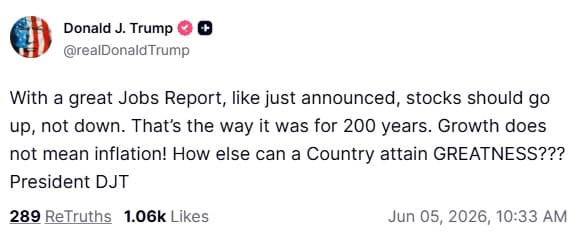
United States (US) President Donald Trump is annoyed that stocks aren’t rallying on Friday. He clearly expected that to be the case after the May Nonfarm Payrolls (NFP) report blew the consensus out of the water.
The US economy created 172K jobs in May, when only 85K were expected. Additionally, the April NFP was revised upward from 115K to 179K. More importantly, the healthcare sector wasn’t the only thing holding up the jobs market. This round saw leisure and hospitality add 70,000 net jobs in May.
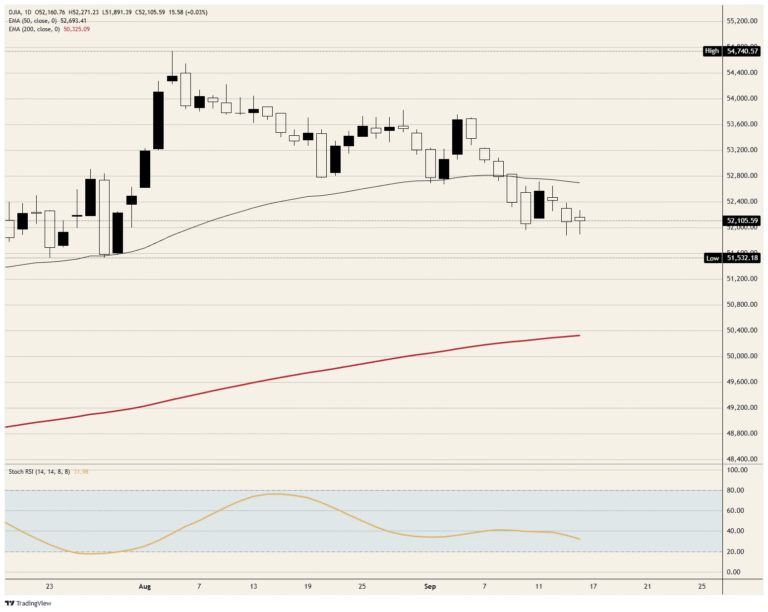
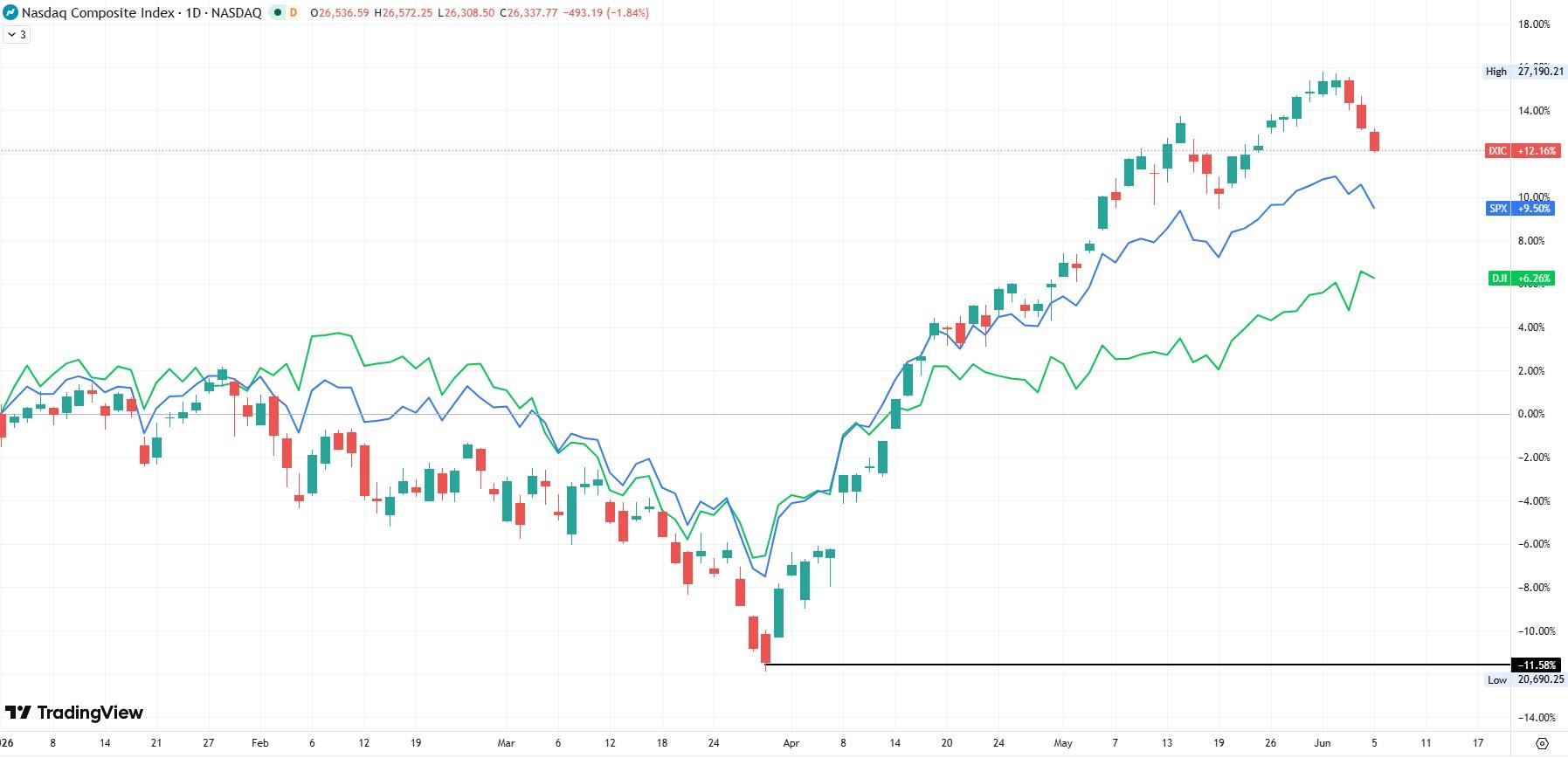
Still, the NASDAQ Composite sold off 2% at the time of writing, while the S&P 500 gave up 1.1% and the Dow Jones Industrial Average (DJIA) sank 0.3%.
The reason for the sell-off is that the US labor market has now witnessed three decent monthly reports in a row. The figures haven’t hit the 200K threshold that used to be the standard, but many economists think that level is out of date due to retiring baby boomers and mass immigrant deportations.
The more robust labor market means that the Federal Reserve (Fed) has less of a need to worry about it and can turn its focus to inflation. Indeed, the CME Group’s FedWatch Tool showed that estimates for rates to stay unchanged by the Fed’s December 2026 meeting fell after the NFP release from 47% to 29%. The odds that the fed funds rate would be 50 basis points higher by that meeting rose from 11% to nearly 22%.
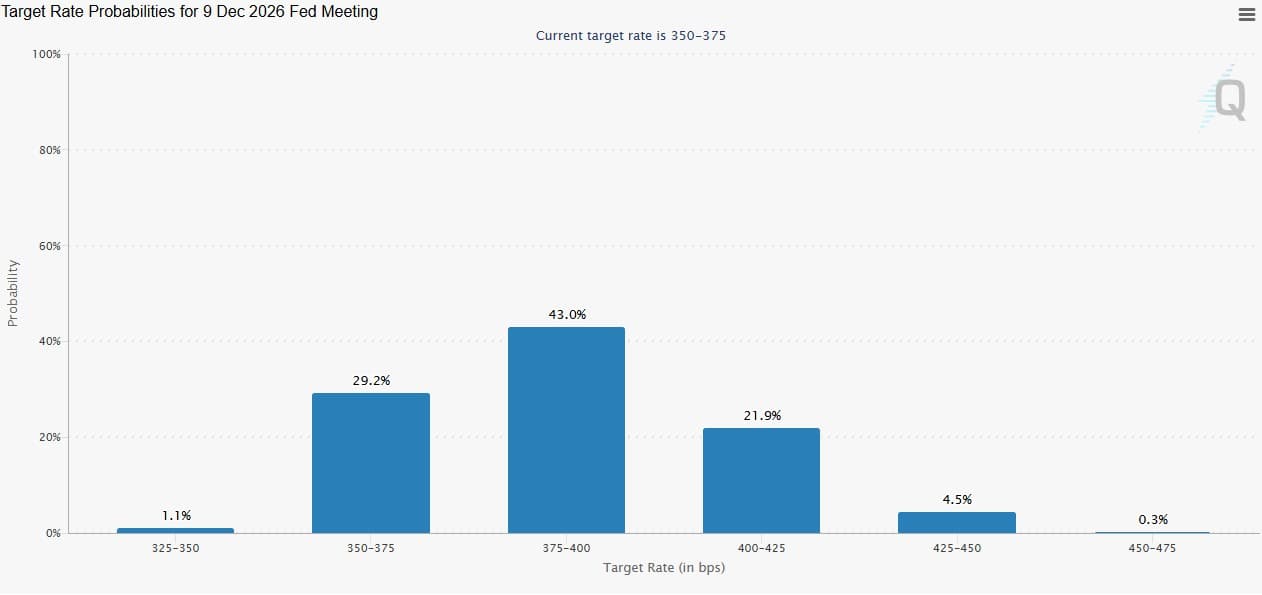
“The third consecutive consensus-beating gain in [N]onfarm [P]ayrolls in May should further reduce concern among the FOMC about the downside risks to the labor market, thereby making it even harder for the Fed to try to look through elevated rates of core and headline inflation,” said Stephen Brown, chief North America economist for Capital Economics.
Brown said he now expects several rate hikes in the latter part of the year. And investors know that a rate-hiking cycle typically tends to weigh down stock market indices.
About The Author