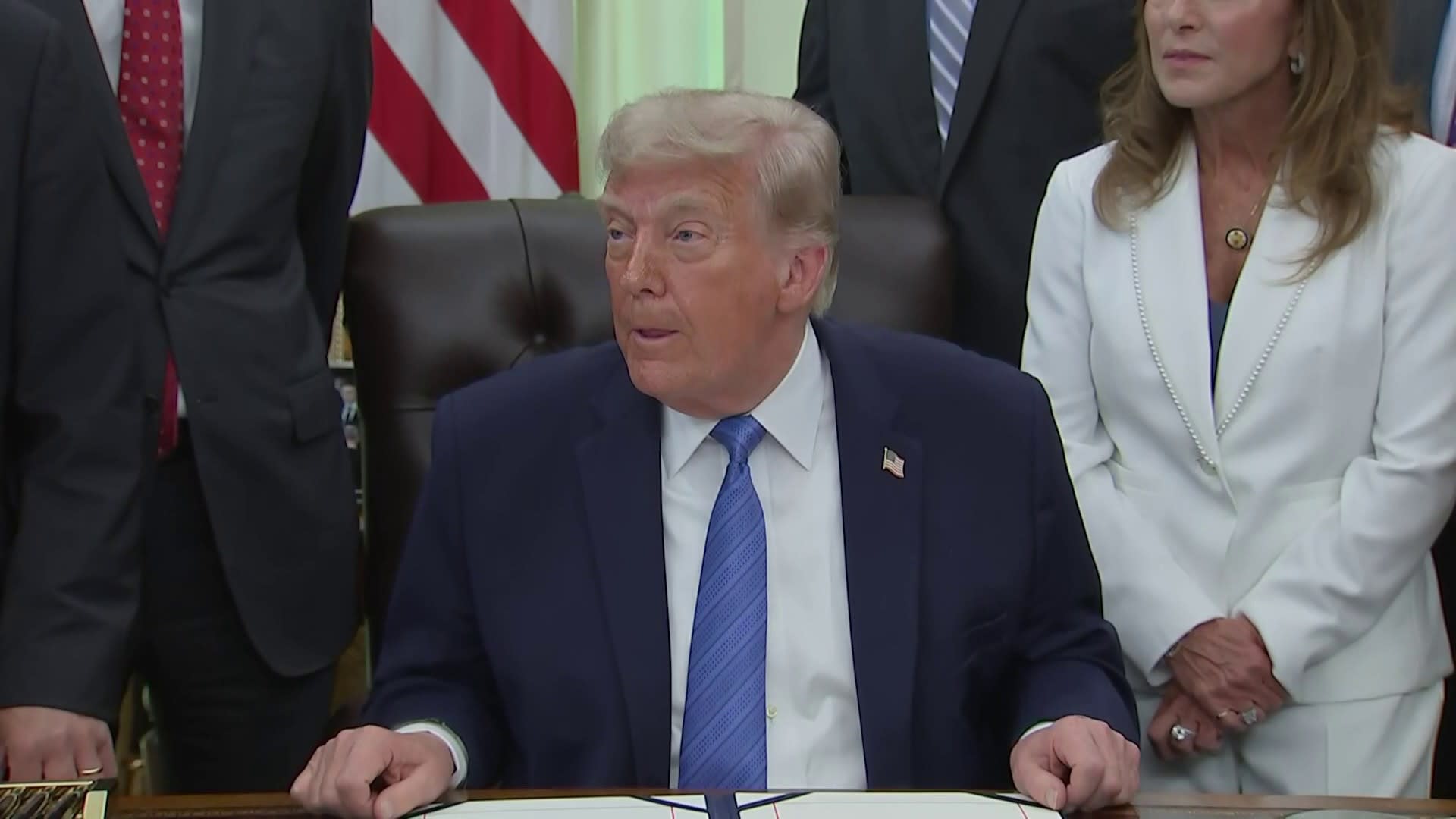

“You know what I really love? I love the inflation,” PresidentDonald Trump said Wednesday after the consumer price index climbed above 4% for the first time in three years,stemming from the Iran war’s surge in energy prices.
“The numbers were great,” Trump, speaking with reporters in the Oval Office, said of the CPIdata released by theBureau of Labor Statistics.
U.S. households have been feeling less enthusiastic about the impact of the Middle East conflict on the cost of everyday goods. The Federal Reserve Bank of New York’s monthly Survey of Consumer Expectations showed that the share of those respondents who see their current situation as “much worse” than a year ago hit a nearly four-year high.
The oil shock has put upward pressure on prices at a time when many consumers are already struggling.
The U.S. Congress Joint Economic Committee — Minority estimates that tariffs and the war with Iran cost each householdmore than $3,100from 2025 through May of 2026.
The White House did not immediately respond to a request for comment.
Elevated priceson essentials like groceries and gasoline limit how far workers can stretch their paychecks, experts say.
“For most American households, they have negative real earnings growth; it’s hard to spin that positively in any way,” said certified financial planner Stephen Kates, a financial analyst at Bankrate.”Most of the earnings gains have been erased by this inflation spike.”
With average hourly earnings rising 3.4% from the previous year, according to theBureau of Labor Statistics, wage growth nowlags inflation.
An annual inflation rate at 4.2% means”you are devaluing the assets and the income of U.S. residents — that is a huge problem,” said Wayne Winegarden, an economist at Pacific Research Institute, a conservative think tank. “To minimize that impact is troubling.”
With inflation outpacing paychecks, Americans’ personal savings rate also recently hit the lowest level since 2022, according todata from the Bureau of Economic Analysis.
Longer-term inflation expectations
Trump said again this week that adeal with Iran could be reached in the days ahead, and that the critical Strait of Hormuz would reopen “immediately” after that.
Once the war is over, inflation is “going to come down like a rock,” Trump said Wednesday, even as tensions in the Middle East escalated. “When it’s over, you will see oil drop to where it was before,” he said.
The comments came afterTrump said that the U.S. would hitIran“very hard” again.
The president has made many similar comments in recent months about a peace deal being nearly at hand. The war crossed the100-day markon Sunday.
But even once the U.S. and Iran negotiate a peace deal, the war’s inflationary effects could take weeks or months to unwind, experts say.
“The speed of reopening the Strait will be very important for future cost pressures, and consequent pass-through to consumers,” BlackRock fixed income chief Rick Rieder said in a statement Wednesday, referring to the key waterway used to transportabout a fifth of the world’s oil.
Gas prices, whichhave been a particular pain point since the start of the Iran war, may not ease that quickly, according to Bankrate’s Kates.
“You are still looking at an enormous increase year over year,” Kates said. As of Thursday, consumers paid a national average of $4.13 per gallon, according toAAA— up from about $3.12 a year ago.
“The price level is what people care about, and the price levels are not going back to 2025 — even if we have no inflation in the next few years, which is impossible,” Kates said.
SomeFederal Reserve policymakers have also expressed concernsthat, as the conflict persists, it could raise long-term inflation expectations.
About The Author