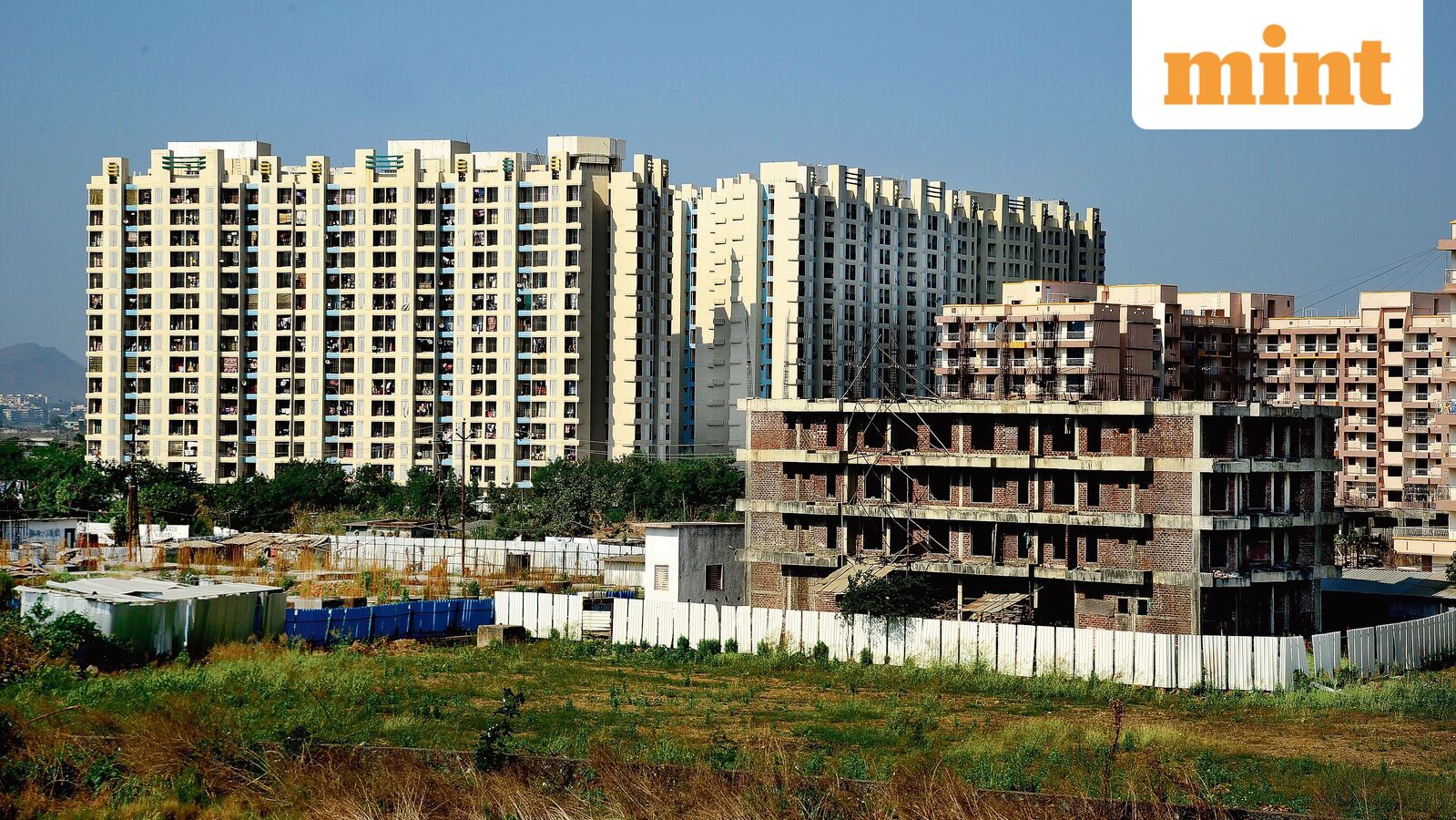
Real Estate stocks: Shares of several real estate companies came under selling pressure in Wednesday’s trade after the Brihanmumbai Municipal Corporation (BMC) announced restrictions on water usage, including the suspension of water supply to construction sites across Mumbai. The move has triggered concerns about potential disruptions to project execution in one of India’s largest and most profitable residential property markets.
Among the worst-hit stocks on the National Stock Exchange (NSE), Macrotech Developers (Lodha) fell as much as 4%, while Oberoi Realty and Godrej Properties declined around 3% each. Shares of Aditya Birla Real Estate, Prestige Estates Projects and Anant Raj were also trading lower, falling between 1% and 2%.
Other Mumbai-focused developers, including Sunteck Realty, Keystone Realtors (Rustomjee), Arkade Developers and Mahindra Lifespace Developers, also witnessed weakness during the session as investors assessed the potential impact of the civic body’s decision.
Why the BMC’s decision has raised concerns
The BMC on Tuesday announced a series of water conservation measures after reviewing water stock levels in reservoirs supplying the financial capital. Reservoir levels have dropped to 10.35% following a delayed monsoon, prompting the civic authority to take precautionary steps to safeguard drinking water supplies.
As part of the measures, the civic body suspended water connections for construction projects and swimming pools. In addition, it imposed a 20% reduction in water supply to industrial, commercial and sports establishments. The restrictions came into effect from Wednesday.
According to the BMC, the objective is to preserve potable water supplies and prevent wastage. The civic authority has also warned of strict action against misuse or excessive consumption of drinking water.
The announcement has raised concerns across the real estate sector because access to water is a critical requirement for construction activity. If the restrictions remain in force for an extended period, developers could face disruptions in project execution, particularly in the Mumbai Metropolitan Region (MMR), one of the country’s most active housing markets.
Construction timelines are influenced by several operational factors, including labour availability, raw material costs, regulatory approvals, utility access, weather conditions and legal clearances. Water availability is among the most important of these requirements, especially for ongoing projects.
A prolonged disruption in water supply could potentially slow construction activity, delay project completions and postpone customer handovers. Such delays may also affect revenue recognition for developers, particularly those with large ongoing project pipelines in Mumbai and surrounding areas.
The concerns emerge despite the broader resilience displayed by Mumbai’s real estate market over the past year. The city has continued to witness steady demand, supported by strong end-user interest, infrastructure-led growth and a relatively stable macroeconomic environment. As India’s financial capital, Mumbai remains one of the country’s most important centres for housing demand, employment generation and investment activity.
Sector Outlook
Brokerage ICICI Securities recently noted that sector performance remained relatively stable during FY26. According to the brokerage, pre-sales were largely flat year-on-year, while collections increased 15.5% year-on-year. It also highlighted that the launch pipeline for FY27 remains strong, although a larger portion of launches is expected in the second half of the financial year due to the Middle East situation.
ICICI Securities further noted that the impact of single-digit increases in construction costs continues to remain manageable for developers at present. However, with water supply now emerging as a fresh challenge, investors are closely monitoring whether the restrictions remain temporary or evolve into a more prolonged operational hurdle for Mumbai’s real estate sector.
Disclaimer: The views and recommendations made above are those of individual analysts or broking companies, and not of Mint. We advise investors to check with certified experts before making any investment decisions.
About The Author