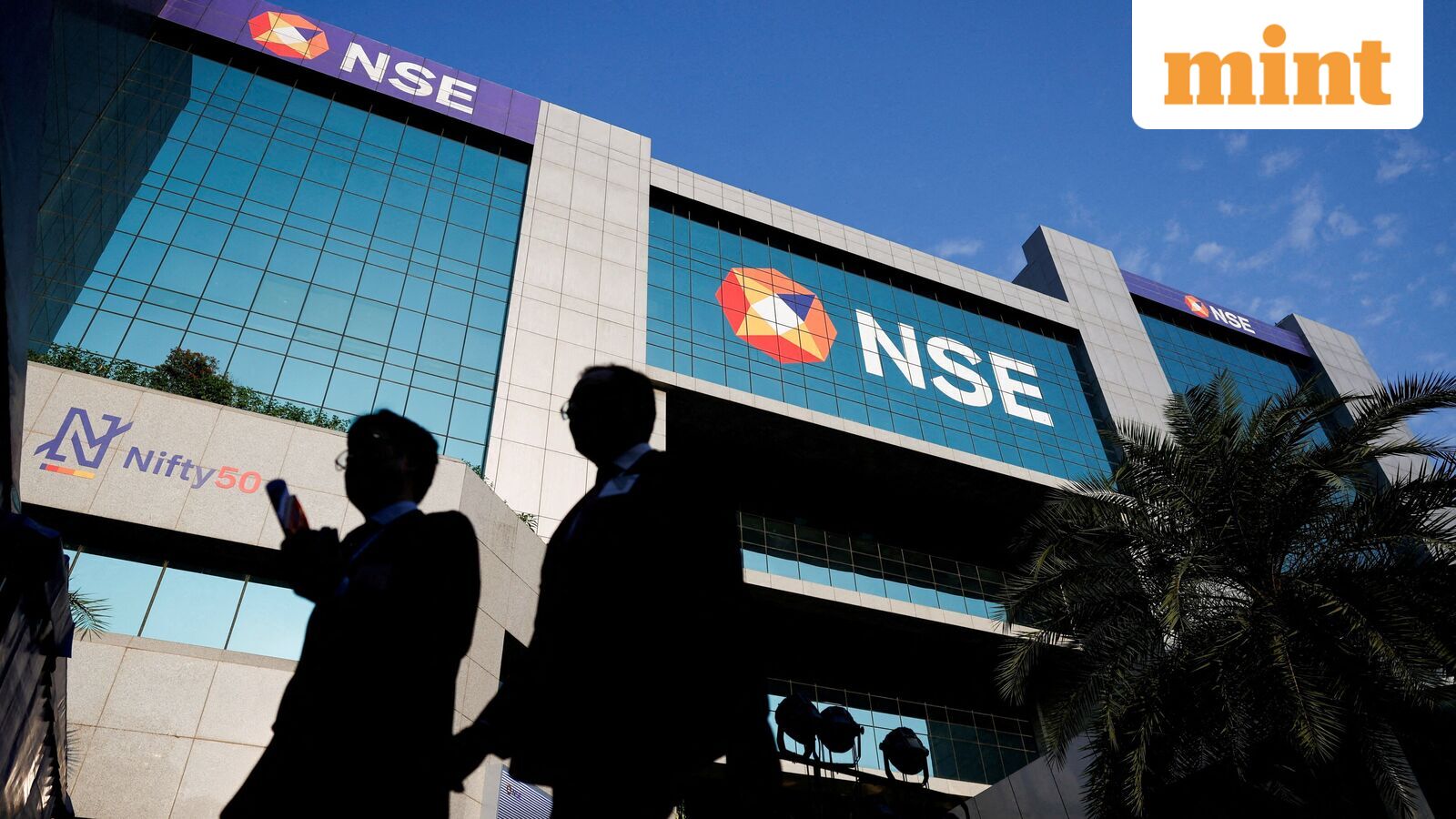
The National Stock Exchange (NSE) has flagged revenue concentration as a key business risk, highlighting that nearly half of its revenue is derived from its top 10 trading members.
The country’s largest stock exchange and the world’s most active derivatives exchange warned that any disruption involving these members could materially affect its financial performance and operations.
In its draft red herring prospectus (DRHP) filed late on Wednesday, NSE said that 46.78%, 44.48%, and 45.26% of its revenue from operations came from its top 10 trading members in fiscal years 2026, 2025, and 2024, respectively.
In absolute terms, revenue generated from these top 10 trading members stood at ₹77,655.80 million in FY26, ₹76,238.40 million in FY25, and ₹66,894.18 million in FY24.
The exchange noted that its financial performance remains highly sensitive to the trading activity, business strategies, and continued engagement of these key trading members.
The loss, reduced activity, or financial distress of one or more of these participants due to market conditions, industry consolidation, regulatory developments, or other internal and external factors could lower trading volumes on the platform and adversely impact revenues.
NSE further cautioned that any migration of these trading members to competing exchanges or alternative trading venues, as well as broader structural shifts in market dynamics, could further amplify the risk.
“There can be no assurance that we will succeed in materially reducing our dependence on a limited number of high-volume trading members, and our continued dependence on this concentrated group could expose us to revenue volatility,” the exchange said in the DRHP.
Meanwhile, the company has warned that regulatory changes, technology failures, cyberattacks, and AI-related risks, coupled with its significant dependence on derivatives trading revenues, could materially affect its financial performance and business operations.
Issue could become India’s largest-ever IPO by size
NSE on Wednesday filed draft papers for its initial public offering (IPO), marking a major step toward listing after years of regulatory delays. The proposed issue will be a pure offer-for-sale (OFS), with existing shareholders set to offload around 6% of the exchange’s equity. The company will not raise any fresh capital through the offering.
The proceeds from the transaction will go entirely to the selling shareholders, which include State Bank of India, Canada Pension Plan Investment Board, affiliates of Morgan Stanley, Temasek, Bank of Baroda, Stock Holding Corporation of India, General Insurance Corporation of India, The New India Assurance Company, National Insurance Company, and United India Insurance Company.
Based on indicative grey market prices of around ₹2,000 per share, the NSE IPO is estimated to be worth approximately ₹29,780 crore (more than $3 billion), implying a valuation of over ₹5 trillion.
At this valuation, the NSE IPO would become India’s largest-ever public offering, surpassing Hyundai Motor India Ltd’s ₹27,859-crore IPO as well as LIC’s ₹20,557-crore issue, Mint had reported earlier.
Disclaimer: We advise investors to check with certified experts before making any investment decisions.
About The Author