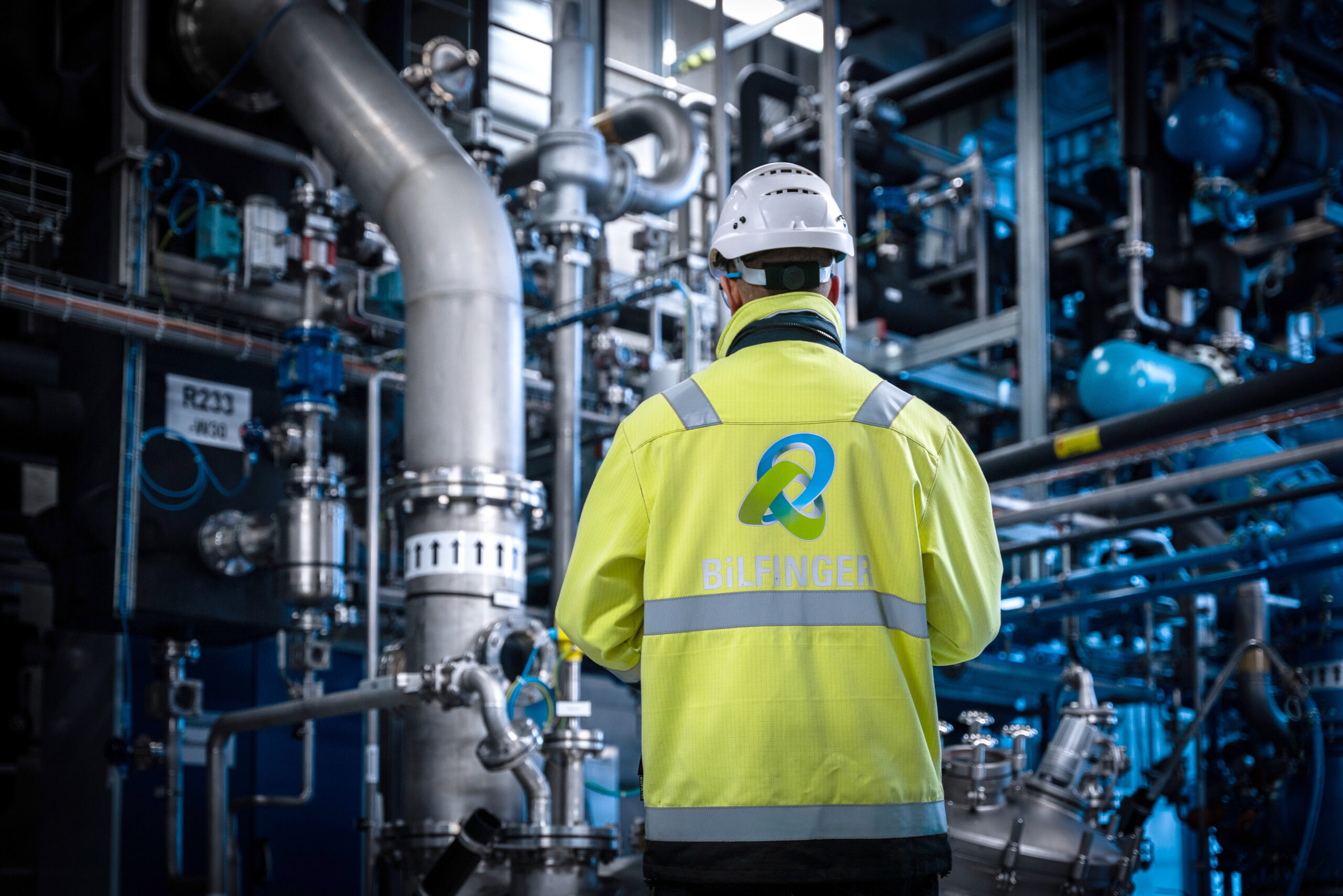
(WO) — Bilfinger and Schneider Electric have successfully deployed an autonomous offshore buoy in the North Sea, demonstrating a new approach to powering and controlling remote subsea assets without the need for permanent offshore personnel or traditional umbilical connections.
The Normally Unmanned Installation (NUI) buoy, developed for Buoyant Production Technologies (BPT), a subsidiary of Crondall Energy, completed 1,000 hours of autonomous operation following its deployment in late 2025. The pilot was designed to evaluate a renewable-powered platform capable of supporting remote and marginal offshore developments.
Bilfinger was selected to design and deliver the control system using Schneider Electric’s EcoStruxure Automation Expert platform, an open, software-defined automation architecture intended to support autonomous offshore operations.
The compact floating installation generates its own power through an integrated renewable energy microgrid combining wind, solar, battery storage and backup diesel generation. The system manages local subsea controls, eliminating the need for a connection to a host platform through conventional power and control umbilicals.
According to the companies, the approach could reduce development costs for remote offshore assets by as much as 50% while lowering emissions and simplifying field infrastructure.
“This approach simplified integration between renewable power generation, remote operation, and autonomous control, while overcoming the long lead times, high capital costs, and limited flexibility associated with traditional infrastructure,” said Steven Parkinson, automation, production and service director at Bilfinger UK.
The buoy was developed to support future subsea tieback projects where operators are seeking lower-cost alternatives to conventional offshore infrastructure. The platform uses remote communications via 5G and Starlink, while onboard systems provide process control, safety monitoring and cybersecurity protection.
Schneider Electric said the project demonstrates how software-defined automation can enable new operating models for offshore production and subsea developments.
“This project proves a new operating model for offshore assets and supports our mission to decarburize hard-to-abate industries,” said Devan Pillay, president of Heavy Industries at Schneider Electric. “The real opportunity now lies in replicating and scaling this approach across future assets.”
Bilfinger completed the project from contract award to technology qualification in approximately 10 months. The companies said the successful pilot validates a scalable model for autonomous offshore operations in remote and challenging environments.
About The Author