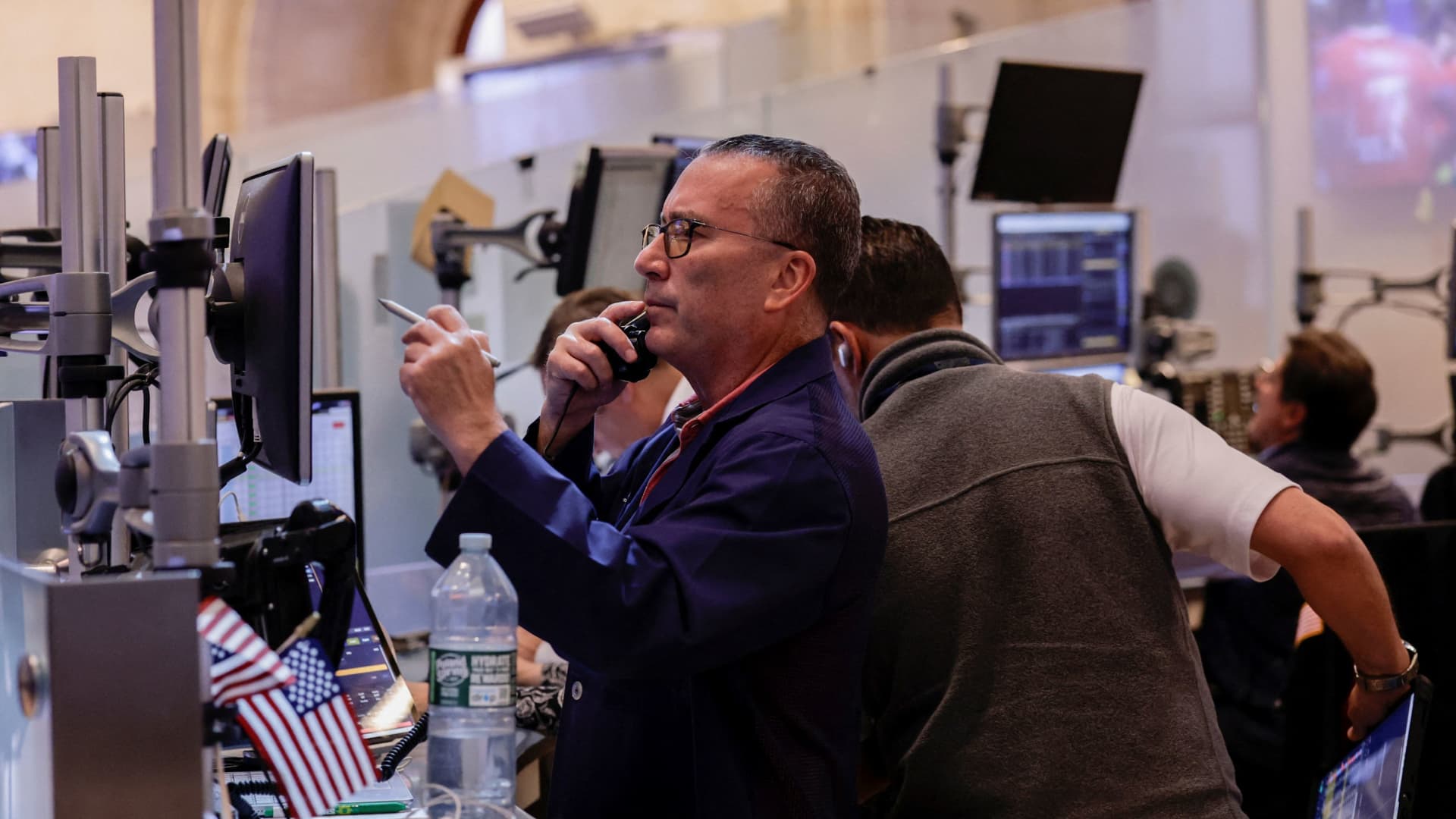
A trader works on the floor at the New York Stock Exchange (NYSE) in New York City, U.S., June 18, 2026.
Jeenah Moon | Reuters
U.S. equity futures were lower on Sunday as Wall Street awaited the release of inflation data that is closely watched by the Federal Reserve.
S&P 500 futures traded down 0.4%, while Nasdaq-100 futures were 0.6% lower. Futures tied to the Dow Jones Industrial Average dropped 0.4%.
The moves come after the three leading U.S. indexes staged a comeback Thursday following a sell-off on Wednesday, with the declines fueled by investor uncertainty surrounding the trajectory of monetary policy. Thursday’s comeback – led by a rise in chip stocks – helped the indexes finish the trading week higher.
The S&P 500 gained nearly 1% in the period, seeing its 11th winning week in 12. The Dow Jones Industrial Average also rose close to 1% on the week, while the Nasdaq Composite advanced more than 2%. The U.S. stock market was closed on Friday for the Juneteenth holiday.
A key test for the market this week will be the release on Thursday of May’s reading on the personal consumption expenditures price index, the Fed’s preferred inflation gauge. Even excluding volatile food and energy prices, core PCE is expected to increase from April, according to economists polled by FactSet.
Following last week’s hawkish Fed meeting, expectations of an interest rate increase were pulled forward to as soon as October. Investors are now laser-focused on any inflation reading that could signal the U.S. central bank may soon begin hiking rates.
While Fundstrat Global Advisors’ Tom Lee believes a number of catalysts could impact the market down the line – such as the implementation of task forces at the Federal Reserve and supply chain impacts from the closure of the Strait of Hormuz – the environment remains positive.
“We still believe later this year there is going to be an abrupt change of market conditions, one that feels very much like a bear market, but we don’t want to stand and call a top,” the firm’s head of research said on CNBC’s “Closing Bell” on Thursday. “I think conditions are still favorable for stocks.”
Investors are also still monitoring developments around the conflict in the Middle East, as Vice President JD Vance met with Iranian officials over the weekend for the first negotiations in Switzerland after talks had earlier been called off – sending Brent crude oil prices higher Friday. At the same time, President Donald Trump threatened fresh strikes on Iran if Iran doesn’t “immediately stop their highly paid PROXIES in Lebanon from causing trouble.”
About The Author