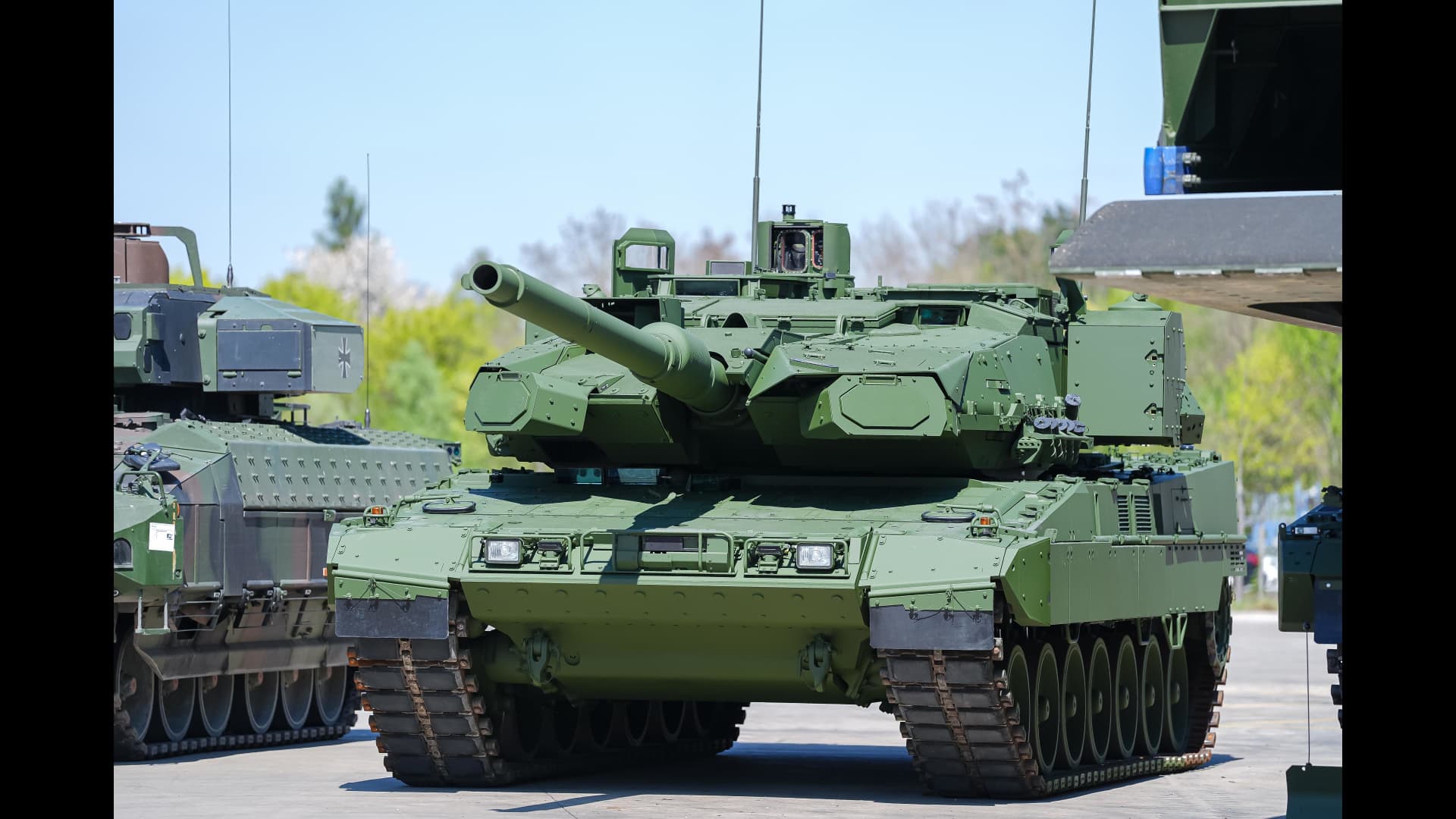
MUNICH, GERMANY – APRIL 22: A Leopard 2 tank stands on the KNDS company grounds at the inauguration of the new assembly line for the Boxer armoured fighting vehicle at the KNDS factory on April 22, 2026 in Munich, Germany. The Bundeswehr, the German armed forces, is planning to acquire up to 3,000 Boxer vehicles in several variants as part of its modernization and expansion program. (Photo by Leonhard Simon/Getty Images)
Leonhard Simon | Getty Images News | Getty Images
France and Germany have agreed on a framework in which the German government will take a stake in defense manufacturer KNDS, ahead of a potential multi-billion-euro IPO by the company.
KNDS is one of Europe’s largest producers of military equipment, including armoured vehicles and ammunition used in Ukraine. The company is viewed as a key to the continent’s rearmament push that has benefited defense companies like Rheinmetall, Saab, and BAE Systems.
“By setting out this Franco-German framework, the two States have taken a decisive step towards strengthening their common sovereignty in land defence,” the French and German governments said in a joint statement on Monday.
Why Germany is seeking a KNDS stake
Germany is now seeking to acquire a 40% stake in KNDS from family shareholders, the country’s government said in a separate statement.
“A stake by Germany in KNDS will secure long-term influence over a company that is strategically important for European security and defense capabilities,” the statement, translated from German, said.
Bloomberg reported on Sunday, citing people familiar with the matter, that the company could be valued at between 15 billion euros ($17.2 billion) and 18 billion euros
Is KNDS going public?
The parties were aiming to finalize the agreement by Monday ahead of an IPO announcement that could come as soon as Tuesday, according to Bloomberg.
KNDS did not immediately respond to a request for comment from CNBC.
The transaction would bring Germany’s stake in KNDS in line with France’s, both governments said in a joint statement.
The French government’s stake is 50% but it is expected to reduce its holding to 40%, according to multiple media reports, which would leave the two governments as equal shareholders.
About The Author