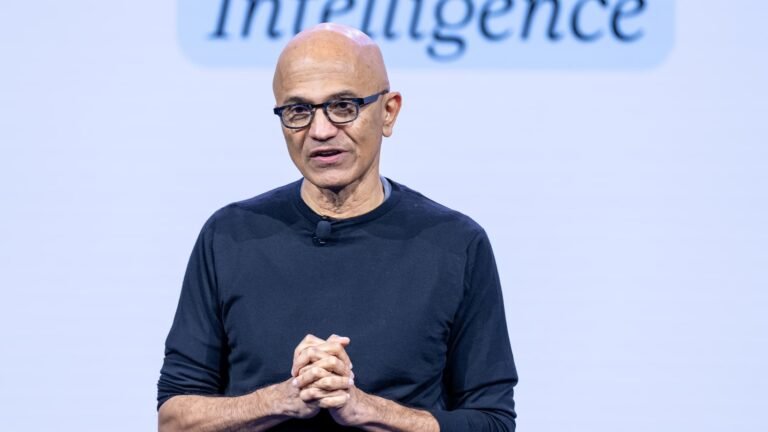
Expert view: Rahul Bhuskute, CIO, Bharti AXA Life, is positive about the Indian stock market. He believes the year 2026 may not be a washout year despite the tumultuous first half. In an interview with Mint, Bhuskute noted that Nifty’s core growth drivers remain attractive, and its one-year forward PE, below the long-term 10-year average, offers a margin of safety. Edited excerpts:
What should be our investment strategy when there is so much geopolitical uncertainty? Should we trim our equity exposure and diversify more towards bonds and gold?
We believe individual asset allocation and investment strategies must align with personal risk profiles and investment horizons. Corporate India’s earnings have shown remarkable resilience amid the US-Iran conflict, with most companies offering a reasonably optimistic outlook.
While sector performance varies, the aggregate economy has navigated geopolitical uncertainty effectively, bolstered by timely interventions from the government and the RBI. Consequently, we maintain a strong conviction in the long-term potential of Indian equity markets.
Considering the Middle East conflict, is it going to be a washout year for the Nifty?
Equity markets offer no guarantees, making absolute Nifty predictions unwise. However, current valuation frameworks suggest a low probability of an index washout this year.
Nifty’s core growth drivers remain attractive, anchored by an expected 15–16% EPS expansion for FY27. Furthermore, its one-year forward PE of nearly 20 times sits safely below the long-term 10-year average of nearly 21 times, offering a reassuring margin of safety.
How do you see rising bond yields in the US and Japan affecting the Indian stock market? Do you see any opportunity for retail investors in it?
Rising global bond yields, particularly in the US, signal that inflation is expected to remain sticky.
A continued upward march in yields could trigger global central bank liquidity tightening, pressuring Indian equity markets through multiple rounds of compression, accelerated FII outflows, and currency depreciation.
We view this liquidity contraction as the primary threat to global risk assets. However, because a significant portion of this inflationary pressure stems from crude oil volatility tied to the West Asia conflict, any de-escalation could rapidly catalyse a powerful risk-on rally.
Inflation is rising in most major economies. Can we see the start of an era of aggressive monetary tightening by the Fed and the RBI? What could it mean for investors?
Geopolitical conflict and a forecasted super El Niño present severe supply-side inflation risks globally and in India. Recognising this structural shift, the Fed and the RBI are transitioning their stance from transitory outlooks to assessing policy durability—a typical precursor to monetary tightening. Despite these hawkish pivots, further rate hikes will likely remain measured, as aggressive monetary tightening cannot easily resolve supply-driven inflation.
The last two years’ trend shows that DIIs can cushion the market but cannot drive it higher without the support of FPIs. When do you expect the FPIs to start buying Indian stocks sustainably?
Over the past two years, superior growth opportunities in alternative emerging markets prompted a meaningful capital reallocation away from India.
However, a potential reversal of these foreign portfolio investor (FPI) flows appears likely as domestic earnings momentum accelerates, moving past recent geopolitical headwinds, including the impact of US tariffs and the West Asia crisis.
Furthermore, Indian equity valuations have moderated toward long-term historical averages, establishing a highly palatable entry point capable of driving sustained medium-term foreign interest.
Are mid and small-caps better bets at this juncture since they are less affected by FPI flow?
Mid and small-cap stocks offer a very compelling proposition in the Indian context, given their high growth potential, exposure to new age/emerging sectors and aid to portfolio diversification.
We are, however, also fairly positive on the large caps today, given the improving macroeconomic environment and growth recovery across sectors like BFS, consumer, industrials, and healthcare.
We hence recommend holding a well-diversified portfolio across large, mid and small caps in today’s scenario.
While a reversal in FII flows may not be a certainty, we are indeed seeing better growth prospects for the large caps, and this could potentially attract flows over a 2–3-year period.
Read all market-related news here
Read more stories by Nishant Kumar
Disclaimer: This article is for educational purposes only and does not constitute investment advice. The views and recommendations expressed are those of the expert, not Mint. We advise investors to consult with certified experts before making any investment decisions, as market conditions can change rapidly and circumstances may vary.
About The Author