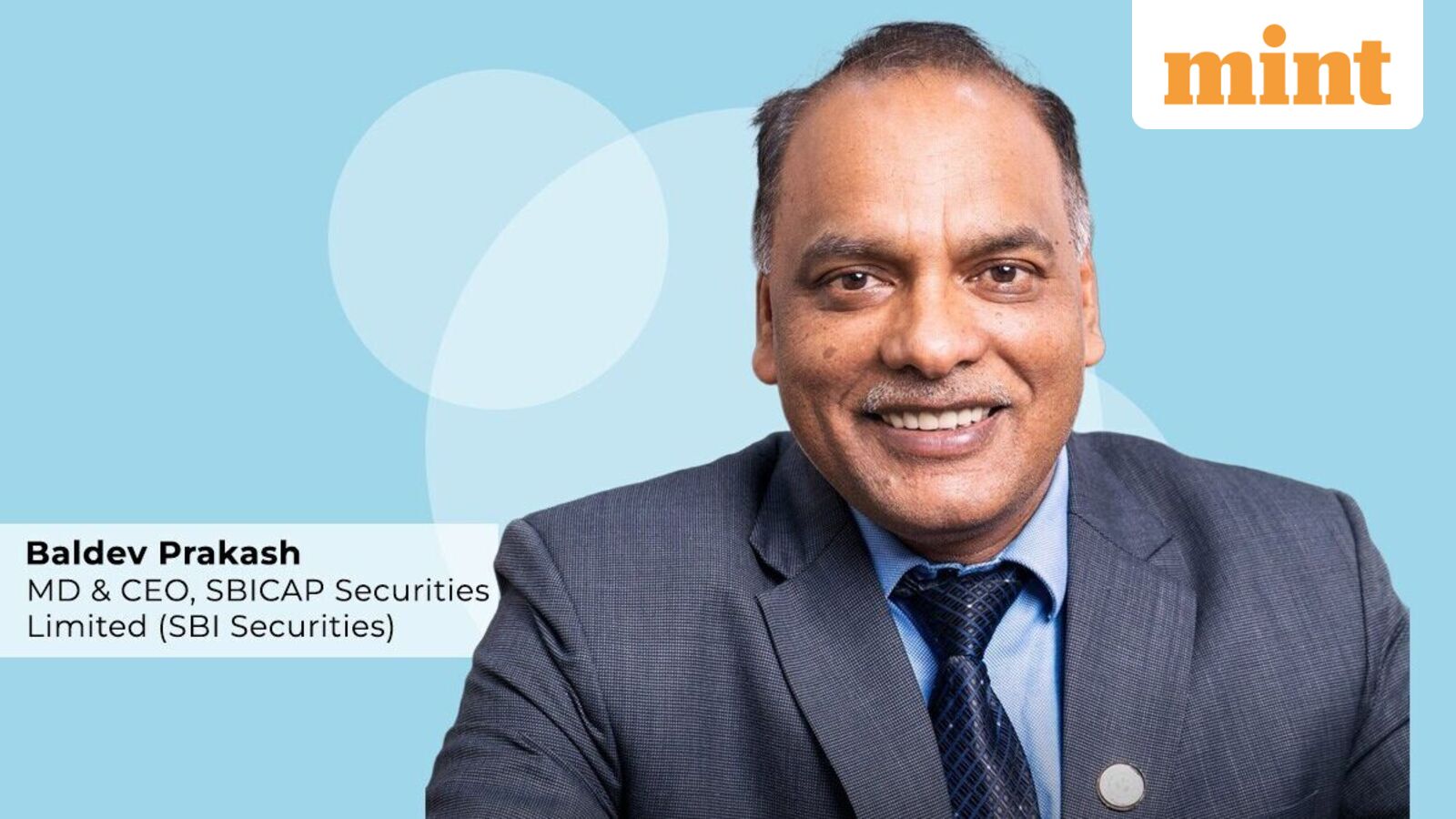
Expert view: Baldev Prakash, MD and CEO of SBICAP Securities (SBI Securities), believes Nifty 50 may rise to a new high by the end of 2026, due to a combination of factors, including earnings growth and strong domestic flows. In an interview with Mint, Prakash shares his views on the Indian stock market, sectors he is positive about, and his expectations for the interest rate trajectory this year. Edited excerpts:
What is your outlook for the domestic market amid increased geopolitical risks? Nifty’s is down about 9% year-to-date. Can it end the year in the red?
At SBI Securities, we have constructive view on Indian equities underpinned by (a) likely double-digit earnings growth for Indian corporates during FY26-FY28E period backed by comfortable valuations, post 21 months of consolidation, (b) discounting of multiple overhangs like trade disruptions led by US import tariffs and volatility in the energy prices on the back of West Asia crisis, (c) strong underlying consumption trend as reflected in the robust auto sales numbers and healthy demand traction across hotels, jewellery, food and beverages sector, etc., (d) strong inflow of bank deposit through FCNR route which has alleviated pressure on USDINR, (e) strong domestic flows through SIP route which has been able to absorb persistent selling pressure from FIIs, and (f) likely reversal of global AI trade by FIIs towards well diversified emerging markets like India.
During 2026, we expect many sectors to close on a positive note with Nifty 50 likely to scale new highs during the fag end of the year, backed by a handsome recovery in heavyweight sectors like banking and IT, etc.
The market has been testing investors’ patience lately. Nifty has, in fact, underperformed major global markets in the last three years. What are the key lessons that one should derive from it?
Wealth creation through equities is the game of discipline and patience. Equity markets always work in cycles wherein 3-4 years of good returns are followed by a period of consolidation. Having said that, market returns are a mirror of corporate earnings growth, and with India’s nominal GDP growth likely to be 11-12%, we expect Indian corporates to deliver profit growth of 12-13%.
Investors can expect similar returns in the long run-in equities. Smart investors who are active in the market tend to outperform by participating in the relatively faster-growing undiscovered businesses. After coming out of the ferocious rally post-COVID, the last 21 months have been tough for Indian equity market participants, especially for those who have witnessed a correction for the first time.
Lesson for new-to- market investors is to have control over greed and fear as markets always swing like a pendulum with extreme optimism at one end and pessimism at the other end. Market participants should be aware that staying invested in the fundamentally sound businesses and protecting the capital is the mantra to survive in the market in the long run.
Is it time to decrease exposure to equities and look at safer options like government bonds?
We always advocate for our clients to have a proper asset allocation plan with exposure towards equities, fixed income instruments and precious metals, depending on the age and risk profile.
Depending on the age and short-term life goals, investors are advised to allocate 20-40% of the liquid financial portfolio towards fixed-income instruments like government bonds.
If one has to invest in equities at this juncture, what sectors would you recommend looking at?
Key themes that are likely to outperform over the medium term include auto (two-wheelers and passenger vehicles), auto ancillaries, select private and public sector banks, NBFC, defence, precision engineering, capital market-linked businesses (wealth management, AMCs, exchange, discount brokers, etc.), value-added metals and metal products, select chemicals (fluorine, battery chemicals, etc.), healthcare (hospitals, formulations and CDMO), cables and wires, consumption (jewellery, liquor, hotels, etc.), and EMS, etc.
These sectors are supported by favourable structural growth drivers, strong earnings visibility, healthy balance sheets and long-term domestic demand trends. In a nutshell, wealth creation opportunities exist across all the cohorts of the market, and investors are recommended to adopt a bottom-up stock-specific approach.
Emerging sectors are the ones that either deliver outsized returns or sink the capital. Do you see any emerging opportunities? How do you see the AI theme?
Emerging sectors like circular economy/recycling, semiconductor, data centre ancillary, battery chemicals, aerospace, and medical equipment may be explored by investors with a high-risk, high-return appetite.
In India, we don’t have any direct AI-related play which is available. Having said that, we believe that Indian corporates will emerge as one of the fastest adopters of AI globally.
Indian IT cos are bundling traditional IT services with AI-led offerings to add value to the clients and, at the same time, adopting AI for cost reduction measures and improvement in productivity.
The market is anticipating at least one rate hike this year. Will an overall more than 50 bps hike this year be a major negative for market sentiment?
The RBI has already revised its inflation outlook upward. In its June monetary policy, the central bank raised its FY27 CPI inflation forecast to 5.1% from 4.6% projected earlier. As of now, RBI have maintained a neutral stance and with future decisions being data-dependent and a meeting-by-meeting approach rather than a guaranteed tightening cycle.
The current inflationary pressure is more supply-led with higher energy prices on the back of the West Asia crisis and rising food costs resulting from uneven monsoon rains. On the other hand, to defend the USD-INR, the regulators have already initiated multiple capital inflow measures.
In case energy prices continue to remain sticky and vegetable and food prices continue to be elevated due to patchy monsoon, then RBI may initiate one round of rate hike in the last quarter of CY26.
Hypothetically, if a rate hike is more than 50 bps over the next 3-6 months, then it can act as a demand dampener for rate-sensitive sectors like auto, real estate, etc. Having said that, the situation is fluid, and the decision will be dependent on incoming data. We believe, going forward, RBI will continue to maintain a fine balance between growth and inflation.
Read all market-related news here
Read more stories by Nishant Kumar
Disclaimer: This article is for educational purposes only and does not constitute investment advice. The views and recommendations expressed are those of the expert, not Mint. We advise investors to consult with certified experts before making any investment decisions, as market conditions can change rapidly and circumstances may vary.
SBICAP Securities Disclaimer: MTF will be subject to the provisions of SEBI circular CIR/MRD/DP/54/2017 dated June 13, 2017. Trade Name: SBICAP Securities Limited | SEBI registration Number: Stock Broker: INZ000200032 | DP Registration No.: IN-DP-314-2017 |
Research Analyst: INH000000602, IRDAI Corporate Agency Reg. No. CA0103; AMFI Reg. No. ARN-0011; PFRDA Reg. No. POP26092018.
About The Author