Gold (XAU/USD) remains in a corrective phase as markets await the Federal Reserve’s policy decision. Expectations that the Fed will keep monetary policy restrictive continue to limit upside momentum. At the same time, renewed geopolitical tensions in the Middle East have increased inflation concerns and added uncertainty to the market. The Federal Reserve’s policy statement and Fed Chair Kevin Warsh’s comments are expected to provide fresh direction for gold prices.
Gold under pressure as markets eye Fed decision and Middle East risks
Gold remains under pressure as markets await the Federal Reserve’s monetary policy announcement. The precious metal is holding near the $4,000 area as market participants remain cautious ahead of the decision. A weaker US Dollar has helped limit additional downside after two consecutive days of declines. Softer-than-expected US Goods Trade Balance data weighed on the US Dollar, offering temporary support to gold prices.
Renewed tensions in the Middle East have also influenced market sentiment. The latest military developments increased concerns about broader regional instability and pushed Oil prices higher. The rise in energy prices has renewed inflation concerns and increased expectations that the Federal Reserve will keep monetary policy restrictive. Rising inflation expectations generally support Treasury yields and reduce the appeal of non-yielding assets like gold.
Attention now turns to the Federal Reserve’s policy decision and Fed Chair Kevin Warsh’s comments. According to the CME FedWatch Tool, markets currently assign about a 30% probability of a 25-basis-point rate increase at this meeting, while expectations for a September rate hike remain elevated near 80%. If the Fed delivers a more hawkish message or signals that inflation remains a concern, the US Dollar and Treasury yields could strengthen further and weigh on gold prices.
Gold technical analysis: Descending channel keeps correction in focus
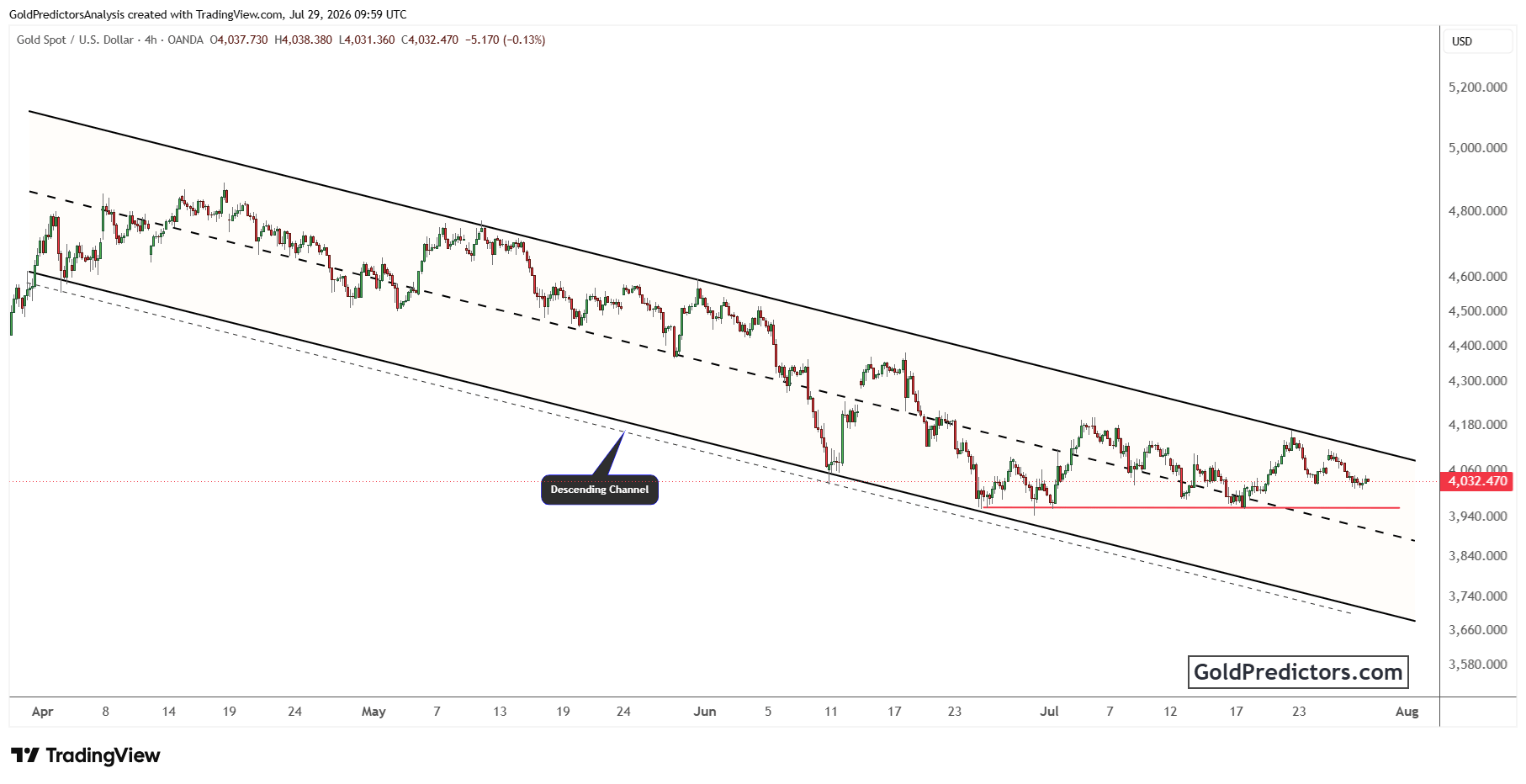
The gold chart below shows price continuing to trade within a well-defined descending channel that has guided price action for several months. The upper trendline continues to act as dynamic resistance, and every recovery has struggled below this level. This structure confirms that the broader corrective phase remains intact while price stays below channel resistance.
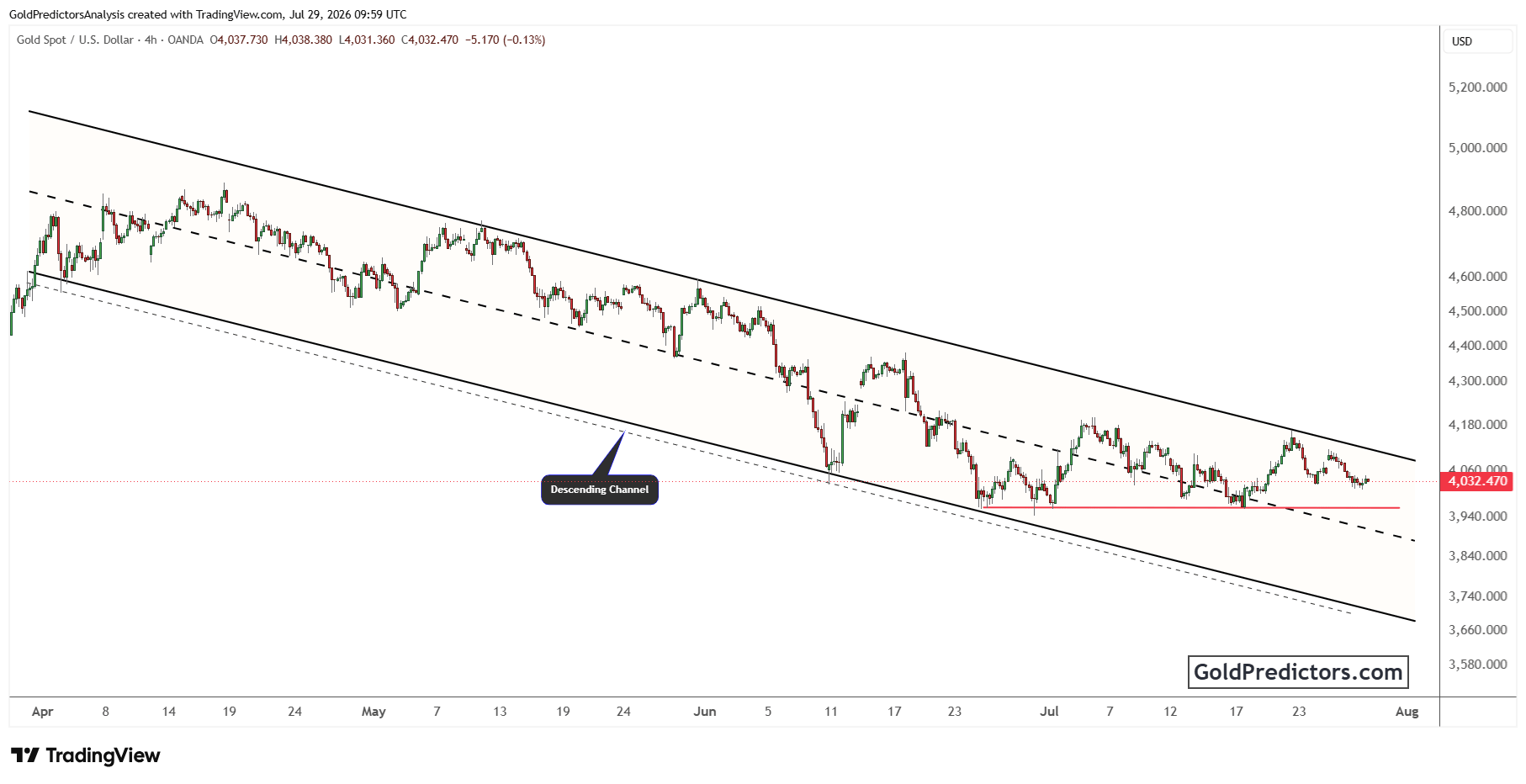
Gold is now holding above an important horizontal support zone, which is providing short-term stability. This level has prevented additional downside during recent pullbacks and remains a key area to watch. A sustained move below this support could weaken the near-term outlook, while holding above it would keep the current consolidation intact.
Recent price action indicates that gold is stabilizing within the descending channel after its recent decline, rather than signaling a renewed uptrend. The channel continues to define the broader market structure, with the upper boundary acting as resistance while horizontal support helps contain further downside. As long as gold remains below the channel resistance, the broader corrective phase is likely to remain in place.
Gold forecast: Fed guidance could set the next market direction
Gold remains in a corrective phase as markets await the Federal Reserve’s policy decision and guidance from Chair Kevin Warsh. Renewed geopolitical tensions continue to support safe-haven demand, but expectations for higher interest rates are limiting upside potential. From a technical perspective, gold continues to trade below short-term descending resistance while holding above an important support zone. A sustained move above channel resistance could improve the near-term outlook, while failure to do so would keep the broader corrective phase intact.
About The Author