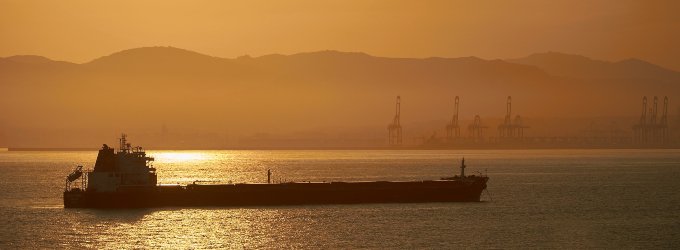
(Bloomberg) — A growing number of Iranian oil tankers are sitting idle off the country’s coast as a renewed U.S. naval blockade disrupts crude exports and increases pressure on Tehran’s energy revenues, according to shipping data and market analysts.
Roughly 50 laden tankers carrying crude oil, refined products and liquefied petroleum gas (LPG) were waiting off Iran’s coastline in the Persian Gulf and Gulf of Oman as of Tuesday, according to nonprofit group United Against Nuclear Iran (UANI). That compares with 45 vessels a week earlier and 36 when the blockade was reinstated on July 14.
The U.S. action is aimed at restricting activity at Iranian ports, slowing exports while also preventing empty tankers from returning to load new cargoes.
“The blockade seems effective,” Charlie Brown, an adviser to UANI, said, noting that while some smaller vessels continue loading LPG and other petroleum products, crude shipments remain heavily constrained.
The shipping bottleneck comes as Washington and Tehran continue discussions on reopening the Strait of Hormuz. Qatar said a draft proposal has been prepared, while officials from both countries have expressed optimism about restoring shipping through the strategic waterway.
According to UANI, it has not tracked any laden Iranian crude tanker successfully leaving the Gulf of Oman without encountering U.S. enforcement since the blockade resumed, although some vessels may have avoided detection by disabling their tracking systems.
The export disruptions have reduced the availability of Iranian crude cargoes, with traders reporting fewer offers and higher asking prices. Discounts for Iranian Light crude narrowed to about $4/bbl below ICE Brent, compared with approximately $5/bbl a week earlier.
At the same time, weak refinery demand in China—the largest buyer of Iranian crude—is contributing to rising floating storage. Independent refiners in Shandong province continue to operate below normal utilization rates as refining margins remain under pressure.
Data from Vortexa show Iranian crude held in floating storage, defined as cargoes on vessels idle for at least seven days, has increased 14% over the past month to approximately 135 million bbl. Additional clusters of Iranian tankers have also been observed off Malaysia and near Sri Lanka, underscoring the growing volume of crude awaiting buyers as export constraints persist.
Analysts said that if the blockade continues, the limited pool of Iranian crude already positioned outside the Persian Gulf will become increasingly important to regional buyers.
About The Author