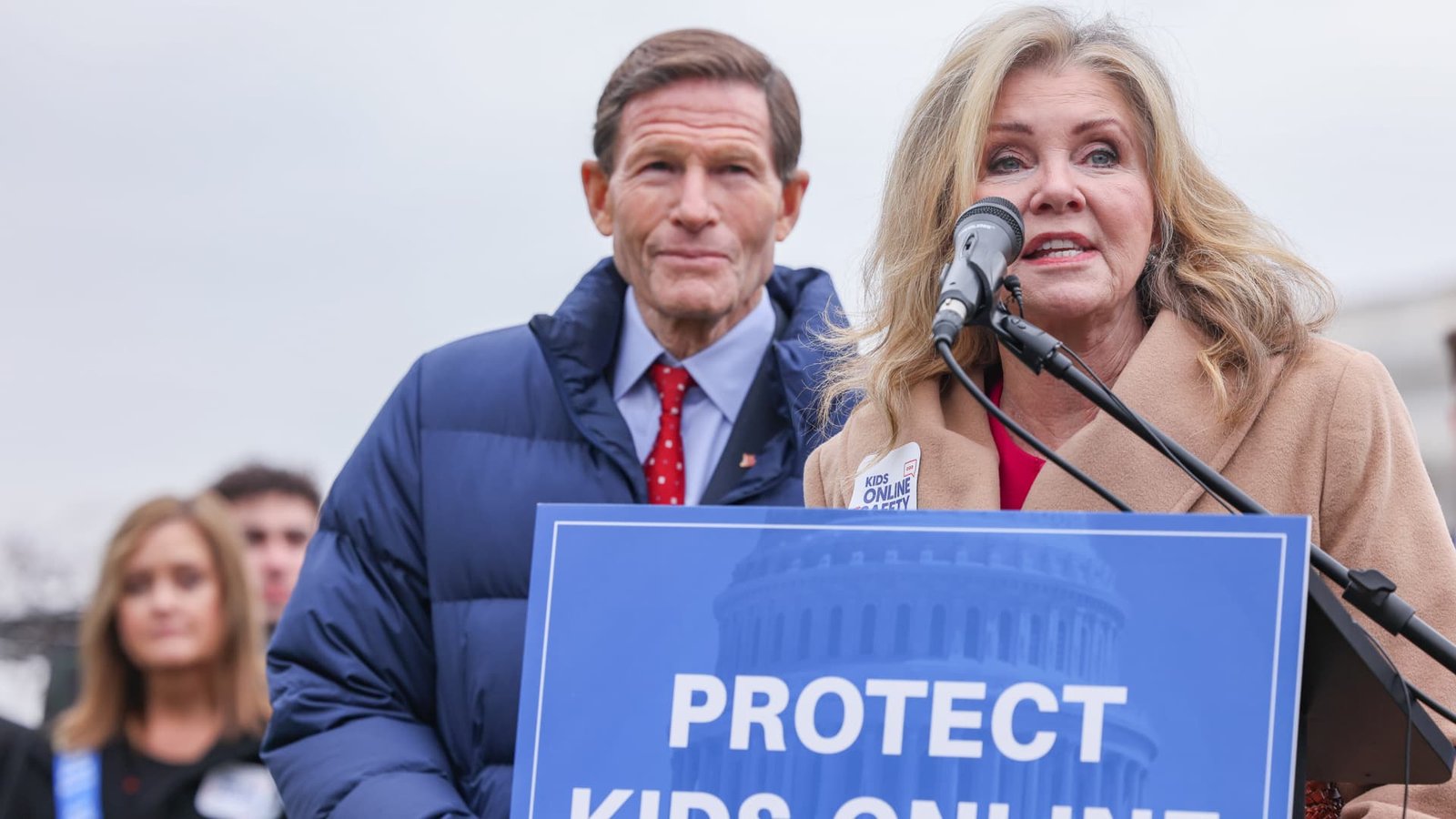
Sen. Marsha Blackburn (R-TN) speaks during a rally organized by Accountable Tech and Design It For Us to hold tech and social media companies accountable for taking steps to protect kids and teens online on January 31, 2024 in Washington, D.C.
Jemal Countess | Getty Images Entertainment | Getty Images
The Kids Online Safety Act, known as KOSA, cleared a key hurdle Wednesday by advancing through the Senate Commerce, Science and Transportation Committee.
The measure, which has strong bipartisan support, is aimed at establishing protections for children’s online safety by creating parental controls and studying the impact of social media on the well-being of kids.
The legislation was introduced by Sen. Marsha Blackburn, R-Tenn., with support from Sen. Richard Blumenthal, D-Conn. The proposal has 76 cosponsors in the Senate. A different version of the bill advanced out of the House in June as part of a broader package of proposals to protect children and teens online, though its path to becoming law remains murky.
“Children and teens face real risk of harm online, and we’ve lost too many. Congress needs to do more,” Sen. Maria Cantwell, D-Wash., the top Democrat on the committee, said Wednesday before the committee vote.
“It imposes a duty of care on social media platforms so that these companies have to take reasonable care to make sure they are not creating harm and implementing products that harm kids,” Cantwell continued.
The legislation advanced out of committee with a series of other measures aimed at kids’ online safety, including one bill that would require artificial intelligence companies to implement privacy safeguards in their online chatbots.
Multiple versions of KOSA have bounced around Congress in recent years, and the Senate passed one version of the bill in 2024. Disagreements between the two chambers have so far prevented the legislation from getting to the president’s desk.
The Senate version of bill includes a “duty of care” provision, which requires social media platforms such as Meta, Snapchat and TikTok to exercise reasonable care when creating and implementing design features that could harm kids. The House version does not, an omission that has drawn criticism from its Senate sponsors.
“Instead of passing a federal standard that will protect America’s children from Big Tech’s greed, the House of Representatives just passed legislation that is a pale imitation of Big Tech accountability,” Blackburn and Blumenthal said in a joint statement after House passage of the package in June. “The House’s decision to strip out the Duty of Care will only maintain the status quo in which Big Tech uses our kids as profit centers and leaves parents to pick up the pieces.”
The legislation faces additional headwinds. Civil liberties groups like the American Civil Liberties Union and the Foundation for Individual Rights and Expression have argued against versions of the bill, claiming they would jeopardize user privacy and contribute to government censorship.
The Senate committee also took up the bill one day before members were due to leave for their August recess. Precious few legislative days remain on the House or Senate calendar between now and November’s midterm elections, meaning the legislation could fall by the wayside as lawmakers prioritize government funding and other higher priorities.
But Sen. Ted Cruz, R-Texas, who chairs the Senate commerce panel, projected confidence.
“We’ve now passed KOSA again unanimously out of this committee. I’m confident we’ll pass it on the Senate floor, and then we’ll continue the hard work and negotiations with the House to get it over the finish line into the president’s desk,” Cruz said.
“I believe we’ll get there, but there’s more work to be done.”
About The Author