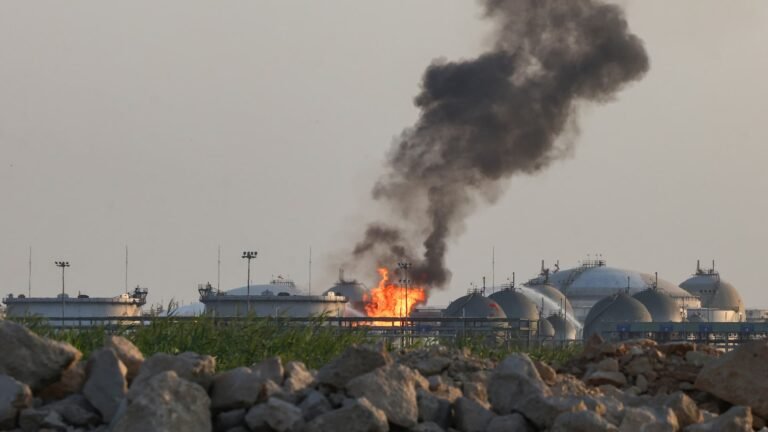

Gas prices could remain stubbornly high even after the summer driving season ends, as the world faces a tight fuel market due to a shortfall of refining capacity caused by the wars in Europe and the Middle East.
U.S. drivers could see pump prices hit a Labor Day record if Washington and Tehran do not reach an stable agreement on the Strait of Hormuz, said Patrick De Haan, head of petroleum analysis at GasBuddy. Prices set a Labor Day high of $3.83 per gallon in 2012, De Haan said.
Motorists are currently paying around $4.06, down from the 2026 high of $4.56 but still 36% above what gas cost on Feb. 27 before the U.S. and Israel attacked Iran, according to AAA data.
Prices should ease a bit in the fall as demand softens due to seasonal factors, De Haan said, but the global shortage in refining capacity could result in gas that is unusually expensive for that time of year.
The Iran and Ukraine wars have shut down refineries with about 5 million barrels per day of capacity, said Valero Chief Operating Officer Gary Simmons on the company’s earnings call last week.
“Refining fundamentals are very tight and getting tighter with the issues in Russia and the Mideast,” Brian Mandell, executive vice president for marketing at Philliips 66, said on the refiner’s Wednesday earnings call.
The tightness in refining explains why fuel remains expensive even as crude oil prices have dropped significantly from this year’s highs, ExxonMobil CEO Darren Woods told CNBC’s Squawk Box on Friday.
In the past, there was plenty of refining capacity so gas prices were set mostly by the cost of oil, Woods said. Today, the constraints on refining have created a “disconnect between crude prices and pump prices” the CEO said. Gas prices are now being set by the demand for refining — not crude oil, he said.
“That’s one of the reasons why we haven’t seen crude rise as quickly as people have thought, or we didn’t see product prices fall as crude prices came down because there is this disconnect in the marketplace,” Woods said.
U.S. oil prices have plunged about 10% this week to trade around $76 per barrel as President Donald Trump teases a potential deal with Iran to increase traffic through the Strait of Hormuz. Oil prices are up about 14% since the war started while retail gasoline is 36% higher than pump prices on Feb. 27.
Big disruption, big profits
Refiners are raking in bumper profits as they run at or near full capacity to meet robust demand while supply is short. They are benefiting from big margins between the input cost of crude oil and the sales price of products like gasoline and diesel, known as the crack spread.
The crack spread surged past $70 in late July, which was almost as much as a barrel of U.S. crude at the time. Some refineries are delaying maintenance to take advantage of these elevated margins, De Haan said.
“If you’ve got the refinery, you run it absolutely as hard as you can,” he said.
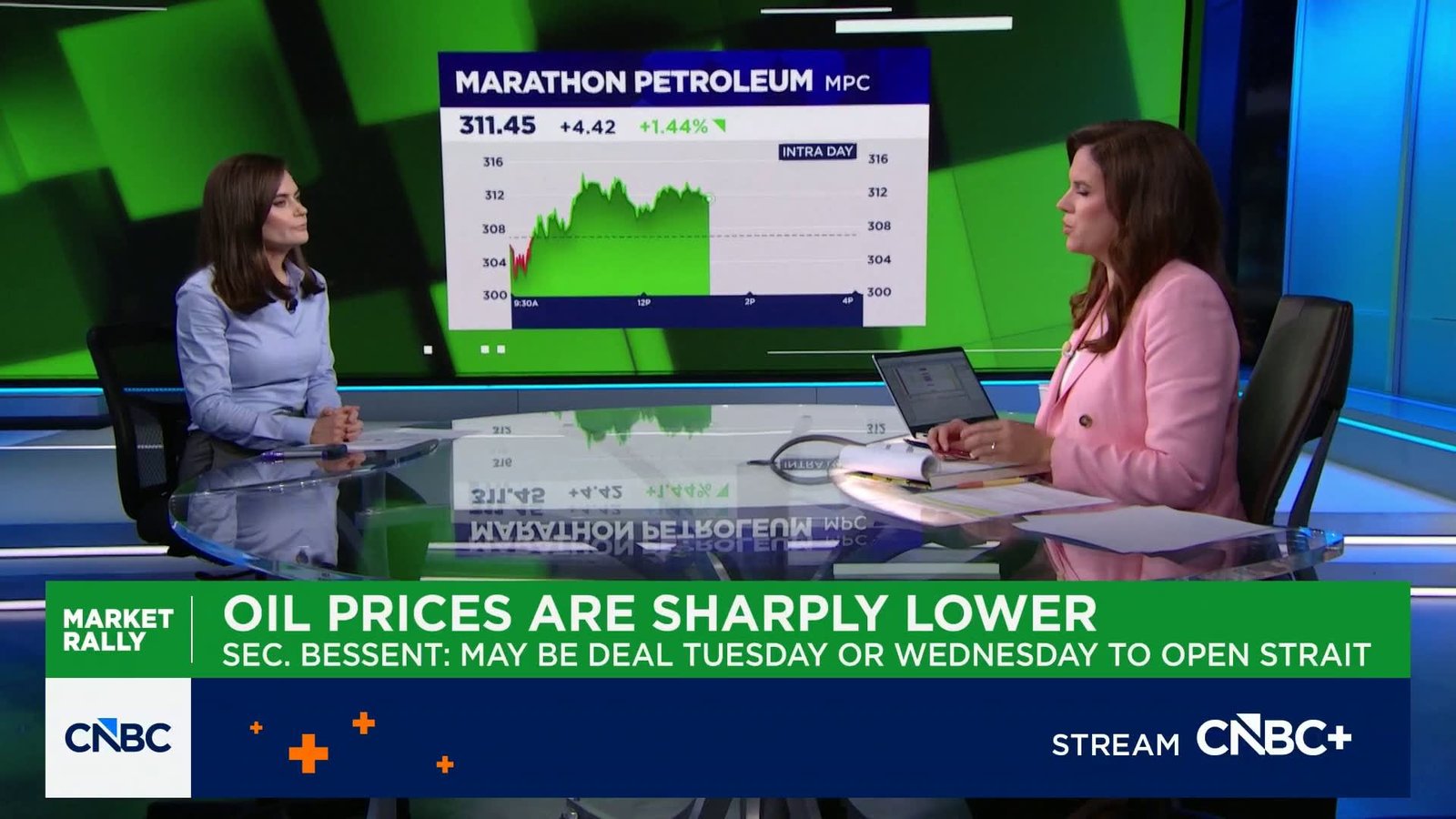
Valero‘s earnings for the second quarter soared more than 400% to $3.7 billion compared to the same period last year. The profits of Marathon Petroleum and Phillips 66 surged more than 300% to $5.1 billion and $3.8 billion, respectively, year over year.
Refineries on the U.S. Gulf Coast are benefiting from the import of Venezuela crude oil supplies and the waiver of the Jones Act, which has loosened the rules for shipping fuel between U.S. ports. Gulf Coast refiners can basically export gasoline and diesel wherever they want right now, De Haan said.
“Those refineries down the Louisiana and Texas coast, they have the most options in the world,” he said. “There’s not a better place to be a refinery in the world. The world is your oyster.”
The refining capacity available to meet demand is as low as it has ever been, Woods said on Exxon’s earnings call Friday. About 3 million bpd in the Middle East is not available due to the disruption in Hormuz, the CEO said.
“With respect to Persian Gulf conflict, the Middle East refineries have really been slow to come back online,” Marathon Petroleum CEO Maryann Mannen said on the refiner’s earnings call Tuesday. “Any further disruption in the region could cause further supply constraints to evolve.”
Ukraine’s drone attacks on Russian refineries have knocked out about another million barrels per day of capacity, Woods said. Moscow has banned diesel exports due to the attacks.
“Ukraine is being very effective at knocking Russian oil refineries offline,” De Haan said.
China, meanwhile, has stopped exporting which removes another couple million barrels per day from the market, the Exxon CEO said.
Phillips 66, for its part, estimates 7 million bpd of refinery capacity is down in Asia and the Middle East while 1.4 million bpd is offline in Russia, Mandell said. If Hormuz reopens, there will be more crude oil than product supply due to the refining constraints, he said.
“The refineries, depending on the damage and ability to get spare parts, are going to take a good long time to get back online,” Mandell said.
About The Author