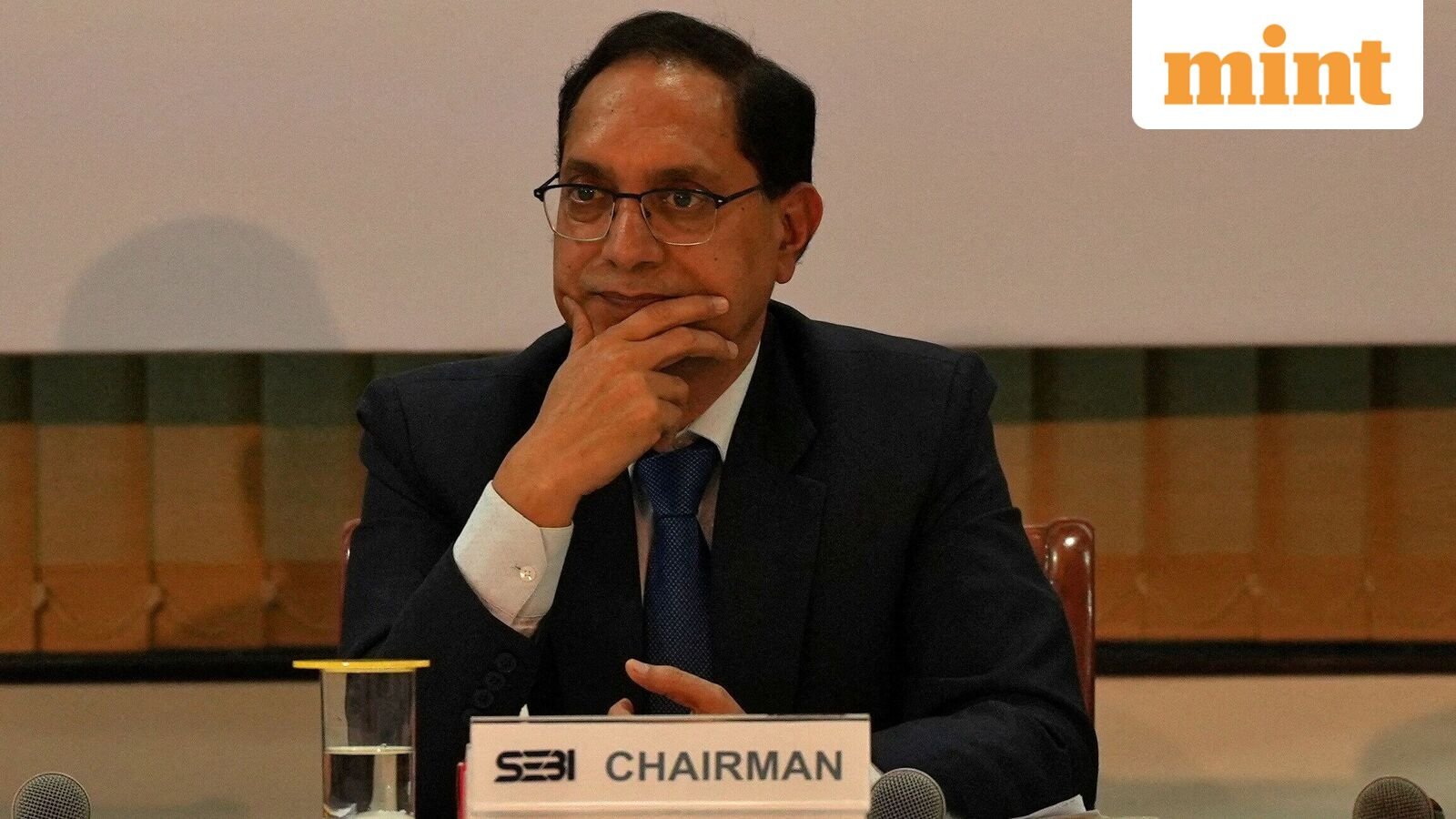
The closing auction session (CAS) for securities markets is “here to stay for sure”, said Securities and Exchange Board of India (Sebi) chairman Tuhin Kanta Pandey on Monday, even as the new mechanism faces criticism over low liquidity and sharp price swings.
Under CAS, buy and sell orders are pooled during a dedicated end-of-day window and matched at an equilibrium price that allows the maximum volume of shares to trade. The mechanism is aimed at improving price discovery and bringing India’s market closer to practices followed in other major markets.
Speaking at an event, Pandey said the market regulator would examine and address constraints in the mechanism, but ruled out abandoning it because some market participants want to trade options differently.
“We cannot just put out this thing (CAS) on this issue just because some people want to do options trading in the way they want to do options trading,” the Sebi chief said.
His comments come two weeks after India introduced its first closing auction session for securities markets on 3 August. The session currently covers 208 derivative-traded stocks and replaced the long-standing volume-weighted average price (VWAP) system for determining closing prices.
However, its debut has been marked by thin trading and unusually sharp moves. On the first day, the Nifty50 surged 1.6%, compared with a 0.7% gain in the Sensex. The Nifty’s move was driven by a 200-point jump in the final two minutes of the order-closing period, raising questions about the divergence between the two indices and between Nifty stocks and their futures.
Mint reported on 17 August that most domestic traders and retail investors had stepped aside from the CAS window, making it the leanest trading period of the day.
Last week, Pandey said Sebi had found no signs of manipulation in CAS so far.
The chairman also said Sebi’s consultation paper on the securities lending and borrowing mechanism (SLBM) is expected “very soon”. The regulator has formed a working group to revamp the framework, nearly two decades after its introduction, as part of efforts to better link cash equities and derivatives and improve price discovery and reduce settlement stress.
SLB is a mechanism where investors lend securities to borrowers for a specified period in exchange for a fee. Borrowers may use these securities for short selling or other purposes. The system facilitates efficient market functioning, improves liquidity, and provides additional income opportunities to security holders.
Greater participation in SLBM will help improve liquidity in CAS too, Pandey said.
About The Author