(WO) – The Offshore Northern Seas (ONS) conference and exhibition has once again been underway this week, featuring plenty of discussions, debates, product exhibits. and technology innovation announcements. Although a final figure is yet to be determined, it would seem reasonable to say that somewhere between 60,000 and 70,000 attendees are sampling what ONS has to offer.

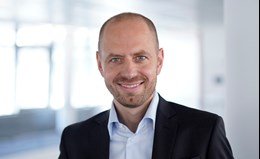
Fig. 1. Siemens Energy President and CEO Christian Bruch. Image: Siemens Energy.
Included in that offering earlier this week was the two-hour Opening Ceremony. What follows is a significant sampling of what was said and discussed in those first two hours.
Christian Bruch and Ursula von der Leyen. Up first to deliver remarks to the crowd was Siemens Energy President and CEO Christian Bruch, Fig. 1. His theme seemed to be laced heavily with an emphasis on renewable fuels and artificial intelligence (A.I.). He spoke of the world adding more than 580 gigawatts of new renewable power capacity in a single year. He also stated that “we are living through an era of extraordinary risks and extraordinary opportunities. The world is becoming more fragile and more capable, more dangerous and more inventive.”
Bruch spent part of his time discussing the ONS theme this year, which is “Courage.” What that means in the context of energy, and more specifically oil and gas, could be subject to wide-ranging interpretation. As he explained, “Not because courage sounds good, because courage in a world of uncertainty is a necessity. Courage means tackling the hard stuff, courage means making decisions before all answers are available, and courage means not reacting to change, courage means shaping the future. That challenge runs through every discussion we will have…” He said it runs through five themes: Geopolitics, technology, climate, finance, and leadership.
Bruch then explained the relationship of courage to geopolitics. “Do we have the courage to act? In geopolitics courage means also accepting reality. Energy security and national security are closely interlinked. We see it in Ukraine, we see it the Middle East, we see in wherever critical infrastructure becomes a strategic target. Geopolitics has become one of the defining forces to energy policy, and in technology, courage means going from invention to implementation.”

Fig. 2. TotalEnergies Chairman and CEO Patrick Pouyanné. Image: TotalEnergies.
One other item that Bruch spend a fair amount of time on was A.I. “Artificial intelligence is transforming economies at extraordinary speed, but AI alone is not running on algorithms,” declared Bruch. “I need power, and power needs lots of equipment. While everybody wants AI, we have to talk about the infrastructure and the investments behind it. Innovation matters, but execution decides who wins.”
Following Bruch’s various musings, EU President Ursula von der Leyen made an appearance via a video recording. Her message, fair to say, was mostly about Europe working together and getting rid of fossil fuels. “In just five years, the world has faced two major energy crises,” declared von der Leyen. “Europe has weathered these storms because we acted together. We diversified supplies with trusted partners, with Norway at the heart of this effort. We worked with industry to keep homes heated and hospitals running in Ukraine. And through coordinated action after the closure of the Strait of Hormuz, we helped to stabilize markets and reassure citizens and businesses.”
President von der Leyen then proceeded to remark further on a theme that can only be described as fossil fuels bad, clean energy good. “As long as Europe remains dependent on fossil fuels, we remain vulnerable,” opined von der Leyen. “And this is why we are accelerating the transition to clean, homegrown energy. This is already making a difference. Last year, over 70% of the European Union’s electricity came from clean sources. And for the first time, wind and solar alone generated more electricity than all fossil fuels combined.” The remainder of her remarks continued to re-state these themes.

Fig. 3. Sara Akbar, CEO, Oilserv Kuwait. Image: SPE.
First session, including Pouyanné and Akbar. Following Bruch and von der Leyen was the first panel of the morning. Among the more notable participants in this group were TotalEnergies Chairman and CEO Patrick Pouyanné and Oilserv CEO Sara Akbar from Kuwait (Figs. 2 and 3).
For his part, Pouyanné (Fig. 2) expanded a bit on the courage and leadership theme by explaining how he has gone about running TotalEnergies over the last 12 years. “So, when I became CEO, I engaged the whole company, and 30,000 people contributed to what do we want Total Energy to be in 20 years,” explained Pouyanné. “This is something we’ve done in 2016, and we repeated it in 2020. We want a clever company, which will remain an online gas company. We also want to be a larger energy company—electricity will represent 20% of a business by 2030. And I can tell you, since I’m CEO, and this is what I learned from government, from Ukraine, everything can happen.”
Pouyanné went on to say that the energy industry needs to be ready to adapt. He added that such a large company as TotalEnergies needs a strong capacity to adapt. Acknowledging that energy security is a greater issue now than some years back, he also stressed that TotalEnergies will retain consistency with respect to renewables. “We are the last major to continue to invest in renewable energy, I would say, but we will continue…we need to continue to invest more in online gas, because this is the energy of today, because this is what the society is claiming. People are afraid to have a lack of diesel or gasoline suddenly, and they cannot afford to see a crisis of the natural gas price again, so we need to have an abundance of energy.”
Akbar has a long, illustrious career in the Kuwaiti oil fields, having worked as an engineer onshore and offshore while also participating in extinguishing oil well fires left by then-Iraqi President Saddam Hussein’s retreating army in 1991. She went on to become one of the first woman CEOs in the oil sector of the Arabian Peninsula.
Picking up on the ONS theme of courage and reflecting on her own country’s difficulties in 1990-1991, Akbar said, “I think courage is the ability to say no, to say stop. So, what I cannot comprehend is for Europe to continue in this war with Ukraine. You already have two million casualties; you have more than 600,000 people dead. So, how much is enough for you to wake up one day and say, enough, stop. I encourage you to do so because, this cannot continue. It’s so devastating for Europe.”

Fig. 4. IEA Executive Director Fatih Birol. Image: IEA.
Prompted by moderator Amrita Sen to talk about the effects of the current Mid-East war on Kuwait, Akbar noted, “We find ourselves entangled in this very strange situation, this war that we were never even consulted with. And I say this jokingly, I don’t understand why the Iranians are shooting at us… It’s very strange that we’ve been targeted as a country… we, as Kuwait, do not have exit. We cannot export.”
Later session-IEA’s Birol. In another session, International Energy Agency Director Fatih Birol was the principal keynote speaker, Fig. 4. He made a particularly stark observation, noting that at the beginning of the decade, there were two main arteries bringing energy to the markets. One of them is from the rich West Siberian reserves of Russia to Europe. And the second one has been bringing huge resources from the Middle East to the growing Asian economies and beyond. “And now today, both of them are paralyzed.”
Commenting further on these two routes, Birol said that Europe has decided, as of 2027, to completely stop getting LNG or pipeline gas from Russia. And when it comes to Iran, he said he may be a bit more skeptical or more pessimistic. “The vase (Strait of Hormuz) is broken. Once it is closed, it can be closed again… We will still get oil and gas from the Middle East, but it will be very difficult to get back where the things were before 28th of February.

Fig. 5. Equinor President and CEO Anders Opedal. Image: Equinor.
Opedal and Sawan. The final session of the morning mostly featured observations from Equinor President and CEO Anders Opedal and Shell CEO Wael Sawan.
For his part, Opedal (Fig. 5) wryly noted that “in January and February, when I met investors, the key question was how low did I think oil prices and gas prices would go during 2026. In March, the question was, how high did I think the oil prices and the gas prices [would continue]. I think volatility is what we see in the energy market; we have seen it for a while, and I think this is also going to be what we see in in the future. It’s the new norm.”
Opedal also acknowledged the special role that Norway and Equinor play in natural gas supplies. “We are the largest provider of gas to Europe, the largest of oil; 20% of the oil, 33% of the gas goes to Europe. Commenting further on gas in Europe, Opedal said, “obviously the gas storage level is much lower than we have [had] in the past, one of the lowest in years,It doesn’t necessarily mean a crisis… but that’s why it’s so important that we, on the Norwegian Continental Shelf, focus on safety, protecting our infrastructure, and make sure that Europe can trust that, even in a cold winter.”
Speaking from his own angle, Shell’s Sawan (Fig. 6) said he wanted to start with a thought about his colleagues, “who continue to suffer out in the Middle East at the moment. Shell has 2,500 staff there, another 10,000-plus, if you have family members. We had one of our facilities, Pearl GTL, where one of the trains was hit with a missile, and thankfully everyone had been evacuated. But those are the risks that people are facing.”

Fig. 6. Shell CEO Wael Sawan.
Referencing Opedal’s comments on volatility, Sawan said, “I think what Anders says about volatility is absolutely true. Volatility is not new for the energy sector. It has been magnified of late. And the metaphor I used recently was, yes, the world has been incredibly resilient from an energy perspective, and generally from an economic perspective in handling these significant, significant discontinuities.”
Looking at the immediate crises in the Middle East and Ukraine but also beyond, Sawan said, “I think there’s some urgent action we need to take to be able to meet the needs of here and now, and that does mean we’re thinking weeks, we’re thinking months. But we need the keep in perspective the multi-decade journey that we are on, that I think, irrespective of what’s happening today, we need to be able to follow the fundamentals. And the fundamentals continue to be, and we hope they will continue to be, over 100 million people every single year, between now and 2050, moving into the global middle class, drawing on the air conditioning that was talked about, drawing some of the luxuries. Only 20% of people in today’s world have gone on an airplane. All of that is going to play a role in the continuing growth of the energy demand that we see into the future.
About The Author