Apple has generated a remarkable return of more than 2,000% under CEO Tim Cook since 2011.
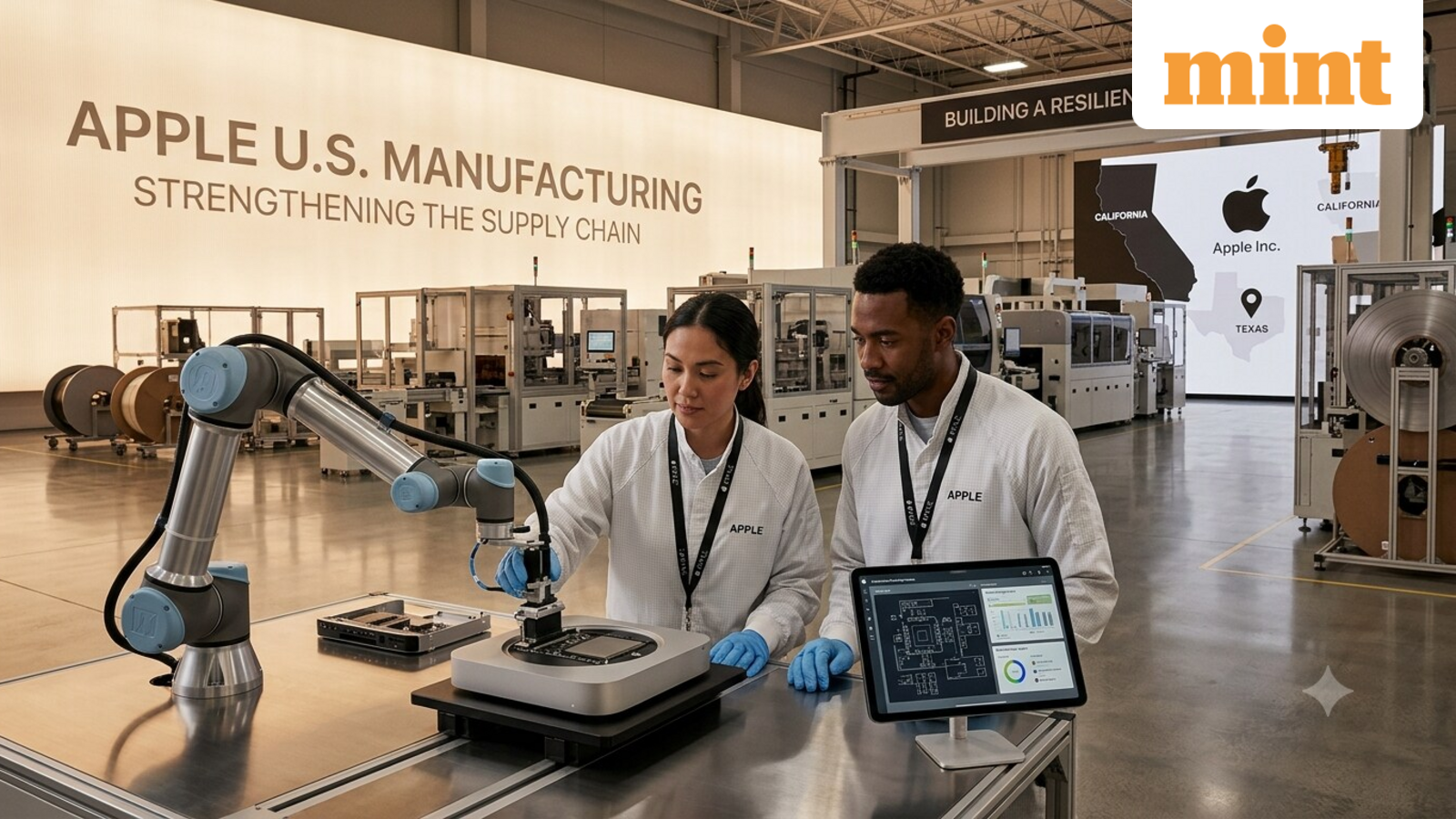
As Cook gets ready to pass the leadership baton to John Ternus, Apple’s senior vice president of hardware engineering, the technology giant is also stepping up efforts to strengthen its US supply chain, including a planned $60 billion investment in Texas.
The strategy is aimed at reducing Apple’s exposure to potential tariff disruptions while helping protect profit margins and earnings. John Ternus is scheduled to take over as CEO on September 1, allowing him to concentrate on Apple’s products and services as the company works to make its manufacturing network more resilient.
$600 Billion US Manufacturing Push
The Texas investment forms part of Apple’s broader four-year commitment of $600 billion toward manufacturing and supply-chain activities in the U.S., announced last year.
Apple is not planning to manufacture iPhones domestically. However, it intends to produce the Mac mini at a new facility in Houston. The plant will also manufacture and ship Apple’s advanced artificial intelligence servers.
Apple has also entered into a long-term agreement with Broadcom to develop and manufacture custom silicon components and advanced wireless technologies. The partnership is expected to be worth more than $30 billion.
On the company’s fiscal Q3 earnings call, Cook said: “This marks our largest-ever American manufacturing program commitment. It’s also an important step forward in our work to build an end-to-end silicon supply chain here in the U.S.”
Although producing iPhones in the U.S. would likely require substantially higher prices, increasing the proportion of its supply chain sourced domestically could give Apple greater flexibility as tariff and trade policies evolve.
Tariffs Have Already Affected Apple’s Results
Apple’s most recent quarterly results highlighted the potential impact of tariffs on its financial performance. The company reported a gross margin of 50.1%, with tariff refunds accounting for 2 percentage points of that figure.
Diluted earnings per share increased 29% from a year earlier to $2.02, including an $0.11 contribution from tariff refunds. Apple has said it plans to reinvest those refunds in strengthening its U.S. supply chain.
The refunds relate to tariffs that Apple had already paid before the U.S. Supreme Court ruled in February 2026 that certain tariffs were unlawful. However, the ruling does not remove the possibility of new tariffs being introduced under other laws, giving Apple another reason to diversify its manufacturing base.
Memory Costs Pose a Fresh Challenge
Apple’s immediate concern is rising memory costs. Company executives described the recent jump in memory prices as a “100-year flood.”
For the fiscal fourth quarter ending in September, Apple expects gross margin to fall between 47% and 48%. The forecast includes a one-percentage-point boost from tariff refunds.
Cook is therefore preparing to leave Ternus with a more diversified and resilient U.S. supply chain. Analysts continue to forecast low-double-digit earnings growth for Apple over the longer term.
While soaring memory prices could weigh on results in the near term, Apple’s increased investment in domestic production could provide a form of long-term tariff protection, helping the company limit the impact of future trade-policy changes on margins and earnings.
About The Author