Review
Federal Reserve Chairman Kevin Warsh used his Jackson Hole speech Friday to answer critics of his muddled July news conference, delivering a clearer warning that stubborn inflation could push the Fed toward a rate hike.
— Matt Peterson, “Analysis: Kevin Warsh Sharpens Inflation Warning at Jackson Hole, Signaling Possible Rate Hike,” CNBC, August 28, 2026.
Kevin Warsh’s Jackson Hole speech sent U.S. stocks tumbling on Friday, but they still capped off a positive week. In his speech, Warsh reaffirmed his hawkish stance and the Fed’s commitment to a 2% inflation target. Interestingly, this is almost a direct contradiction to the Treasury Department’s interventions in recent weeks, which were designed to keep interest rates from rising.
The good news is that the Nasdaq led the way higher after Nvidia reported blockbuster earnings, showing that the AI trade remains alive and well. The question now is whether the Lunar Eclipse that squared Uranus marked a blowoff top of sorts for this market-moving name.
European markets ended mixed on the week, with only the Zurich SMI finishing lower. The FTSE, Amsterdam AEX, and German DAX all closed up and near the highs of the week. The Asia and Oceania region fared a bit better, with the Shanghai Composite, Japanese Nikkei, and the Australian All-Ordinaries all notching solid gains.
Precious metals didn’t like Warsh’s hawkishness either, as they finished at the lows of the week. Treasuries fared poorly as well, although intermarket bullish divergence between T-Notes (10-year) and T-Bonds (30-year) remains in effect. Cryptos were flat on the week as they digested their impressive gains from the prior week. In the big picture, it appears that elevated Crude Oil prices continue to strain the macroeconomic environment. It finished lower on the week but well off the lows.
Short-term geocosmics
Just days after Virgo season started, a Lunar Eclipse unfolded in a T-square to Uranus. This upcoming week starts with Jupiter trine Saturn, an important aspect with respect to the synodic cycle that reset with the conjunction in Aquarius in December 2020.
The Jupiter–Saturn synodic cycle is otherwise known as the “Great Chronocrator.” This planetary pair is important not only because of the father-son mythological dynamic, but also because, for most of human history, they were considered the outermost planets and marked the limits of the natural world.
The trine kicks off a new central time band that’s going to be in effect until July 2027. Given that it’s taking place in fire signs, it could add an element of passion, excitement, and adventure to the mundane mix. Given that Saturn is in his detriment in Aries, one would think that Jupiter may be in a position to maintain an energetic advantage over his symbolic father. After all, Jupiter is in the regal sign of Leo—the sign of the king—and he is the king of the gods.
Jupiter in Leo may also prove to be beneficial for Gold throughout its transit, but let’s not forget that Leo is a fun-loving sign as well. If anything, humanity needs a reminder about the importance of having fun, and how beneficial it is. In terms of financial markets, look for consumer discretionary—people’s wants—to have a bit of a run throughout this transit. With Saturn in Aries, people may not fully gauge the consequences of their decisions, and prefer to live in the moment instead. They’ll eventually have to reconcile that when Saturn transits Taurus. But in the meantime, let the good times roll.
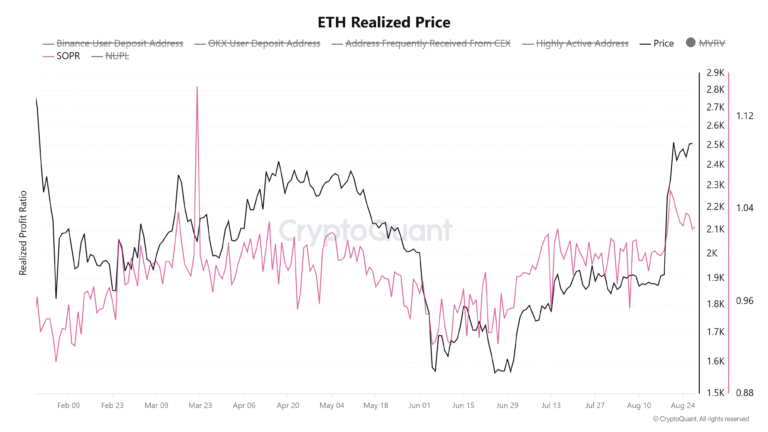
Mars will also square Saturn this week, so be on the lookout for new geopolitical developments. During the following week, Uranus goes retrograde on the same day that Mercury ingresses into Libra and Venus ingresses into Scorpio. Whenever Uranus changes direction, we look for breaks in technical support or resistance, but of particular consequence may be AI, software, or communications-oriented stocks this time around. It’s also worth noting that Venus’s transit through Libra satisfied the 20% or greater move study for Ethereum.
Longer-term thoughts (and opinion)
“Only in finance is “nobody can know” worn as a badge of wisdom. And only in finance is it used as an excuse to prepare for nothing… I work the way the sciences work: observe the data, respect the structures, form the hypothesis, state it in advance—and adjust it without ego if developments take another turn.”
—Henrik Zeberg, on X: @HenrikZeberg.
Over the past few weeks, a major backlash has been mounting against artificial intelligence and data centers. It’s grown to the point that, here in the United States, politicians across the political spectrum have gone out of their way to condemn new data centers. There have even been promises to halt all new construction, most likely until the political dust settles after the midterm elections in November.
The backlash against data centers mainly stems from environmental concerns and rising electrical costs, but let’s be real – the material benefits of these data centers are being concentrated into the hands of the tech sector’s robber barons, and unless you’re already invested in this world-changing technology, there’s been little monetary benefit to be gained.
One of the key principles to understand when it comes to behavioral economics is how people respond to incentives. Never mind that artificial intelligence has the potential to dramatically improve humanity’s quality of life into the future—the main question people ask is, “How is this benefiting me *now*?”
As a millennial, I’ve witnessed America’s political dysfunction play out for pretty much my entire life. While Americans sit and debate whether AI is good or bad, right or wrong, just or unjust, the one country that is actually competing with us on this technology is barreling ahead regardless—and that country is China.
China is not halting its AI development and data center construction while its citizens debate the latest talking points, or whether they like it or not. This statement isn’t meant to cast judgment on anyone or anything surrounding the matter; it’s just the truth. And when it comes to markets, capital always flows along the path of least perceived resistance.
China’s AI models have already made significant strides against U.S. models, and several are now far less expensive to run. For observers of the cosmos, markets, and history, one might see how the U.S. could finally be reaching an inflection point with this technology and its status as the world’s economic kingmaker.
The geocosmic backdrop is very straightforward. Uranus is trine Pluto in air signs, Gemini and Aquarius. Intelligence and data have become commodified. If one considers China’s natal chart for October 1, 1949 in Beijing (using 3:15 PM BJT time), Uranus and Pluto form a powerful Grand Trine configuration with China’s natal Sun, Moon, and Ascendant.
Here’s the thing America needs to understand—AI is going to move forward with or without our consent. The United States does not have a unique right to be the center of the global economy and technological innovation, and it’s clear that this status has been increasingly taken for granted over the years. And despite the endless complaints, many Americans fail to realize how much their standard of living is subsidized by the rest of the world via the reserve currency status, which is a direct extension of the country’s economic innovation and prowess.
One of our major forecasts here at MMA is the gradual migration of economic and financial power to the East. This isn’t going to happen overnight, next week, or even next quarter, but it’s becoming more evident how this transformation will play out.
To borrow a quote from one of the defining figures of the last time Neptune was in Aries, “A house divided against itself cannot stand.” Abraham Lincoln used these words during his 1858 election campaign, though the quote actually has biblical origins.
To be clear, I’m not saying the debate over data centers will contribute to a future civil war, and I have serious doubts that one would even occur, but this is yet another microcosm of the growing issues the Western world faces in the years to come.
Remember, people respond to incentives. The tech robber barons that AI has exalted have not lived up to theirnoblesse oblige. The solution may be as simple as royalty checks for citizens in localities where data centers are built, similar to oil and gas mineral rights, tax breaks, or even environmental guarantees.
In theory, this should be resolved through the results of the midterm elections, but if recent history serves as a guide, should we hold our collective breath? And more importantly, do we really think that “Global Capital” is going to wait around for Americans to stop arguing over AI before pivoting toward financing China’s AI boom?
Capital behaves like matter. It is never destroyed; it simply changes form and migrates from one country, sector, or asset class to another. Keep in mind the Chinese equity indices haven’t even taken out their all-time highs since 2008, and if what we’ve seen in Japan or South Korea is any indication, China may be the next destination for the AI boom.
About The Author