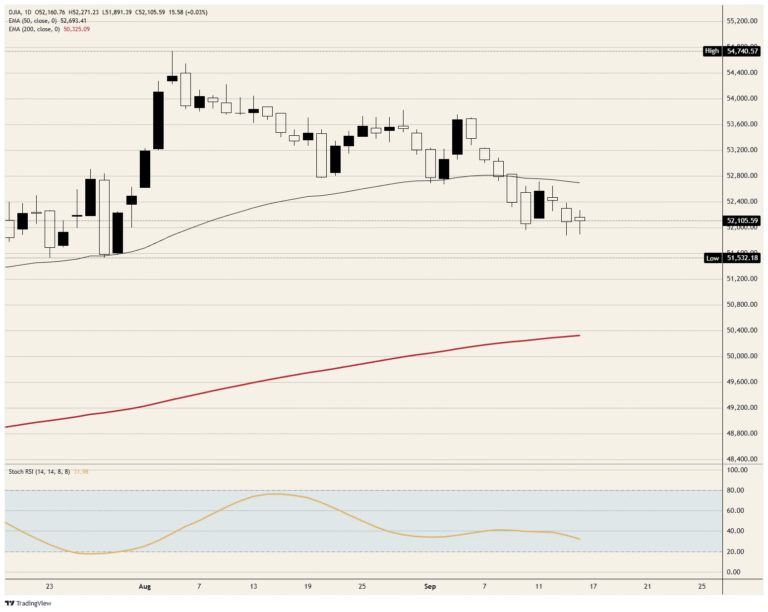
The week that was
It has already been a positive week for the US Dollar (USD), but a hawkish speech from Chair Kevin Warsh at the Jackson Hole Symposium may have laid the groundwork for a more sustained rebound in the Buck.
Indeed, the US Dollar Index (DXY) has regained its composure and is on track to end the week with solid gains, reviving expectations of a potential re-test of the psychological 100.00 barrier sooner rather than later.
Meanwhile, investors appear to have digested last week’s turbulence in the US bond market. With the geopolitical front unusually quiet and no fresh verbal intervention from Japan’s Ministry of Finance (MoF) or the Bank of Japan (BoJ), markets were left with few distractions, putting the focus squarely back on US data and, above all, Warsh’s message.
And he has not disappointed…bulls at least.
A little help from Jackson Hole
Kevin Warsh delivered one of the week’s clearest warnings on inflation at the Jackson Hole Symposium, arguing that the Federal Reserve (Fed) must be confident that underlying price pressure is moving toward its objective. Although this summer’s inflation data were better than expected, he said they did not demonstrate a meaningful change in underlying trends. The Fed’s 2% PCE target remains “firm and fixed,” Warsh claimed, and its predominant focus should currently be on prices.
Warsh also questioned whether monetary policy is providing much restraint. He said he would be “hard-pressed” to describe financial conditions as restrictive, noting that credit and loan markets showed few signs of policy tightening. At the same time, consumer spending remained healthy, labour markets stable and the broader economy appeared to have strengthened, giving the Fed room to concentrate on inflation.
He acknowledged that medium-term inflation expectations and market pricing remained broadly reassuring but warned that such expectations can appear durable until they suddenly change. Wage growth, meanwhile, was moderate but not necessarily a reliable guide to future inflation. Warsh said a good majority of policymakers had considered waiting at the July meeting to be the wiser course but stressed that the Fed must ultimately deliver price stability.
Jackson Hole speech strengthens case for rate hikes
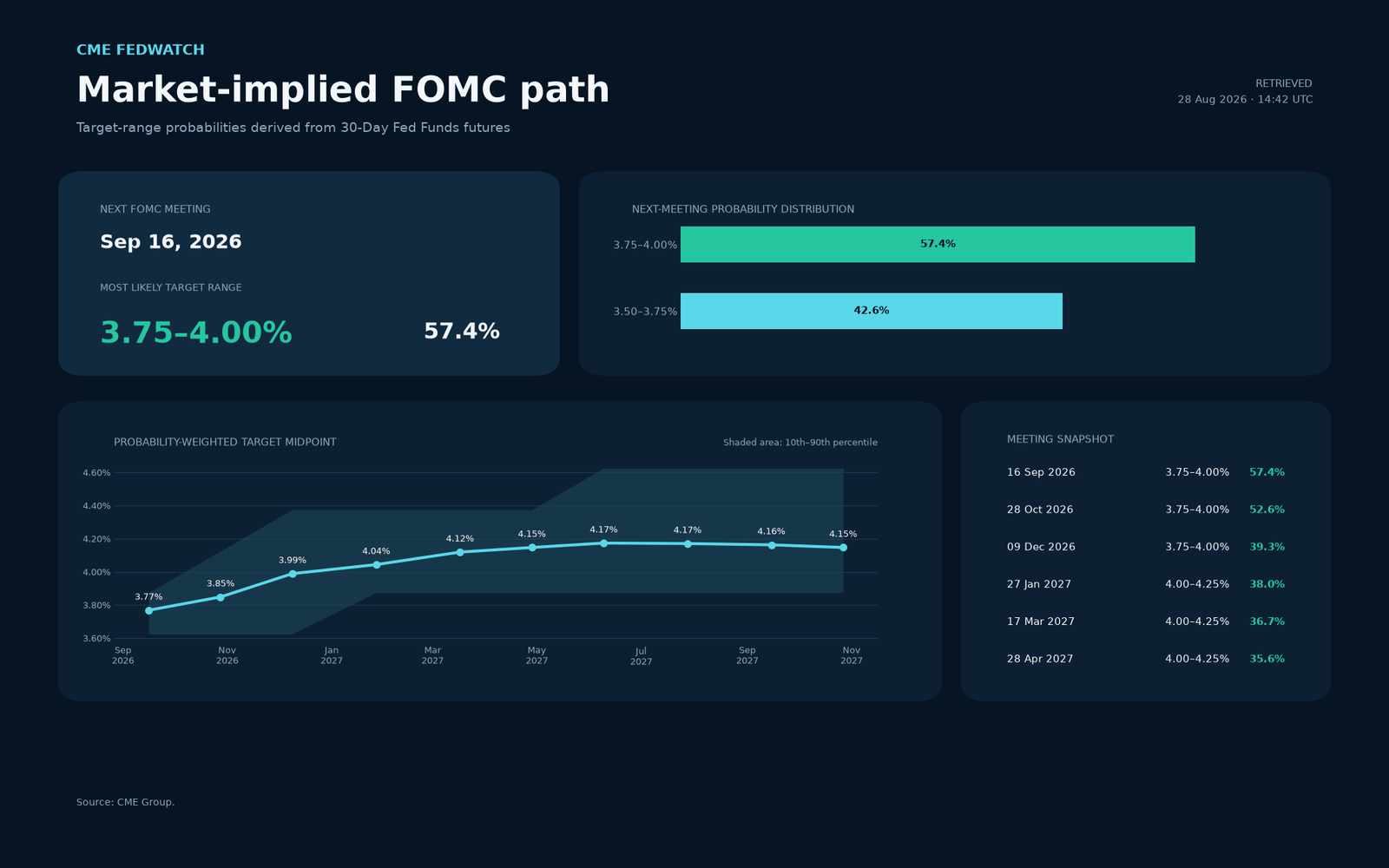
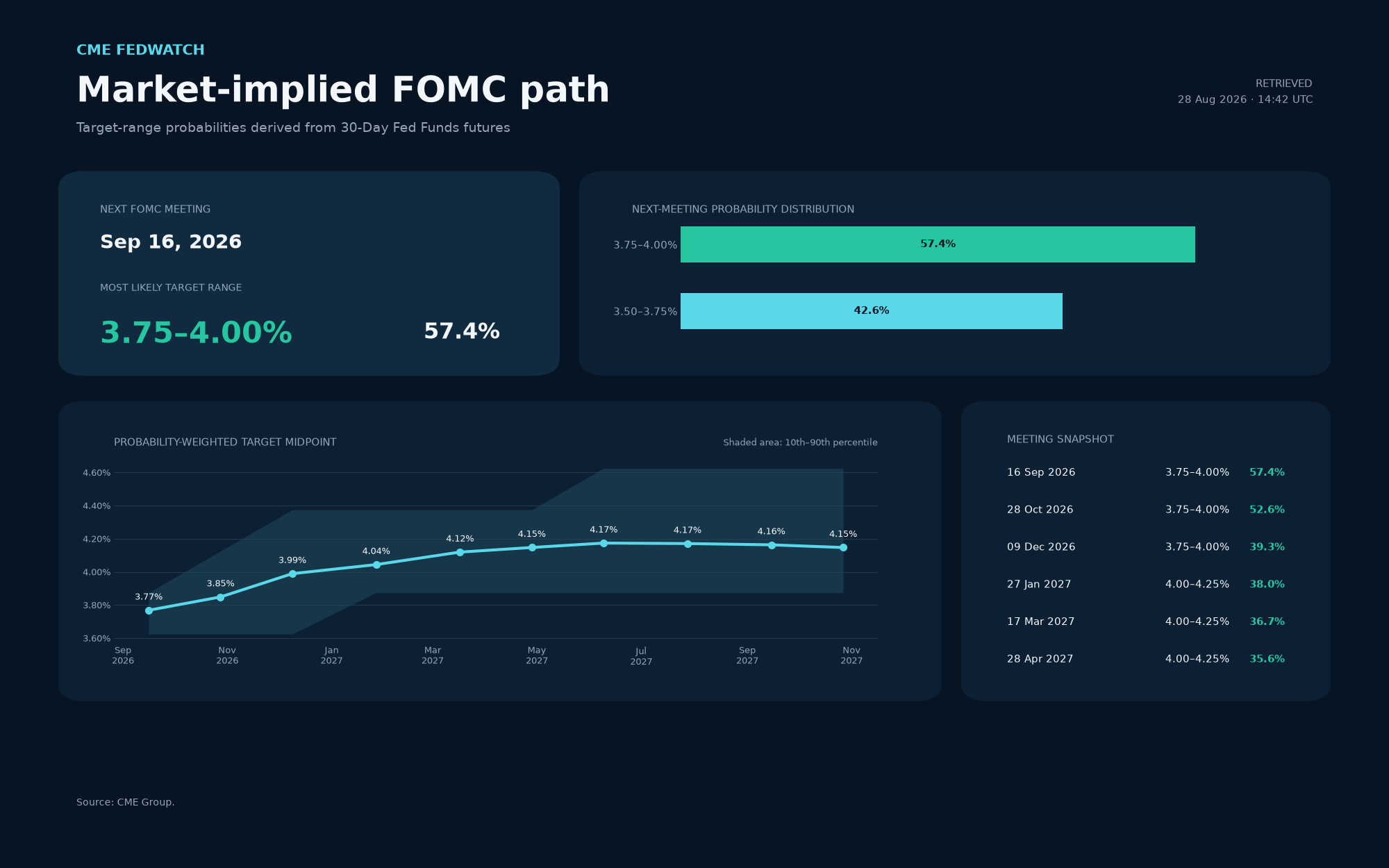
Warsh’s remarks strengthen the case for rate hikes later this year, although they do not amount to a commitment to move at the next meeting. The combination of persistent inflation, healthy demand and financial conditions that are not clearly restrictive gives hawkish officials a strong argument for acting.
The deciding factor will be whether incoming data confirm that underlying inflation is genuinely moving back toward 2%. If progress remains limited, the balance of this week’s commentary suggests that the hurdle for renewed tightening could be lower than markets had assumed.
And the inflation story goes on and on
Federal Reserve officials delivered an increasingly hawkish message this week, warning that inflation remained persistent as tariffs, war and higher energy costs complicated the path back to 2%. Beth Hammack (Cleveland) went furthest by explicitly calling for rate hikes, while Jeffrey Schmid (Kansas City) and Austan Goolsbee (Chicago) favoured gathering more evidence before determining their next move.
The common thread was concern that inflation was not yet under control. Hammack expects it to finish the year near 3%; Schmid described it as stubborn and sticky, and Goolsbee said the possibility that price pressures remained uncontrolled was his greatest near-term fear.
Hammack delivered the clearest policy signal, explicitly calling for rate hikes and warning that waiting would create greater economic pain. She sees little restraint from current interest rates or broader financial conditions and fears that persistent inflation could undermine confidence in the Fed’s 2% target and foster an inflationary mindset. Although she approaches each meeting with an open mind, her remarks amounted to an unambiguous case for renewed tightening.
Schmid shared much of the inflation concern without explicitly endorsing an immediate increase. He said the energy shock was leaking into the wider economy and questioned how much the current policy stance was actually restricting. However, with the next meeting approaching, he argued that officials still needed more information before deciding how to respond.
Goolsbee struck the most balanced tone. Tariffs and war-related price increases are complicating the outlook, but the latest three-month inflation trend did not look especially troubling. He described the economy as broadly stable and the labour market as unusually characterised by low hiring and low firing, leaving him inclined to follow the incoming data rather than commit to a particular rate path.
The officials also addressed the Fed’s institutional position. Goolsbee warned that political interference with central banks generally resulted in higher inflation, while Hammack stressed that the Fed operated independently from the Treasury. She added that credibility depended on delivering the dual mandate and explaining policy clearly to the public.
Overall assessment
The week produced a distinctly hawkish shift in the Fed debate, but not yet a unified call for higher rates. Hammack has moved decisively into the rate hike camp, Schmid appears increasingly uneasy about the absence of meaningful restraint, and Goolsbee remains cautious and data-dependent.
The critical question is whether tariffs and energy costs produce a temporary increase in headline inflation or whether they begin to spread into expectations and broader pricing behaviour. Hammack believes that process may already be starting; Goolsbee is not yet convinced. That divide is likely to shape the debate at the next FOMC gathering.
Dollar longs retreat, but conviction remains
The speculative bullish positioning in the US Dollar weakened further in the week ending August 18, according to the Commodity Futures Trading Commission (CFTC) data. Indeed, the net speculative positioning fell by just over 2.3K contracts, extending the previous week’s decline and reducing the 4-week change to nearly +3.5K.
Additionally, open interest also decreased around 3% to nearly 48K contracts. The simultaneous decline in net positioning and participation suggests long liquidation and a broader unwinding of bullish exposure rather than an aggressive build-up of fresh USD shorts.
Speculative exposure fell sharply to 39.8% from 43.2%, with its percentile falling to 58.6. The net-position percentile also eased to 68.5. Although both readings remain above neutral historical levels, the latest figures point to a clear erosion of bullish conviction from a relatively elevated starting point.
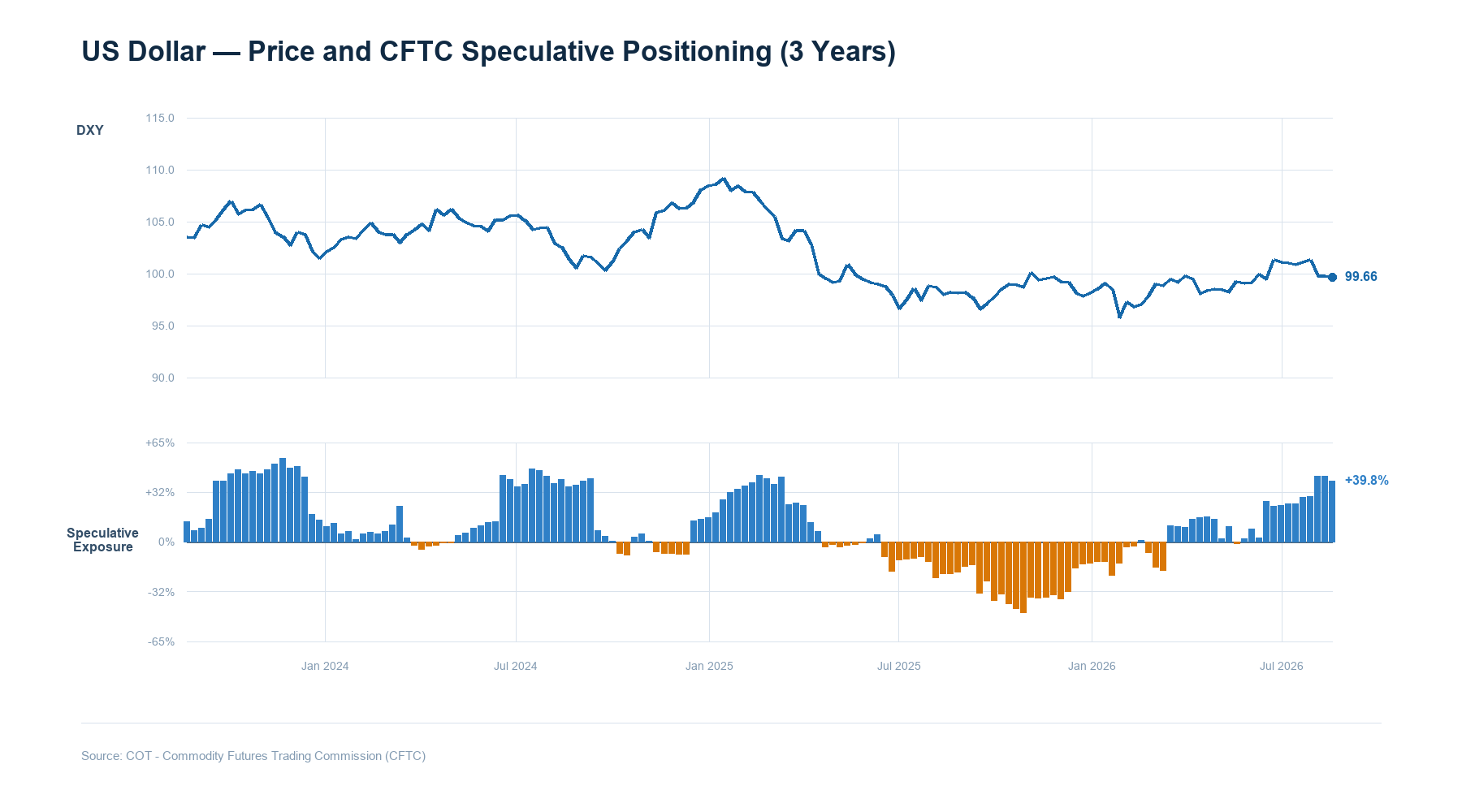
Overall, USD positioning remains net long, but the underlying momentum has deteriorated significantly. The data suggest that traders are reducing bullish exposure rather than adopting a firmly bearish USD stance; nevertheless, if the liquidation continues, the Greenback’s positioning-based support could weaken further.
What’s in store for the buck
Next week will be a busy one on the US calendar, where the ISM gauges on business activity (Manufacturing and Services PMIs) and the performance of the labour market (ADP report, JOLTs readings, weekly Initial Jobless Claims report and NFP data) will be at the centre of the debate.
And as usual, comments from Fed rate setters will also keep market participants entertained.
The US Dollar still has inflation on its side
The last few months have highlighted a familiar problem: bringing inflation down from its peak is one thing. Getting it all the way back to target is proving much harder.
That final stretch of the disinflation process could become an important source of support for the US Dollar in the months ahead, particularly if markets have been too optimistic about how quickly the remaining price pressures will fade.
Underlying inflation remains stubborn, and expectations that interest rates will need to stay higher for longer should continue to provide a floor under the Greenback. At the same time, fiscal concerns are unlikely to disappear quietly into the background, adding another layer of uncertainty to what already promises to be anything but a calm second half of the year.
Employment FAQs
Labor market conditions are a key element to assess the health of an economy and thus a key driver for currency valuation. High employment, or low unemployment, has positive implications for consumer spending and thus economic growth, boosting the value of the local currency. Moreover, a very tight labor market – a situation in which there is a shortage of workers to fill open positions – can also have implications on inflation levels and thus monetary policy as low labor supply and high demand leads to higher wages.
The pace at which salaries are growing in an economy is key for policymakers. High wage growth means that households have more money to spend, usually leading to price increases in consumer goods. In contrast to more volatile sources of inflation such as energy prices, wage growth is seen as a key component of underlying and persisting inflation as salary increases are unlikely to be undone. Central banks around the world pay close attention to wage growth data when deciding on monetary policy.
The weight that each central bank assigns to labor market conditions depends on its objectives. Some central banks explicitly have mandates related to the labor market beyond controlling inflation levels. The US Federal Reserve (Fed), for example, has the dual mandate of promoting maximum employment and stable prices. Meanwhile, the European Central Bank’s (ECB) sole mandate is to keep inflation under control. Still, and despite whatever mandates they have, labor market conditions are an important factor for policymakers given its significance as a gauge of the health of the economy and their direct relationship to inflation.
About The Author