Here are the 3 big things we're watching in this holiday-shortened trading week
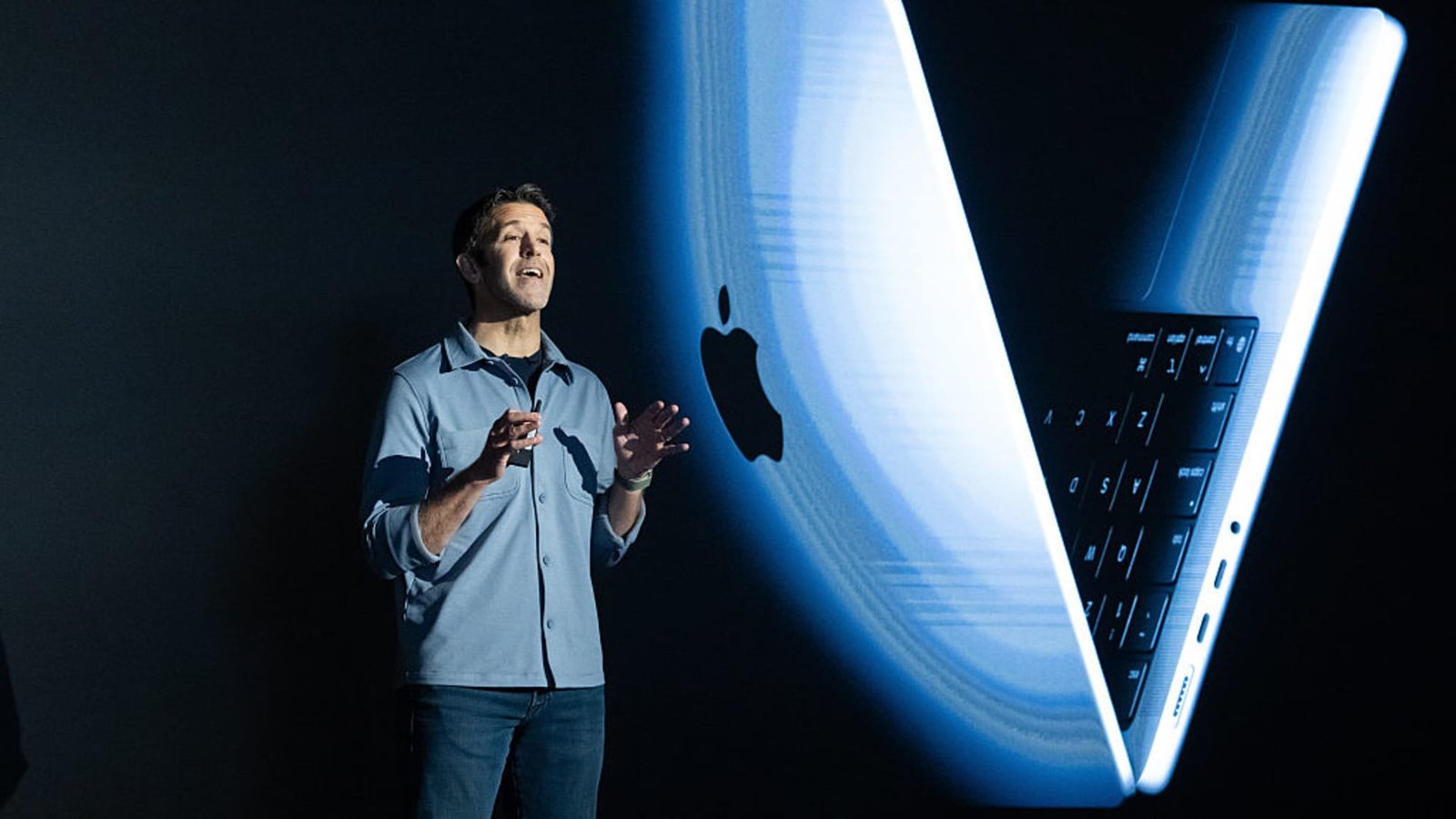
Goodbye, summer. With Labor Day marking the unofficial end of summer, traders and portfolio managers will return from vacations and be back at their desks in full force. Portfolios tend to see some house-cleaning adjustments. Trading volumes pick up. Midterm elections are also on the horizon this year, which can add volatility in the run-up to November. This holiday-shortened week of trading gets started with a bang: a fresh batch of inflation data that will influence the Federal Reserve’s next move on interest rates; an iPhone launch event that will double as an introduction to the new CEO of the world’s second-most valuable company; and a slate of investor conferences where we’ll hear from executives at Club holdings as earnings season slows to trickle. Also: on Thursday, we’ll hold our September Monthly Meeting at our regular start time of noon ET. Now, here’s a closer look at what we’re watching this week: 1. Inflation data: The August producer price index (PPI) and consumer price index (CPI) are due out on Thursday and Friday. The data come ahead of the Federal Open Market Committee’s Sept. 15-16 policy meeting, where market odds are back to pricing in roughly a 60% chance of a hike, according to the CME Group’s FedWatch tool. Fed Governor Christopher Waller summed up the stakes nicely in market-moving comments this past Thursday at an event hosted by Reuters. Here’s a key excerpt (from a transcript posted by the Fed): As of today, the labor market is stable, with employment near its maximum sustainable level, and inflation is making slow but continued progress on reaching 2%. We will get another employment report and inflation reading before the next FOMC meeting. I don’t expect that the employment data will deviate much from what we have been seeing. So my decision on the appropriate stance of policy will be heavily influenced by what we learn about August inflation. If there is continued progress toward our 2% goal, then I am willing to support holding the policy rate at its current level. But if inflation comes in hot, I would consider a rate hike. I judge that policy is currently only slightly restricting aggregate demand, and it may not take much acceleration in inflation to nudge me into supporting tighter policy. If there is evidence that progress toward 2% inflation reversed in August, a small adjustment in our stance would help ensure that it resumes. The market on Thursday greeted Waller’s comments cheerfully, focusing on his current inclination to keep rates steady. This was notable after Fed Chairman Kevin Warsh’s perceived tough talk on inflation at the Jackson Hole symposium caused market probabilities to lean toward a quarter-point hike in September. Waller’s comments shifted odds of a hike to a 50-50 toss up — and fueled a stock rally Thursday — only for Friday’s stronger-than-expected jobs report to reverse the shift. Waller was right that Friday’s jobs report didn’t materially change our understanding of the labor market, underscoring just how resilient its been in the face of the Iran war. Thus, the stakes are high for this week’s inflation data. If it comes in hotter than expected, traders may brace for a hike. If it comes in cooler, a hold may become more likely. One caveat: Given the role that high oil prices have played in rekindled inflation this year, any encouraging updates on a resolution to the Iran war that we receive in the coming days may be considered supportive of keeping rates steady, irrespective of the backward-looking August data. Thursday’s wholesale PPI is expected to show a 0.4% month over month increase and a 5.4% increase year over year, according to economists polled by FactSet. On a core basis, which excludes more volatile food and energy prices, core PPI is expected be up 0.3% month over month and 4.6% annually. PPI measures prices that producers are paid for their output, so it’s seen as a leading indicator for consumer inflation. Consensus for Friday’s CPI is a 0.36% month-over-month increase and a 3.3% annual gain, according to FactSet. On a core basis, CPI is expected to be up 0.2% from the prior month and up 2.3% annually. 2. iPhone launch: On Wednesday, Apple holds its annual hardware launch event, and it should be an exciting one. The company is branding it as “surprise and shine.” For starters, it will be new CEO John Ternus’ first event at the helm of Apple after replacing Tim Cook on Sept. 1. Cook slid into an executive chairman role. While most of the updates are likely to be what longtime Apple watchers expect — a new iPhone 18, updates to the Apple Watch, new AirPods and maybe new smart-home offerings — it’s widely believed this will be the week Apple finally enters the foldable smartphone arena . Anything with a new form factor (like a foldable phone) is sure to garner most of the attention, especially on Wall Street, as analysts rush to calculate potential demand and sales for the new offering. The price of the foldable phone is expected to be well north of $2,000, Bloomberg News has reported . Still, market research firm IDC expects Apple to ship more than 17 million foldable iPhones by 2027, securing a 40% share in a market dominated by Samsung and China’s Huawei. Away from the foldable intrigue, perhaps the biggest question is where Apple prices the iPhone 18s due to what Cook called the “100-year flood” of soaring memory costs. To date, Apple has only hiked prices on the Mac and iPad lineups, along with a few smart home offerings. The iPhone, however, is the company’s bread and butter when it comes to hardware. So, while we understand the desire to keep selling price on that down for as long as possible so as not to impact demand, we’re prepared to see price increases on the iPhone. Last year’s iPhone 17 Pro started at $1,099 — up $100 from the previous generation’s cheapest model — while the Pro Max started at $1,199, unchanged from the prior generation. How Apple goes about changes to the iPhone 18 pricing will be noteworthy. Will the price hikes be across the board? Will they try to preserve some value on the phones with the lowest amount of storage, acknowledging that the real value of a user comes after their initial purchase, when they start signing up for services and embedding themselves ever deeper into the Apple ecosystem? This dynamic is especially true for first-time iPhone buyers. That said, while the hardware is sure to get most of the time, it’s what Apple demonstrates with Apple Intelligence that may be most important for where the stock goes from here. Artificial intelligence remains all the rage, but as concerns grow over the level of spending, investors are starting to look for beneficiaries somewhat insulated from any potential funding issues that may be lurking around the corner. As a result, we’ve started to see AI infrastructure plays stall out as enterprise software players have come back into favor on the realization that for many AI will prove a tailwind, rather than a headwind. Apple Intelligence can play a similar role on the consumer front, and for investors, should it prove a real game changer for Apple’s Siri capabilities. While we’ve seen some previews of the new technology, a clear-cut signal that it’s ready for general availability this fall should get Wall Street excited. This will not only strengthen the Apple ecosystem and potentially open up new revenue streams, but it could be the long-awaited catalyst to prompt an acceleration of upgrades by existing users, especially those with older iPhones less capable of running Apple Intelligence. To be sure, the iPhone 17 likely prompted some upgrades thanks to the new form factor, but Apple Intelligence is more likely to provide the revolutionary, rather than evolutionary, jump we’ve been looking for. 3. Conference updates: Outside of the Apple event, as earnings season winds down, conference season is ramping up. This is that stretch between quarterly earnings reports, when companies aren’t in quiet periods, and banks bring in executives and their investor clients for Q & As and presentations. The big one for the Club will be the Goldman Sachs Communacopia + Technology Conference, where we’ll hear from Alphabet on Tuesday, Microsoft and Salesforce on Wednesday, and from Qnity Electronics , CrowdStrike , and Nvidia on Thursday. CrowdStrike will also speak at Citigroup’s Global TMT Conference on the same day. Wells Fargo will also host its 21st annual Healthcare Conference next week, where we’ll hear from Cardinal Health and Johnson & Johnson on Wednesday. Kimberly-Clark , which is our newest stock (along with BNY ), will present at the Barclays Global Consumer Staples Conference on Wednesday morning. While it’s quiet on the Club earnings front, there are some influential names outside the portfolio reporting earnings: Oracle , which will offer a checkup on AI computing demand and the market’s appetite for the AI buildout names, and Adobe , which will test the durability of the rebound in software stocks. Week ahead Monday, Sept. 7 U.S. market closed in observance of Labor Day Tuesday, Sept. 8 Before the bell: ABM Industries (ABM), United Natural Foods (UNFI) Alphabet to present at 1:10 p.m. ET After the bell: Casey’s (CASY) Wednesday, Sept. 9 Before the bell: Chewy (CHWY), Caleres (CAL), Academy Sports & Outdoor (ASO), Signet Jewlers (SIG), Core & Main (CNM) Kimberly-Clark to present at 7:30 a.m. ET Cardinal Health to present at 8:45 a.m. ET Johnson & Johnson to present at 11:00 a.m. ET Microsoft to present at 12:30 p.m. ET Salesforce to present at 6:05 p.m. ET After the bell: AeroVironment (AVAV), American Eagle Outfitters (AEO), CooperCompanies (COO) Thursday, Sept. 10 Producer price index (PPI) at 8:30 a.m. ET Initial jobless claims at 8:30 a.m. ET Existing home sales at 10 a.m. ET Qnity Electronics to present at 11:10 a.m. ET CrowdStrike to present at 11:30 a.m. ET Nvidia to present at 11:50 a.m. ET CrowdStrike to present at 4:45 p.m. ET Investing Club Monthly Meeting at noon ET Before the bell: Macy’s (M), Designer Brands (DBI) After the bell: Oracle (ORCL), Adobe (ADBE), Copart (CPRT) Friday, Sept.11 Consumer price index (CPI) at 8:30 a.m. ET University of Michigan consumer sentiment survey (preliminary) at 10 a.m. ET Before the bell: Kroger (KR) (See here for a full list of the stocks in Jim Cramer’s Charitable Trust.) As a subscriber to the CNBC Investing Club with Jim Cramer, you will receive a trade alert before Jim makes a trade. Jim waits 45 minutes after sending a trade alert before buying or selling a stock in his charitable trust’s portfolio. If Jim has talked about a stock on CNBC TV, he waits 72 hours after issuing the trade alert before executing the trade. THE ABOVE INVESTING CLUB INFORMATION IS SUBJECT TO OUR TERMS AND CONDITIONS AND PRIVACY POLICY , TOGETHER WITH OUR DISCLAIMER . NO FIDUCIARY OBLIGATION OR DUTY EXISTS, OR IS CREATED, BY VIRTUE OF YOUR RECEIPT OF ANY INFORMATION PROVIDED IN CONNECTION WITH THE INVESTING CLUB. NO SPECIFIC OUTCOME OR PROFIT IS GUARANTEED.