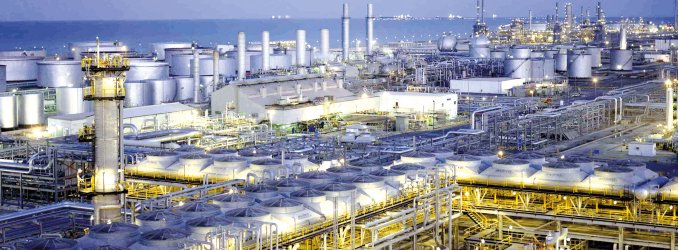
(Bloomberg) — Saudi Arabia halted operations at several energy facilities in the south after fresh Houthi attacks sparked fires, adding to concerns over oil supplies as Brent crude approaches $100/bbl.
The Yemen-based Houthis said they targeted Saudi Aramco facilities in Abha, Najran and Jazan with ballistic missiles and drones, according to a statement from the group’s military spokesperson. Saudi Arabia’s energy ministry confirmed fires at several locations and said efforts were underway to contain the blazes, without identifying the facilities.
While the targets appear to include infrastructure supplying domestic Saudi demand, repeated attacks on Jazan — home to a 400,000-bpd refinery — are a growing concern for oil markets.
The Jazan refinery has been targeted repeatedly since the Houthis warned in July that they would blockade Saudi oil flows. The complex was shut following an attack days after that threat and has since been targeted on at least two other occasions. Saudi vessels have also come under attack, including a supertanker in the Red Sea last month.
Facilities in Abha and Najran are part of Saudi Arabia’s nationwide oil and gas distribution network and primarily serve domestic consumption, according to a 2025 Saudi Aramco prospectus.
Saudi officials said recent attacks targeting four cities near the Yemeni border have injured 73 people.
“Markets are increasingly pricing a prolonged Mideast conflict,” Goldman Sachs analysts including Daan Struyven wrote in a note. The bank modestly raised its oil-price forecasts on expectations that shipping disruptions will persist into 2027, adding that risks to its outlook remain “significantly tilted to the upside.”
The Houthi attacks come amid continued tensions between Iran and the U.S. Iran recently reorganized its military ranks around what it described as an “offensive doctrine,” while senior Iranian security official Mohsen Rezaee warned of a more aggressive posture toward U.S. forces in the region.
The Iran conflict, which began with U.S. and Israeli strikes in late February, has now continued for more than six months. President Donald Trump said Tuesday that oil prices would fall sharply when the conflict ends, linking the recent price surge to the ongoing hostilities.
The latest attacks on Saudi energy infrastructure add another supply risk to a crude market already facing restricted shipments through the Strait of Hormuz. Brent has climbed toward $100/bbl amid concerns that continued attacks on regional energy infrastructure could further constrain supplies.
About The Author