Wells Fargo sees improvement in a key metric — plus, Lilly gets praise beyond GLP-1s
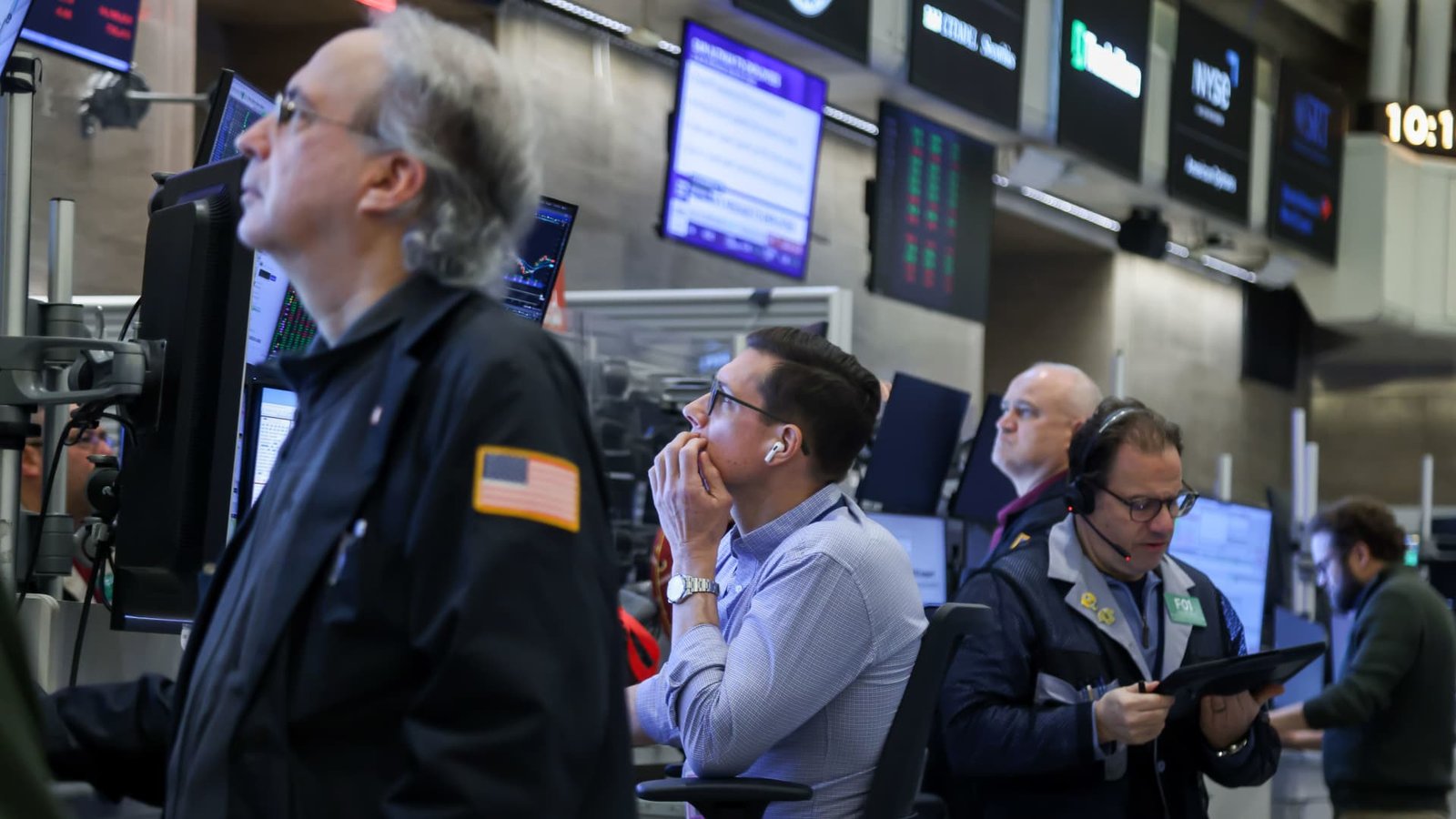
Every weekday, the CNBC Investing Club with Jim Cramer releases the Homestretch — an actionable afternoon update, just in time for the last hour of trading on Wall Street. Stocks struggled as oil prices and bond yields powered higher. West Texas Intermediate crude , the U.S. benchmark, jumped roughly 5% on Tuesday to $106 per barrel due to continued uncertainty out of the Middle East. The accompanying inflation fears from elevated oil prices, which add costs throughout the economy, pushed the 10-year Treasury yield to its highest level since 2007. All this comes ahead of the conclusion of the Federal Reserve’s two-day September monetary policy meeting on Wednesday afternoon. That’s when the central bank will announce its interest rate decision. The market expects a 25 basis point rate hike. Wells Fargo shares moved higher on incrementally positive news about the bank’s current third quarter. CFO Michal Santomassimo presented at the Barclays Global Financial Services Conference on Tuesday. One small source of upside compared with management’s prior guidance was its net interest margin. In simple terms, NIM is the spread between what a bank earns on loans versus what it pays on deposits. Santomassimo said that Wells Fargo’s quarter-to-date NIM is roughly flat to one basis point down from its 2.43% rate in Q2. That’s a little better than the 3 to 4 basis points decline anticipated. This isn’t a major upside surprise, but it’s notable given Wells Fargo’s recent track record of falling short of NIM estimates. The bank’s NIM has missed in nine of the past 10 quarters. We would prefer the market judge Wells Fargo by its non-interest income, which we believe is the better measuring stick of CEO Charlie Scharf’s turnaround plan. However, we recognize the importance the market puts on interest-rate-driven metrics like NIM, so we’re pleased to see the third quarter running slightly ahead of expectations. Eli Lilly was upgraded to buy from hold at Berenberg, and the drugmaker’s leading obesity business isn’t the only reason for the optimism. Analysts argued that the potential benefits from this year’s acquisition spree, which was funded by Lilly’s GLP-1 windfall, are being underestimated by the market. “Many of the resulting new pipeline entrants have multibillion-dollar sales potential and offer important diversification optionality,” analysts wrote in a Monday note to clients. So far in 2026, Lilly has committed about $60 billion toward more than 25 business development deals, according to Berenberg, “with plenty of capacity to spend more.” That figure includes both acquisitions of entire companies and license deals for specific experimental drugs or types of technology , such as gene editing. Lilly’s purchase of AtaiBeckley in psychedelic drugs for mental health conditions and Centessa in sleep disorders such as narcolepsy were two deals that Berenberg specifically called out. Last week, Lilly closed the AtaiBeckley deal , which cost $2.8 billion up front and potentially another $1 billion if certain milestones are reached. The Centessa takeover was completed in late June. Lilly shelled out $6.3 billion up front and could pay another $1.5 billion if Centessa’s drugs win regulatory approval by certain deadlines. Our primary reason for sticking with the stock remains Lilly’s obesity opportunity — spanning both drugs on the market, like injectable Zepbound and daily pill Foundayo, and those in late-stage development such as retatrutide (colloquially known as “Triple G”) and eloralintide . We’re upbeat on how these other drugs could complement Lilly’s existing products, with Triple G as a more powerful option for weight loss, and eloralintide potentially offering improved tolerability. Eloralintide is being studied as both a standalone therapy and in conjunction with Zepbound. Analysts at Leerink said Tuesday that they expect fresh data on eloralintide-plus-Zepbound on Sept. 30, and argued it has “mega-blockbuster” potential . Despite our obesity focus, we’re pleased that Berenberg is shining on a spotlight on these non-obesity opportunities. Though it may be a while before they start generating material revenue, pharmaceutical companies always need to be thinking and planning for many years down the road. Another aspect of the Fed’s September meeting is the release of an updated Summary of Economic Projections, alongside the rate decision. The so-called SEP includes the dot plot, which shows where each member expects the federal funds rate to be at the end of this year, next year, and 2028. We would argue that too many conclusions are drawn from the dot plot, especially since rate expectations will change as the data evolves. However, the dots do give the market a snapshot in time of where Fed officials expect rates to be in the years ahead. (See here for a full list of the stocks in Jim Cramer’s Charitable Trust.) As a subscriber to the CNBC Investing Club with Jim Cramer, you will receive a trade alert before Jim makes a trade. Jim waits 45 minutes after sending a trade alert before buying or selling a stock in his charitable trust’s portfolio. If Jim has talked about a stock on CNBC TV, he waits 72 hours after issuing the trade alert before executing the trade. THE ABOVE INVESTING CLUB INFORMATION IS SUBJECT TO OUR TERMS AND CONDITIONS AND PRIVACY POLICY , TOGETHER WITH OUR DISCLAIMER . NO FIDUCIARY OBLIGATION OR DUTY EXISTS, OR IS CREATED, BY VIRTUE OF YOUR RECEIPT OF ANY INFORMATION PROVIDED IN CONNECTION WITH THE INVESTING CLUB. NO SPECIFIC OUTCOME OR PROFIT IS GUARANTEED.