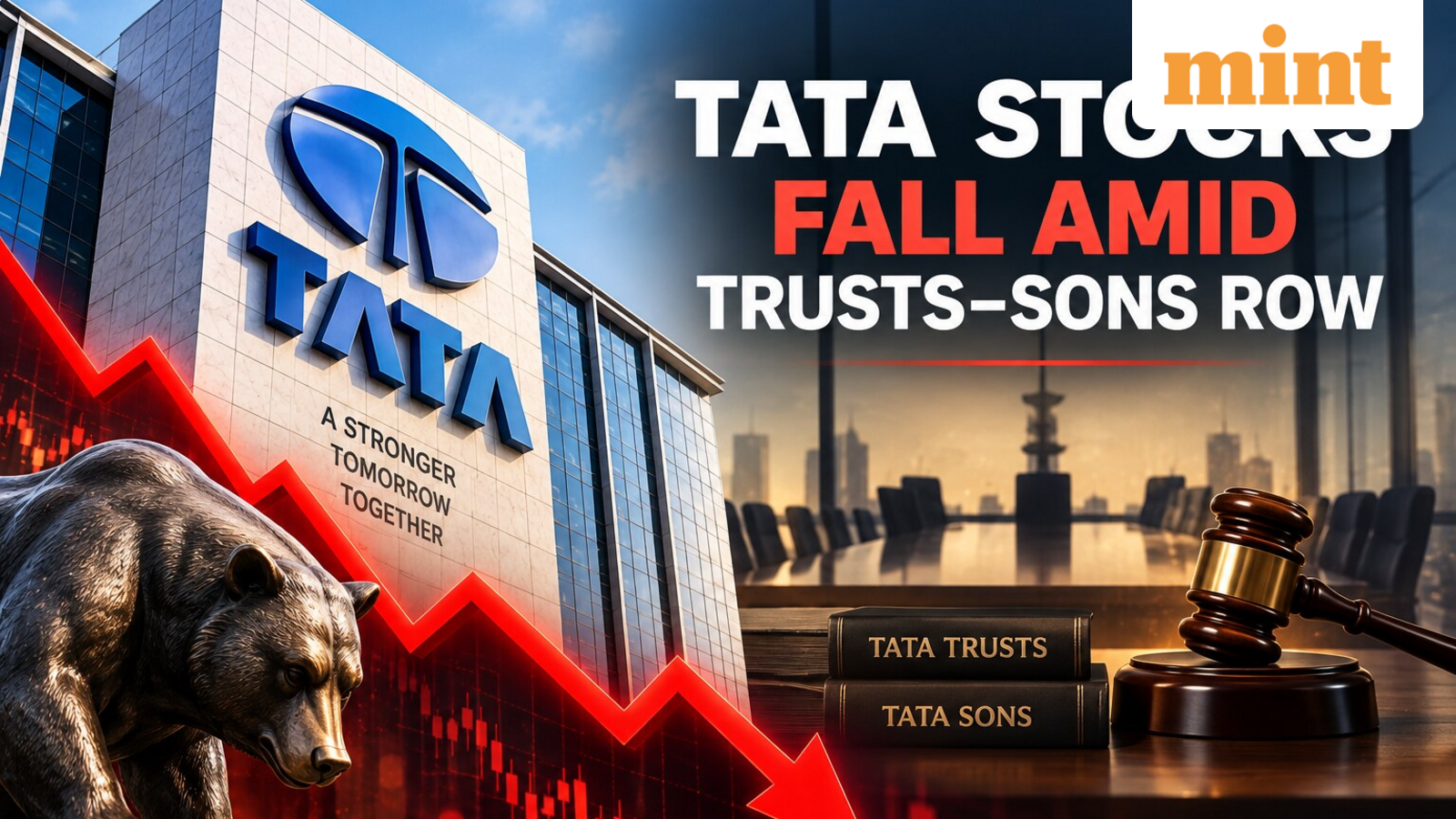
Tata Group stocks came under pressure in early trade on Monday, 21 September as the dispute between Tata Trusts and Tata Sons over N Chandrasekaran’s reappointment as chairman escalated, with the leadership row now moving towards a potential legal battle.
The fresh pressure followed last week’s decision by the Tata Sons board to give Chandrasekaran another five-year term and proceed with preparations for the much-awaited listing of the group holding company. Tata Group shares had already witnessed a sell-off on Friday after Tata Trusts termed Chandrasekaran’s reappointment illegal.
The Trusts, which hold about 66% of Tata Sons, have argued that the board resolution was a “legal nullity” because it did not receive the required support from both Trust-nominated directors. Noel Tata voted against the reappointment, while the other Trust nominee, Venu Srinivasan, supported it.
Separately, the Reserve Bank of India has rejected Tata Sons’ request to surrender its registration and continue as a private company, bringing the potential listing and the future structure of Tata Sons back into focus.
Tata Group stocks today: Check full list
Most Tata Group counters extended Friday’s decline in Monday’s session. Tata Capital fell around 3% to ₹341, while Tata Power declined 2.5% to ₹365.55.
Tata Investment Corporation dropped 2.3% to ₹685.90 and Tata Technologies slipped 2.2% to ₹707. Tata Elxsi fell 2% to hit a 52-week low of ₹3,268.
Tata Motors Passenger Vehicles declined 1.5% to ₹299.25, while its commercial vehicles counterpart fell 1%. Tata Communications was down 1.5% at ₹1,746.80 and Tata Teleservices declined 1.4% to ₹35.25.
The selling was not uniform across the group. Tata Chemicals, which initially fell 4%, recovered to trade 0.6% higher. TCS, after initially declining 1%, also recovered and was up 1%. Tata Steel gained 1%.
Tata Trusts vs Tata Sons: Boardroom battle intensifies
Tata Trusts, headed by Noel Tata, has legally challenged the Tata Sons board’s decision and is seeking judicial intervention to maintain the status quo on Chandrasekaran’s tenure. Reports said the Trusts were weighing legal options, including possible proceedings before the National Company Law Tribunal.
In its latest statement, Tata Trusts reiterated that Chandrasekaran’s reappointment was never validly approved because the Articles of Association of Tata Sons require support from both Trust-nominated directors. Since Noel Tata voted against the resolution, the Trusts maintain that the required condition was not met.
The Trusts also argued that a casting vote cannot revive what it considers a failed resolution. It said the Articles of Association cannot be selectively relied upon and described any attempt to alter the century-old structure as “a sledgehammer to crack a nut.”
Tata Trusts said: “There was no paralysis and there was no deadlock. The Board put a question, and the AoA answered it in the negative. The exercise of a protective right conferred by a company’s own constitution is not a deadlock.”
The Trusts therefore maintained that the resolution to reappoint Chandrasekaran as Tata Sons chairman, considered at the September 17 board meeting, “was not validly passed and has no legal effect” and described it as “void ab initio.”
Meanwhile, senior advocate Abhishek Singhvi, who has been appointed to represent Tata Trusts, said on Sunday that he was entering the dispute with “sadness and regret” because the issues could not be resolved amicably.
In a post on X, Singhvi said that, having worked closely with Ratan Tata and knowing the principal actors on both sides, his first reaction was one of sadness and regret. He added that the fundamental rights of shareholder-owners could not be nullified in the manner in which they had been.
“But in the ultimate analysis, fundamental rights of shareholder-owners cannot be nullified in the manner in which they have been. To stultify shareholder ownership rights would spell doomsday for corporate governance across hundreds of Indian companies. To stymie democratic intra Trust decision-making by Tata Trusts by putting a sudden and completely unwarranted fetter on even their covening for a meeting is another matter of patent legality. Rupturing the over hundred years of Tata Trust and Tata Sons established hyphenated relationship and divorcing one from the other seems unthinkable. Ignoring the unvarying precondition of Trust unanimity in voting & the clear veto in provisions applied without cavil for decades appears patently unjustified,” he said in hit post.
The dispute has therefore moved beyond the boardroom, with Tata Trusts preparing to challenge the validity of the reappointment and Tata Sons expected to respond to the objections.
Key points from Tata Trusts’ latest statement
Two Trust nominees: Tata Trusts said Tata Sons has two Trust-nominated directors, making two the required majority among them.
One voted against: One of the two nominees voted against Chandrasekaran’s reappointment on September 17.
Casting vote disputed: The Trusts said the chairman’s casting vote applies to a tie at the overall board level and cannot override the separate Trust-nominee requirement.
No deadlock: Tata Trusts rejected the argument that its opposition created a situation that could paralyse Tata Sons.
Resolution challenged: The Trusts said Chandrasekaran’s reappointment resolution was not validly passed and had no legal effect.
Supreme Court argument: The Trusts pointed to the earlier Cyrus Mistry case, saying Tata Sons had defended the affirmative voting rights of Trust-nominated directors under Articles 104B and 121 before the Supreme Court.
Governance debate: The Trusts also rejected the argument that listing Tata Sons was necessary to improve corporate governance, pointing to existing provisions covering independent directors, audit and nomination committees, related-party transactions, retirement by rotation and insider trading.
Disclaimer: This story is for educational purposes only. Please consult with an investment advisor before making any investment decisions.
About The Author