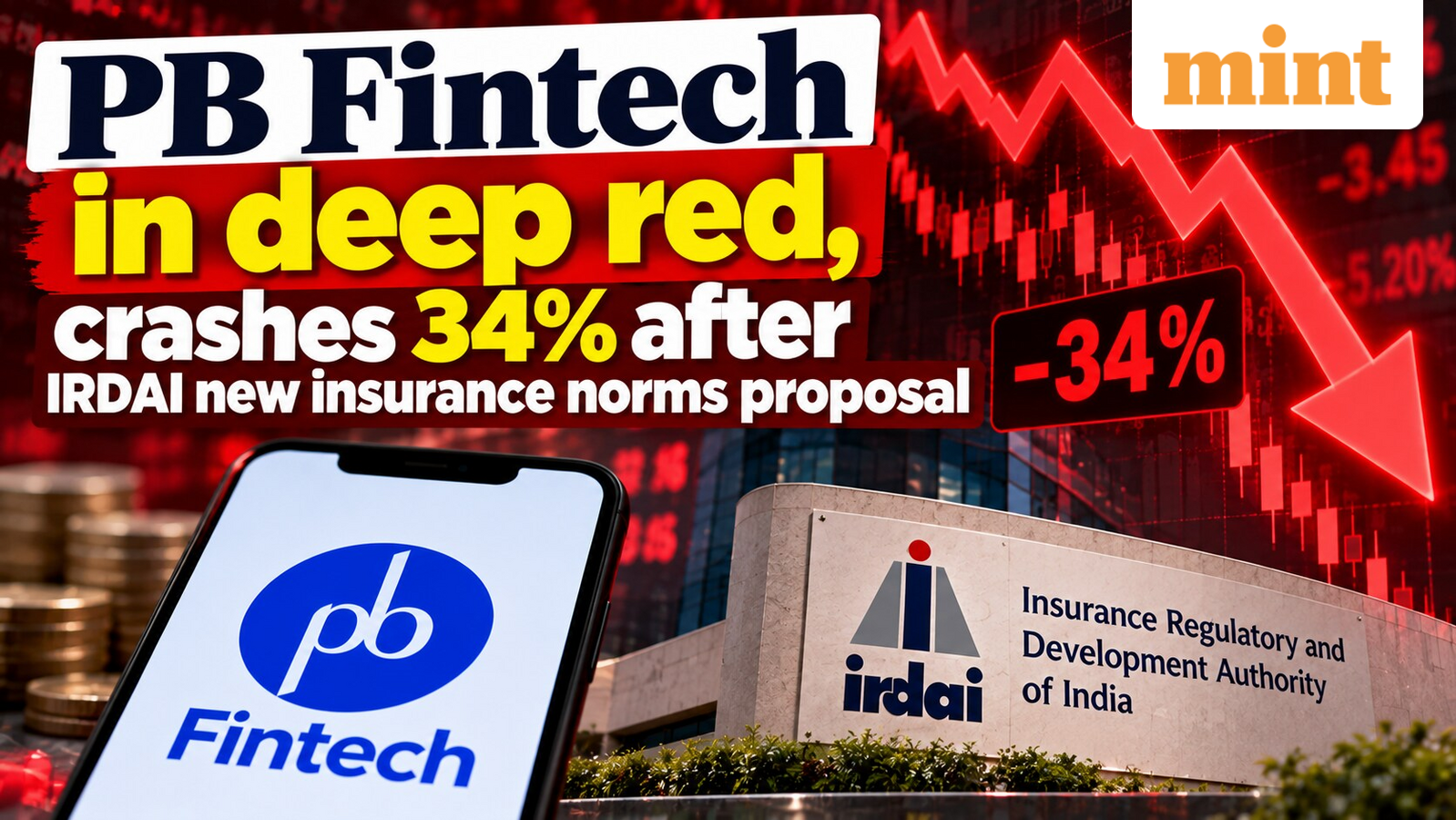
PB Fintech share price came under heavy selling pressure on Thursday, 24 September, after the Insurance Regulatory and Development Authority of India (IRDAI) proposed sweeping changes to insurance distribution rules, including a ban on certain “dark patterns” used on insurance and distributor websites.
PB Fintech share price hit the 34% lower circuit at ₹1,247.40 during Thursday’s session as investors assessed the potential impact of the proposed regulatory changes on insurance distribution businesses.
Why are insurance stocks under pressure?
The proposed reforms could put pressure on the economics of insurance distribution by tightening Expense of Management (EoM) limits and restructuring the commission framework.
Lower EoM limits could restrict the amount insurers may spend on commissions, distribution, and other operating expenses. This could potentially alter distribution economics and increase the cost of acquiring customers.
For distributors and insurance-focused platforms, changes to commissions and distribution practices could therefore affect revenue and profitability.
IRDAI proposes new insurance distribution structure
IRDAI has proposed replacing the existing fragmented distribution framework with three broad categories: Insurance Distribution Entities (IDEs), Insurance Distribution Persons (IDPs) and Market Infrastructure Institutions (MIIs).
The regulator said the proposed framework is aimed at reducing insurance costs, widening coverage among underserved sections and supporting sustainable growth in the sector.
The draft paper covers several areas, including rationalisation of EoM limits, segment-wise commission caps and restrictions on dark patterns.
‘Dark patterns’ to come under scrutiny
Under the proposed rules, insurers would have to provide customers with product features and pricing information without first requiring them to submit personal details.
IRDAI has identified the current practice of asking users to provide personal information before accessing pricing and product details as a form of “dark pattern”.
The regulator defines dark patterns as interface or user-experience practices designed to mislead or influence users into taking actions they may not have intended.
The proposal also calls for commission rates to be disclosed in policy documents and for insurers to make product features, pricing and quality information available in a standard and easy-to-understand format.
EoM limits may be tightened
For general insurers, IRDAI has proposed shifting the basis for calculating EoM from gross written premium (GWP) to domestic gross direct premium income (GDPI).
The proposed EoM limit would be reduced from 30% of GWP to 20% of GDPI over five years, with the reduction implemented progressively each year.
According to IRDAI, the move is intended to lower the overall cost of insurance, expand the risk pool in general insurance and improve returns for policyholders in life savings products.
Commission framework to be recalibrated
The regulator has also proposed a more differentiated commission structure instead of a uniform approach. Commission limits would take into account factors such as the insurance segment, line of business, distribution channel, product complexity and effort involved in selling and servicing policies.
Insurers and large distribution entities would also be required to disclose their commission policies and structures in a simple and accessible manner.
More safeguards against mis-selling
The draft framework also proposes stronger measures to curb mis-selling. These include making suitability an enforceable obligation, documenting customer requirements and suitability for specified life insurance sales, and maintaining an audit trail.
IRDAI has also proposed restrictions on incentives paid to agents, changes to the types of policies banks can sell, the use of MIIs for insurance sales, and the prohibition of compulsory bundling of insurance products, including credit life insurance.
What does the proposal mean for PB Fintech?
The proposed reforms could reshape the economics of insurance distribution by changing commissions, customer acquisition practices, and operating cost structures. For PB Fintech and other insurance distribution platforms, the eventual impact will depend on the final regulations and how insurers and distributors adapt to the new framework.
The current proposals are part of a draft regulatory framework and may change following stakeholder feedback before the final rules are notified.
Disclaimer: This story is for educational purposes only. The views and recommendations above are those of individual analysts or broking companies, not Mint. We advise investors to check with certified experts before making any investment decisions.
About The Author