This stocks defensive appeal faces a valuation test. Here's where else investors can look
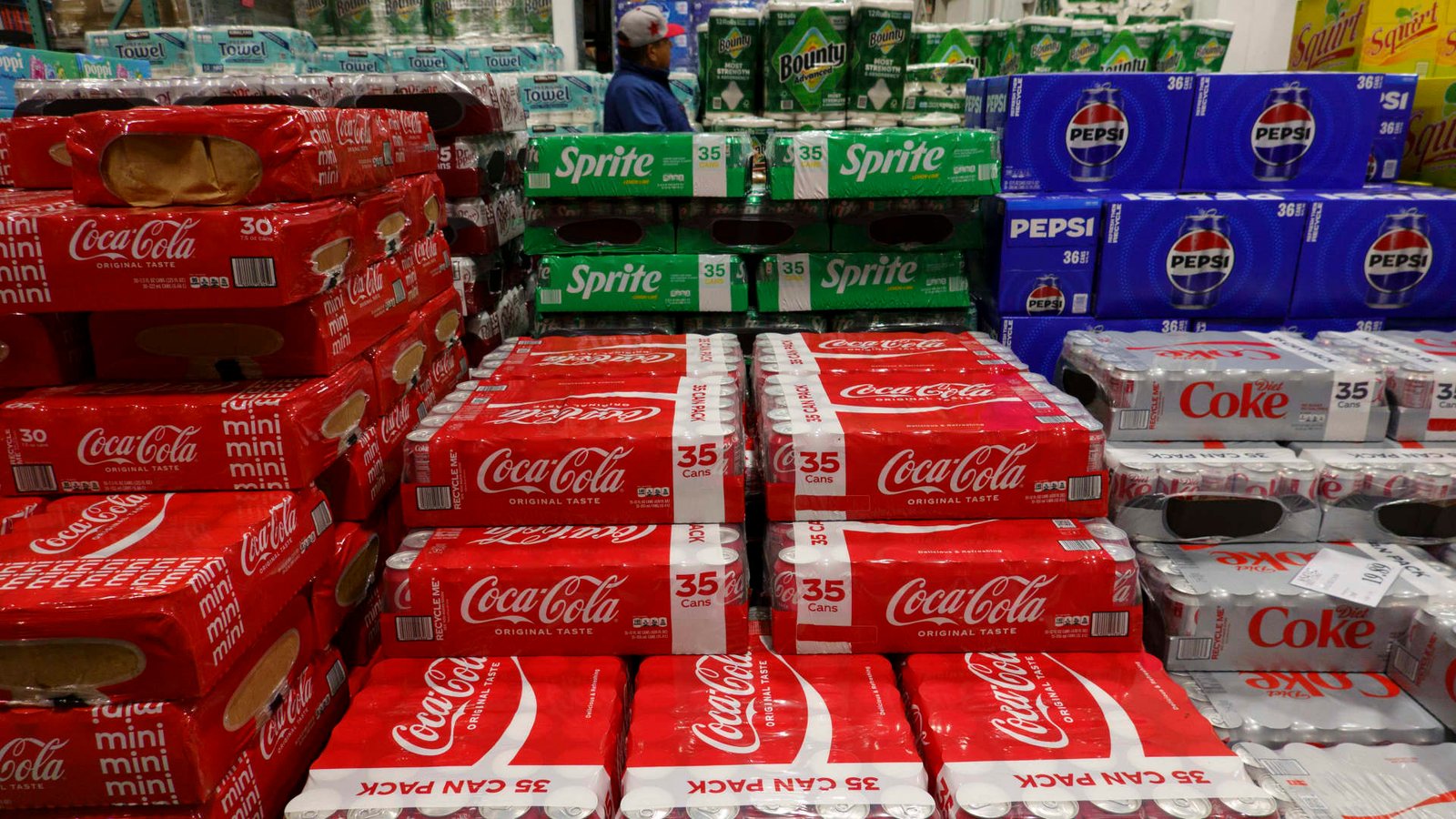
Coca-Cola has many of the qualities investors want in a defensive stock, but its premium valuation, limited upside and unique risks make the stock less compelling. With lower valuations and higher dividend yields, PepsiCo and Keurig Dr Pepper offer investors another way to play defense. Coke’s bonds offer another defensive option as higher yields have improved the appeal of fixed income. Defensive stocks can be very attractive to investors due to their stable earnings and ability to weather economic turmoil, but they’re not without risk. This can be especially true of industry leaders — the best-of-breed companies — that can become so popular that investors are willing to overpay relative to other options. With war, inflation, rising interest rates, and a potential AI slowdown dominating the headlines, it’s no surprise that some may be considering a more defensive approach to their portfolios. So, where should investors look for shelter? Healthcare, utilities and consumer staples are three sectors that are historically considered defensive. The logic is people still need medical care, prescription drugs, electricity, gas, water, groceries, household goods and other everyday necessities no matter the economic backdrop. Within these sectors investors often gravitate to established companies with long track records of outperformance that are number one in market share, generate lots of cash and have a strong brand and pricing power. Perhaps no stock exemplifies these qualities more than Coca-Cola . The iconic brand was founded in 1886 and has been publicly traded since 1919. It has increased its dividend 64 years in a row , and has been in the Dow Jones Industrial Average continuously since 1987. Shares are up over 7,500% since it joined the 30-stock index. Coca-Cola holds half of the world’s carbonated soft drink market, and its latest quarterly results were stellar. “KO delivered what we expect will be one of the cleanest beats in Staples this earnings season,” said Barclays analyst Lauren Lieberman in a post-earnings note. Second-quarter organic sales rose 6% versus a consensus estimate of 3.5%. Comparable operating margin was 35.6% compared with 34.7% a year ago, while comparable EPS grew 11% to 97 cents a share outpacing the 93 cents a share consensus. Coca-Cola raised its full year guidance across the board, including boosting free cash flow expectations to about $12.4 billion from $12.2 billion previously. As good as it gets? As the sixth best performing stock in the DJIA year-to-date, with a 29% increase, can Coca-Cola continue to perform at such a high level? Wall Street seems to think so. It is well liked by analysts, with 20 buy, 6 hold and zero underperform ratings, according to LSEG. However, with an average price target of $94.25, the predicted gain is just about 6%. UBS named Coke to its list of “highest conviction calls” for the U.S. consumer sector on Sept. 11. The average expected upside of the nine stocks it picked was 50%. Coke, with a predicted upside of 18%, sat at the bottom. That’s not a very stellar risk-reward for such a well-liked stock. UBS analyst Peter Grom said its relative valuation to peers is 32% above average compared with only 5% historically. He said “the stronger fundamental outlook warrants this premium valuation and as KO continues to widen the gap vs. peers,” he expects further multiple expansion is possible. Others take a more balanced view on valuation. Bernstein’s Cristian Rios said, “we believe KO will retain its well-earned premium relative to expected [organic sales growth], but also believe that the multiple currently has limited room for further expansion.” Rios has a $93 price target. At $89, Coke trades at a 12-month forward price-to-earnings multiple of 26x, well above the S & P 500 multiple of 19. This is a large gap for this stage of the economic cycle. Investors usually place a higher value on relatively insulated consumer staples companies that have predicable revenue and stable margins and dividends during recessionary periods, not when the gross domestic product is expected to grow at 5.1%, as is forecast this quarter. Investors often look at the price-to-earnings-to-growth ratio to determine a stock’s value. A lower number means you’re paying less relative to earnings growth. A ratio below one is a pretty good value, but when it ticks above two, it’s starting to look pricey. Coke’s expected PEG ratio for 2026 is 3.4. The company has been a reliable dividend payer, but its dividend yield of 2.4% is slightly below the average consumer staple stock’s 2.5% yield. It also faces up to $20 billion in financial risk from a transfer pricing lawsuit over how it allocates profits between its foreign subsidiaries and its U.S.-based parent. After losing the case in U.S. Tax Court, Coke is appealing. The company has deposited $6 billion with the Internal Revenue Service but could face an additional $14 billion payment if it loses its appeal. Only $512 million has been reserved . What might a bear case look like for Coke? Morgan Stanley analyst Dara Mohsenian pegs that at $54 a share in a situation where, “weaker topline from [a] global consumer slowdown and volume deleveraging drives 200 [basis points] of operating margin downside vs our base case. We assume 100% payment of the ~$16B tax liability to the IRS and a 350 bps increase in KO’s [effective tax rate]. KO valuation contracts to 15x bear case CY28 P/E.” In its modern form, the stock’s worst year was 1974, when it lost 57% following the 1973 OPEC oil shock that spiked inflation and interest rates causing consumers to cut back. At the time, Coca-Cola was part of the “Nifty Fifty,” a group of large blue-chip growth companies that had been viewed as infallible due to a record of steady earnings and solid growth. The bear market of 1973-74 saw the price-to-earnings multiples of these stocks re-rate severely to the downside. Where else to look Other beverage companies have higher dividend yields, lower valuations and less idiosyncratic risk, and could have a better chance of outperforming in a downturn. Pepsi With a cola recipe dating back to 1893, PepsiCo has a history nearly as storied as Coke’s. A key distinction occurred in 1965 when Pepsi-Cola merged with Frito-Lay. Today , 42% of its revenue comes from beverages and 58% from food, making Pepsi more diversified than its Atlanta-based rival. Pepsi is in the midst of a turnaround. Last December, the company agreed to streamline its U.S. products by 20% and cut prices as part of deal it struck with Elliott Management. The activist investor took a $4 billion stake in Pepsi last September. “We feel good about how the business is performing,” CEO Ramon Laguarta said on the second-quarter earnings conference call, after it grew organic revenue by 2.5% in the first half of the year. Organic volume during the same period rose at its highest rate since 2022. The progress hasn’t been reflected in its stock price, which is down more than 8% over the last year. At a next-12-months price-to-earnings multiple of 15x compared with a trailing five-year average of 21x, its valuation looks compelling while a dividend yield of 4.6% is competitive with Treasurys for income. Analysts aren’t as ebullient about Pepsi, with nine buy, 15 hold and one underperform ratings, according to LSEG. The average price target of $154.28, however, is more than 18% above the current price, implying the stock has better upside than analysts’ views on Coke. Pepsi’s third-quarter earnings on Oct. 8 will provide a window into its progress. “Overall, we expect another quarter where strong international execution masks continued weakness across North America,” wrote Bank of America analyst Peter Galbo, who has a neutral rating and $152 a share price target. “While we believe PEP is likely to reiterate its FY26 outlook, investors remain focused on evidence of a sustainable turnaround in North America, particularly at [PepsiCo Foods North America].” Piper Sandler analyst Michael Lavery, who has an overweight rating and $176 price target, expects international to continue the momentum from its 7% gain in the second quarter. “International growth is margin accretive, and we believe it can continue at current levels in 2H26,” he said. “We see breadcrumbs for improved US volume momentum in 2H26, albeit at a more moderated rate than we initially assumed.” Keurig Dr Pepper Keurig Dr Pepper is another value beverage stock that trades at a next-12-months price-to-earnings multiple of 13x, lower than even PepsiCo. Last year, the company announced plans to acquire Dutch coffee and tea company JDE Peet’s for $18 billion, combine it with its coffee operations, and then spin it off. The future company will have brands such as Peet’s, Keurig and Green Mountain Coffee Roasters. CEO Timothy Cofer told participants at the Barclays Global Consumer Staples Conference on Sept. 10 that he feels goodaboutearlydaysofintegration” and expects $400 million in cost savings over three years. Meanwhile, Dr Pepper’s zero sugar product grew 30% year-over-year in the second quarter and it “is now the second largest zero sugar brand in the marketplace and over $1 billion in retail sales,” Cofer said. The spinoff, slated for 2027, may be giving some investors pause, but it looks like it could be a good setup. In a research report, Wells Fargo analyst Chris Carey said “apathy setting in and shares at record low valuation.” Looking at the pieces, he said a scaled non-alcoholic beverage company should command a price-to-earnings multiple greater than 20x and a global coffee business greater than 10x. “Net is a stock that should be commanding at least mid-teens P/E but easily higher with building confidence,” Carey said. Analysts’ average price target is about 13% above its current price with 13 buy, 7 hold and zero underperform ratings according to LSEG. Fixed Income Another defensive alternative to Coke’s stock is its debt. S & P’s rating on Coca-Cola is A+ with a stable outlook. Existing debt with maturities from three to seven years yields about 10 to 20 basis points over Treasurys. Bonds generally have been derisked and present a better defensive opportunity given where yields are now. Jim Reid, global head of macro research at Deutsche Bank, wrote in a recent op-ed that “this has been a welcome change from the early 2020s, when low starting yields offered no protection from the bear market.” He said, “the worst of the negative-return period is probably behind us.” Coca-Cola may offer the defensive qualities investors seek in a precarious market, but its premium valuation, limited implied upside and company-specific risks suggest that investors should not assume the stock’s strong track record will automatically translate into superior returns from here. Pepsi, Keurig Dr Pepper and Coca-Cola’s own bonds offer alternative ways to seek defensive exposure, with different combinations of valuation, income, growth potential and risk. THIS CONTENT IS PROVIDED FOR INFORMATIONAL PURPOSES ONLY AND DOES NOT CONSTITUTE FINANCIAL, INVESTMENT, TAX OR LEGAL ADVICE OR A RECOMMENDATION TO BUY ANY SECURITY OR OTHER FINANCIAL ASSET. THE CONTENT IS GENERAL IN NATURE AND DOES NOT REFLECT ANY INDIVIDUAL’S UNIQUE PERSONAL CIRCUMSTANCES. THE ABOVE CONTENT MIGHT NOT BE SUITABLE FOR YOUR PARTICULAR CIRCUMSTANCES. BEFORE MAKING ANY FINANCIAL DECISIONS, YOU SHOULD STRONGLY CONSIDER SEEKING ADVICE FROM YOUR OWN FINANCIAL OR INVESTMENT ADVISOR. Click here for the full disclaimer.