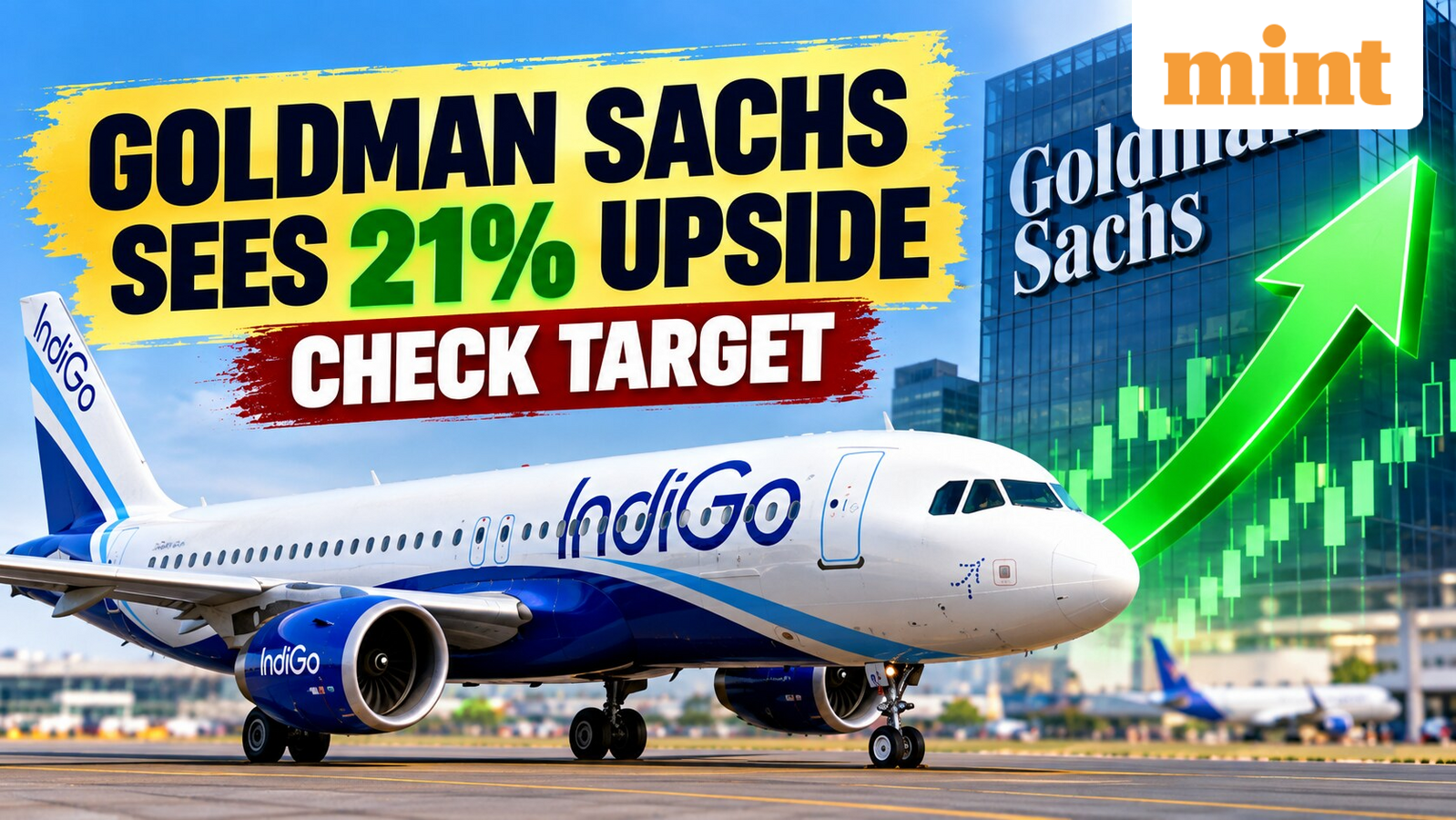
InterGlobe Aviation, the parent company of IndiGo, remained in focus on Tuesday, September 29, after Goldman Sachs reiterated its ‘Buy’ rating on the airline and retained its target price of ₹5,900. The brokerage’s target price implied an upside of more than 21% from IndiGo’s previous closing price of ₹4,874.50, putting the airline stock back on investors’ radar despite recent weakness.
Why Goldman Sachs remains bullish on IndiGo
According to media reports, Goldman Sachs remained positive on IndiGo’s long-term growth prospects, pointing to several factors supporting its view, including the airline’s sustained market share gains, favourable capacity dynamics in the domestic aviation industry, cost leadership and significant growth potential in its international operations.
A key part of the bullish thesis is IndiGo’s ability to continue gaining market share. The airline’s share of the domestic market has expanded considerably over recent years, increasing from around 50% in FY20 to around 65% in August 2026.
Goldman Sachs expects this market-share momentum to remain sustainable. The brokerage has reportedly pointed to liquidity challenges faced by the second-largest player as one factor that could support IndiGo’s continued dominance.
The broader capacity environment is another factor in focus.
Another factor supporting the brokerage’s outlook is the expected pace of industry fleet additions. Goldman Sachs expects fleet additions across the industry to remain modest over the medium term, a factor it believes could provide support to yields. Lower capacity additions relative to demand could support yields, providing a favourable backdrop for airline profitability.
IndiGo’s cost structure also remains an important part of the investment thesis. The brokerage expects the airline’s cost leadership to support profitability, particularly as operating conditions improve.
International operations represent another significant opportunity. Goldman Sachs believes IndiGo has substantial room to expand its international business, describing the opportunity as having a long runway for growth. This could provide another avenue for the airline to increase its scale beyond its existing domestic franchise.
However, higher fuel costs remain an important near-term headwind. IndiGo does not hedge fuel and therefore has been exposed to the sharp increase in aviation turbine fuel costs. Goldman Sachs nevertheless expects a significant improvement in profitability in FY28.
The brokerage’s ₹5,900 target price is based on a valuation of 10.4 times FY28 estimated EV/EBITDAR, in line with the airline’s long-term median multiple.
IndiGo stock price trend
IndiGo shares rose as much as 0.6% during Tuesday’s session to hit an intraday high of ₹4,895.90 on the BSE.
Despite the positive move on Tuesday, the stock has remained under pressure over the recent past. IndiGo shares have declined 3% in one week, 6% in one month and 8.5% over three months.
Over a six-month period, however, the stock has gained 18.5%. On a one-year basis, it has declined 15%. Over five years, the airline has delivered multibagger returns, with the stock gaining 142%.
The stock’s 52-week high stands at ₹5,958.75, which it touched on November 11 last year. Its 52-week low stands at ₹3,894.80, recorded in March 2026.
Q1 results: Fuel costs weigh on profitability
The bullish long-term outlook comes against the backdrop of a challenging first quarter for IndiGo. InterGlobe Aviation reported a standalone net loss of ₹382 crore for the quarter ended June 30, 2026, compared with a net profit of ₹2,161 crore in the corresponding quarter of the previous year.
On a consolidated basis, the company reported a net loss of ₹238 crore, compared with a profit of ₹2,176 crore in the year-ago period.
The sharp deterioration in profitability came despite strong revenue growth. Revenue from operations increased 20% year-on-year to ₹24,584 crore in Q1 FY27, compared with ₹20,496 crore in Q1 FY26.
However, expenses increased at a significantly faster pace of 35.1%. Aircraft fuel expenses were a major contributor, surging nearly 86% to ₹10,830 crore during the quarter.
Airlines such as IndiGo, which do not hedge fuel, faced significant pressure from the surge in jet fuel prices during the quarter. Crude oil prices moved above $100 per barrel amid the Iran war, putting additional pressure on airline margins.
IndiGo attributed the weak profitability to a combination of higher fuel prices, adverse foreign exchange movements and the impact of the Middle East conflict.
“The first quarter was shaped by a volatile operating environment, with elevated fuel costs and network-related constraints in the Middle East impacting profitability. At the same time, demand remained healthy and our revenue performance improved year-on-year, supported by improved yields and continued customer preference for IndiGo as we proudly served more than 31 million passengers,” said Rahul Bhatia, Managing Director, IndiGo.
Thus, while the near-term operating environment remains challenging due to fuel costs and geopolitical disruptions, Goldman Sachs’ positive view is based largely on IndiGo’s market-share gains, cost advantages, industry capacity dynamics and the long-term potential of its international business.
Disclaimer: The views and recommendations made above are those of individual analysts or broking companies, and not of Mint. We advise investors to check with certified experts before making any investment decisions.
About The Author