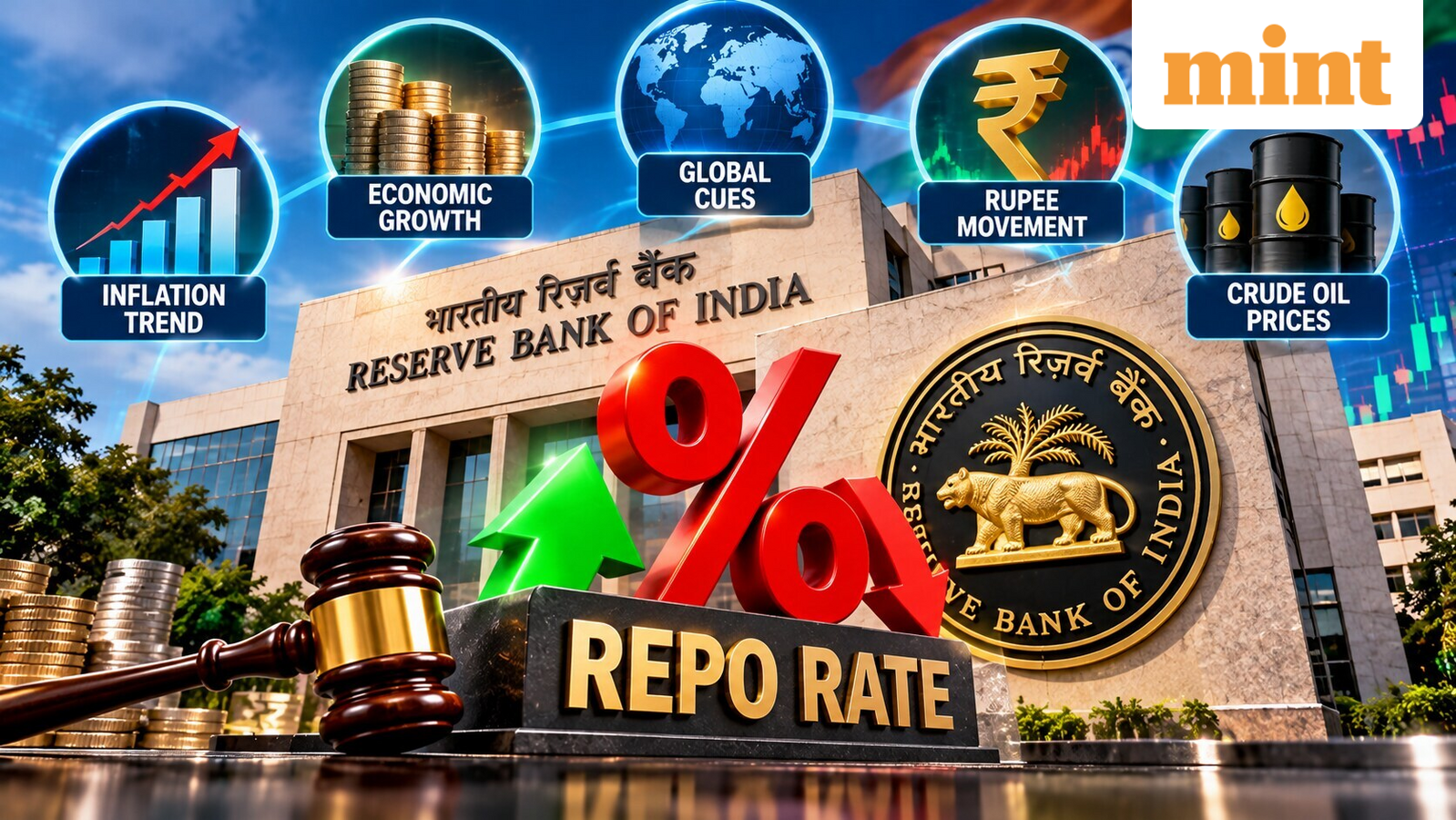
RBI MPC Meeting October 2026: The Reserve Bank of India’s (RBI’s) six-member Monetary Policy Committee (MPC) will meet from October 5 to 7 to review economic conditions and determine the next course of monetary policy. The MPC’s decision is scheduled to be announced on October 7, with investors closely tracking the possibility of a repo rate hike—the first such increase since February 2023.
The Reserve Bank of India (RBI) has kept the repo rate unchanged at 5.25% for the last four consecutive policy meetings, after cutting it by a cumulative 125 basis points in 2025. However, rising inflation, higher energy prices and rate hikes by several major global central banks have strengthened expectations that the RBI may shift towards a tighter monetary policy stance in October.
RBI likely to hike rate by 25bps?
Economists expect the Reserve Bank of India (RBI) could consider a 25 basis point increase in the repo rate, taking it to 5.50%. If the hike materialises, it would be the central bank’s first rate increase since February 2023 and could signal a shift towards a tighter monetary policy stance amid changing inflation and economic conditions.
Rajeev Sharan, Head of Research at Brickwork Ratings, said the RBI, after maintaining rates through 2026, is facing increasing pressure to raise the repo rate at its October policy review. He said a 25 basis point hike to 5.50% has become a realistic possibility, marking the first increase since early 2023.
“The arguments for a rate hike have gained strength, with retail inflation rising to 4.82% and expected to peak during the festive quarter. Crude oil prices remain above $100 a barrel, the rupee has weakened beyond 96, and the Fed’s recent rate hike has narrowed the interest-rate differential, adding to pressure on the currency. However, inflation remains within the RBI’s target range and price pressures have yet to become broad-based, which could prompt the MPC to hold rates once again while adopting a firmly hawkish stance. In either scenario, a rate cut appears unlikely for now, with the next policy move more likely to be a hike than a reduction,” Sharan said.
5 factors that will decide rate hike in RBI MPC October 2026
Sugandha Sachdeva, Founder of SS WealthStreet, believes that the primary objective of the RBI’s monetary policy is to maintain price stability while keeping growth considerations in mind.
“Against this backdrop, the base case for the upcoming MPC meeting is a 25-basis-point hike in the repo rate, as inflationary pressures have strengthened while domestic economic growth remains resilient,” Sachdeva said.
1] Domestic Headline and Food Inflation
CPI inflation accelerated to 4.82% in August from 4.45% in July, moving further above the RBI’s medium-term target of 4%.
According to Seema Srivastava, Senior Research Analyst at SMC Global Securities, consumer price inflation has rebounded from earlier lows, putting renewed pressure on the RBI’s medium-term 4% target. Persistent volatility in perishables and staple food items risks unanchoring household inflation expectations. Even with manageable core inflation, recurrent food price spikes threaten second-round spillovers into wages and services, strengthening the case for a preemptive rate hike.
2] Crude Oil Dynamics and Global Commodity Softening
Crude oil, which previously hovered between $100 and $107 per barrel, poses a severe imported inflation hazard for an economy that imports over 85% of its oil. However, any ongoing decline in international benchmarks provides vital macroeconomic relief.
“Lower fuel prices soften domestic transportation costs, narrow the trade deficit, and reduce input friction across manufacturing, affording the MPC significant room to hold rates steady,” said Srivastava.
3] Rupee Depreciation
A weakening domestic currency compounds imported inflation by elevating the cost of dollar-denominated goods. Defending currency stability and avoiding excessive capital flight often requires a wider interest-rate differential.
“The rupee’s depreciation towards 97 against the US dollar adds another layer of concern. A weaker currency raises the cost of imports, particularly crude oil and other commodities, and can consequently add to domestic inflation. The RBI is therefore likely to assess rupee weakness alongside capital flows and global financial conditions, although the repo rate is not primarily an exchange-rate defence mechanism,” said Sugandha Sachdeva.
4] Global Yield Spreads and Capital Flows
Higher-for-longer sovereign bond yields in advanced economies—notably US Treasuries—tighten global liquidity and dampen emerging market risk appetite. A narrow yield gap risks accelerating foreign portfolio outflows from Indian equity and debt markets, creating additional pressure on domestic financial conditions.
5] Banking system liquidity
According to Sachdeva, banking-system liquidity, credit growth and monetary-policy transmission will influence the MPC’s assessment. The RBI will evaluate whether prevailing liquidity conditions are consistent with its desired monetary stance and whether previous policy actions are being effectively transmitted through lending and deposit rates.
Meanwhile, Srivastava highlighted that the October meeting coincides with peak festive consumption, a crucial period for retail, automobile, and housing credit. An immediate rate hike would raise borrowing costs via external benchmark lending rates, potentially dampening consumer demand.
Disclaimer: This story is for educational purposes only. The views and recommendations above are those of individual analysts or broking companies, not Mint. We advise investors to check with certified experts before making any investment decisions.
About The Author