This ugly shoe brand won over Gen Z. Its stock's low valuation could earn investors' attention
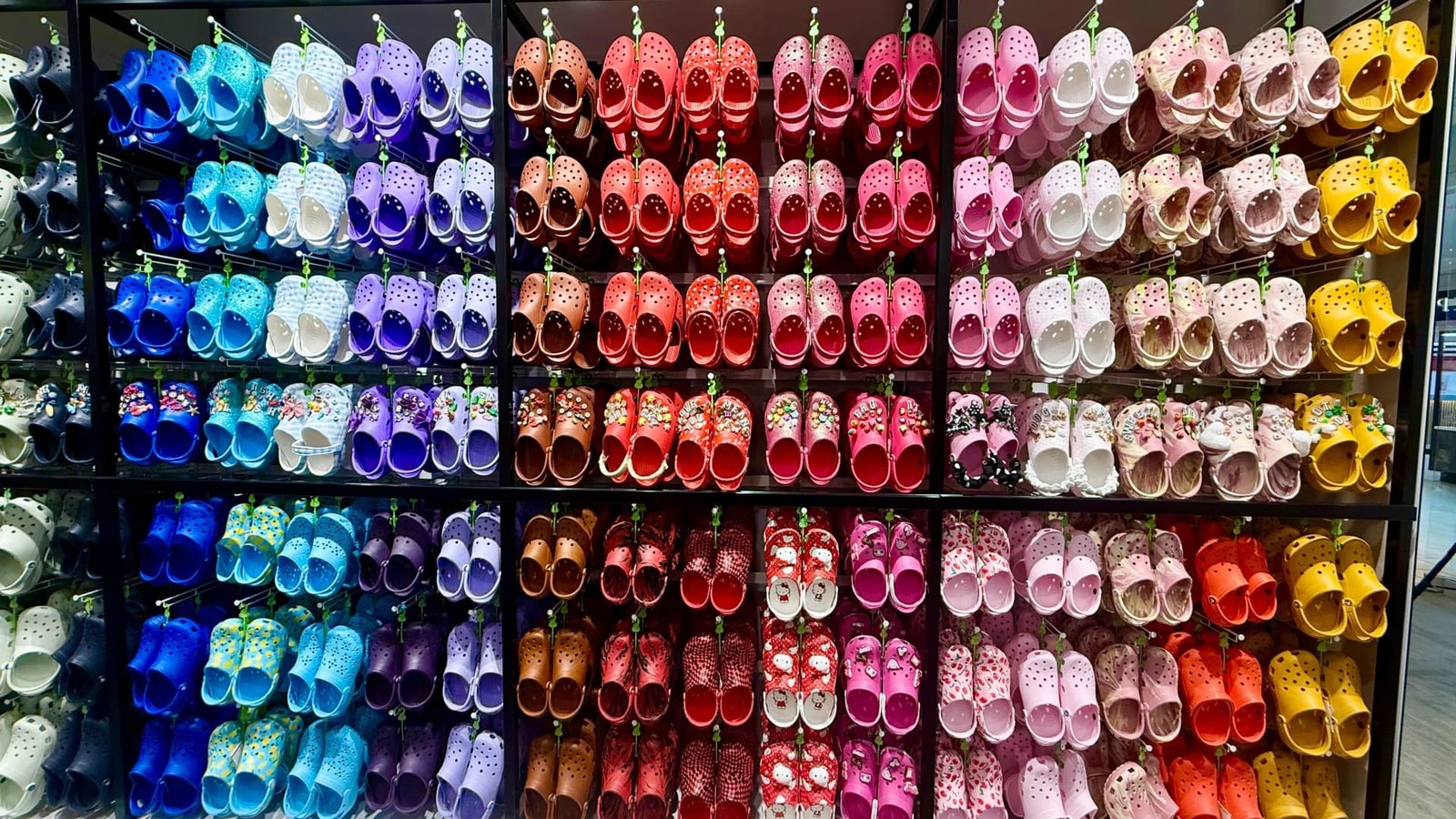
Celebrity partnerships, a TikTok shop integration and new styles such as ballet flats are fueling rapid demand for Crocs among Gen Z consumers, especially in key global markets like China. Recent channel changes have made it difficult for investors to gauge revenue growth, weighing on Crocs’ stock growth. At just eight times forward earnings, Crocs sits at a steep discount to struggling peers like Nike. Crocs have long been known as a polarizing fashion statement — you either love them or hate them. The same may be said about its stock. The company has quietly transformed from a single-product utilitarian clog maker into a global footwear powerhouse. Through high-fashion runway collaborations, celebrity endorsements and rapid expansion in key markets like China, the brand is demonstrating remarkable long-term resilience. While investors have taken note of Crocs’ underlying strength, the stock’s rally has stalled in recent months over channel revenue recognition changes and lingering turnaround questions at its casual footwear brand HeyDude. Still, with strong cash flows, a $2 billion buyback plan and a bargain-basement valuation relative to peers such as Nike , the stock may offer an attractive risk-reward profile at its current price. From boom to near bust Crocs was founded in 2002 by three friends who wanted to create a shoe that appealed to boaters. What they came up with was a revolutionary clog made of Croslite, a proprietary, closed-cell resin that is so lightweight it floats in the water. The clogs were built for comfort and durability with 13 ventilation holes on the top of the shoe and an open back that allowed water to escape and air to enter to allow them to dry quickly. Crocs’ appeal soon stretched beyond water enthusiasts to gardeners, healthcare workers, chefs and really anyone looking for a comfortable, waterproof, easy-to-clean shoe with good traction and slip-on convenience. While the shoe was considered ugly, that became part of its appeal. By the time the company went public in 2006 at $21 a share, the brand’s look was iconic. The company expanded its operations not realizing it was running headlong into a global economic recession. The result: mountains of unsold inventory. Shares tumbled to as low as 79 cents a share intraday in late 2008, as doubts grew about its ability to stay in business. Crocs ultimately went through several turnaround efforts . Each time, the company shuttered stores and factories, reassessed its products and got back on the path to profitability, only to relapse. Andrew Rees was named CEO in 2017, and he has succeeded by embracing new styles that are still rooted in Crocs’ quirkiness. This has smoothed out seasonal sales trends and attracted new types of customers. Crocs Saturday Sandal is one example. On the second-quarter earnings call, Rees said sandals have “strengthened the trajectory” in Crocs’ North American business and the category is expected “to become an even more meaningful growth driver of our global business in 2027 and beyond.” Lifestyle shoes, which include the Classic Ballet flat, continue “to see notable sell-outs globally, particularly in Asia,” Rees said. Bank of America analyst Kendall Toscano wrote in a post-earnings report that “we are encouraged by recent stabilization in classic clogs, as well as the fact that growth is becoming increasingly diversified. CROX is seeing strong traction across sandals, ballet flats, newer sport/fashion clog franchises.” A badge of individuality Crocs’ bold marketing strategy has been to turn its shoe into the ultimate badge of individuality, authenticity and high-fashion cool. It has done this by partnering with celebrities such as Justin Bieber, Post Malone, Bad Bunny, Drew Barrymore and Millie Bobby Brown as well as luxury designers such as Balenciaga and Christopher Kane. Its Jibbitz charms, which snap directly into ventilation holes on its shoes, let wearers mix and match playful designs to effortlessly showcase their personal style. “The ability to personalize a growing portion of our product offering remains a powerful driver of consumer engagement and a key competitive advantage for our brand,” said Rees on the call. Another strategy is to integrate live shopping directly within a social media platform. “We’ve also become the first brand to launch a shoppable series within TikTok Shop. The series titled, Déjà Shoe, brought content and commerce together in a seamless digital-first experience,” said Rees on the call. He said the series amplified demand for its ballet flats and sandals and drove traffic to Crocs’ website. Channel changes While Crocs is connecting well with Gen Z customers, it may have confused investors in its latest earnings release . The company outpaced analyst estimates and raised its full-year forecast. The Crocs brand topped $1 billion in revenue for the first time. Despite the strong results, the stock slid 7.4% due to a hazy announcement about how it will recognize wholesale and direct-to-consumer revenue. Williams Trading analyst Sam Poser attributed the stock’s response to the lack of details provided by management. “Not only wouldn’t CROX management say what business was shifting from DTC to wholesale, they also would not say the amount of the change,” Poser said. Barclays analyst Adrienne Yih said the changes resulted in reported revenue moving from direct to consumer to wholesale “and is recognized at a lower wholesale value, creating a revenue headwind despite no change in consumer demand, units sold, or market share.” “The benefit to CROX is a more efficient, lower-friction, and more profitable relationship, with the partner taking greater ownership of inventory and execution while CROX gains improved economics and better long-term channel alignment, meeting the end-consumer ‘where they want to shop,” Yih said. Wall Street is rather mixed on the stock. Crocs has eight buy, eight hold and one underperform ratings with an average price target of $135.90, according to LSEG. Crocs valuation Crocs stock is up more than 36% this year, leading some investors to think they’ve missed the boat. Despite recent gains, the stock still trades below levels seen five years ago at only 8 times next 12-months forward earnings. Part of the reason for the discount is the poor performance in its HeyDude division. Crocs bought the brand, which is known for its slip-on styles, for $2.5 billion in cash and stock in 2022 . The division has struggled ever since with multiple quarters of double-digit revenue declines. Turnaround initiatives that include inventory clearance, refreshed designs, international expansion and leveraging Crocs’ marketing momentum are starting to pay off. Second-quarter revenue for the unit fell 5.7% year-on-year, less than feared, and the company raised its full-year guidance for the brand to a decline of 4% to 2% year-on-year, up from prior guidance of down 7% to 5%. Meanwhile, Crocs continues to generate strong free cash flow — $705 million in the last 12 months — and is using it to buy back shares. In July, it increased its buyback program by $1.5 billion, bringing its total authorization to $2 billion. At just over 35% of its market capitalization, the buyback has the potential to boost its per-share earnings growth and could help put a floor on Crocs’ stock price. China growth Crocs valuation looks especially attractive relative to peers such as Nike . Even though the sneaker maker has been struggling , shares still trade at 23 times forward earnings, which is far richer than Crocs’ valuation. Nike recently predicted its revenue would decline by “high-single digits” in its fiscal year ending May 31, 2027, while Crocs sees full year 2026 revenue up 1% to 2%. Weakness at Nike is coming from three main areas: sportswear, its retro Jordan brand and its greater China business. Crocs has limited exposure to sportswear and retro fashions while its China sales trends have been strong. Nike’s China sales dropped 26% last quarter on a currency-neutral basis. The Crocs brand’s international sales rose 7%, led by double-digit growth in China, with substantial room to ramp. “China is our second largest international market, but it accounts for just 4% of our global sales. So, there’s a lot of people in China. There’s a lot of feet. Our product plays really well to that consumer. The price is really well positioned in terms of where we are from a consumer standpoint,” said CFO Patraic Reagan at the Baird Global Consumer, Technology & Services conference on June 3. Crocs won over Chinese Gen Z by downplaying its U.S. origin, teaming up with local celebrity icons, and rebranding its “Come As You Are” campaign to “Born to Be Free,” which tapped directly into youth demand for self-expression and independence. Serving as a comfortable, height-boosting alternative to high heels, the brand’s customizable platform clogs have been a massive hit. “Beginning with China, the second quarter was a record revenue quarter, including another successful mid-season festival. Importantly, we leveraged our read and react abilities to quickly bring China-for-China product to market, including unique iterations of our ballet flat,” Rees said on the earnings call. While giants like Nike navigate international slumps, Crocs continues to capture market share with Gen Z-focused campaigns and a surging footprint in China. Coupled with stellar free cash flow generation, current price levels allow investors to buy into that momentum at a significantly lower valuation. THIS CONTENT IS PROVIDED FOR INFORMATIONAL PURPOSES ONLY AND DOES NOT CONSTITUTE FINANCIAL, INVESTMENT, TAX OR LEGAL ADVICE OR A RECOMMENDATION TO BUY ANY SECURITY OR OTHER FINANCIAL ASSET. THE CONTENT IS GENERAL IN NATURE AND DOES NOT REFLECT ANY INDIVIDUAL’S UNIQUE PERSONAL CIRCUMSTANCES. THE ABOVE CONTENT MIGHT NOT BE SUITABLE FOR YOUR PARTICULAR CIRCUMSTANCES. BEFORE MAKING ANY FINANCIAL DECISIONS, YOU SHOULD STRONGLY CONSIDER SEEKING ADVICE FROM YOUR OWN FINANCIAL OR INVESTMENT ADVISOR. Click here for the full disclaimer.