
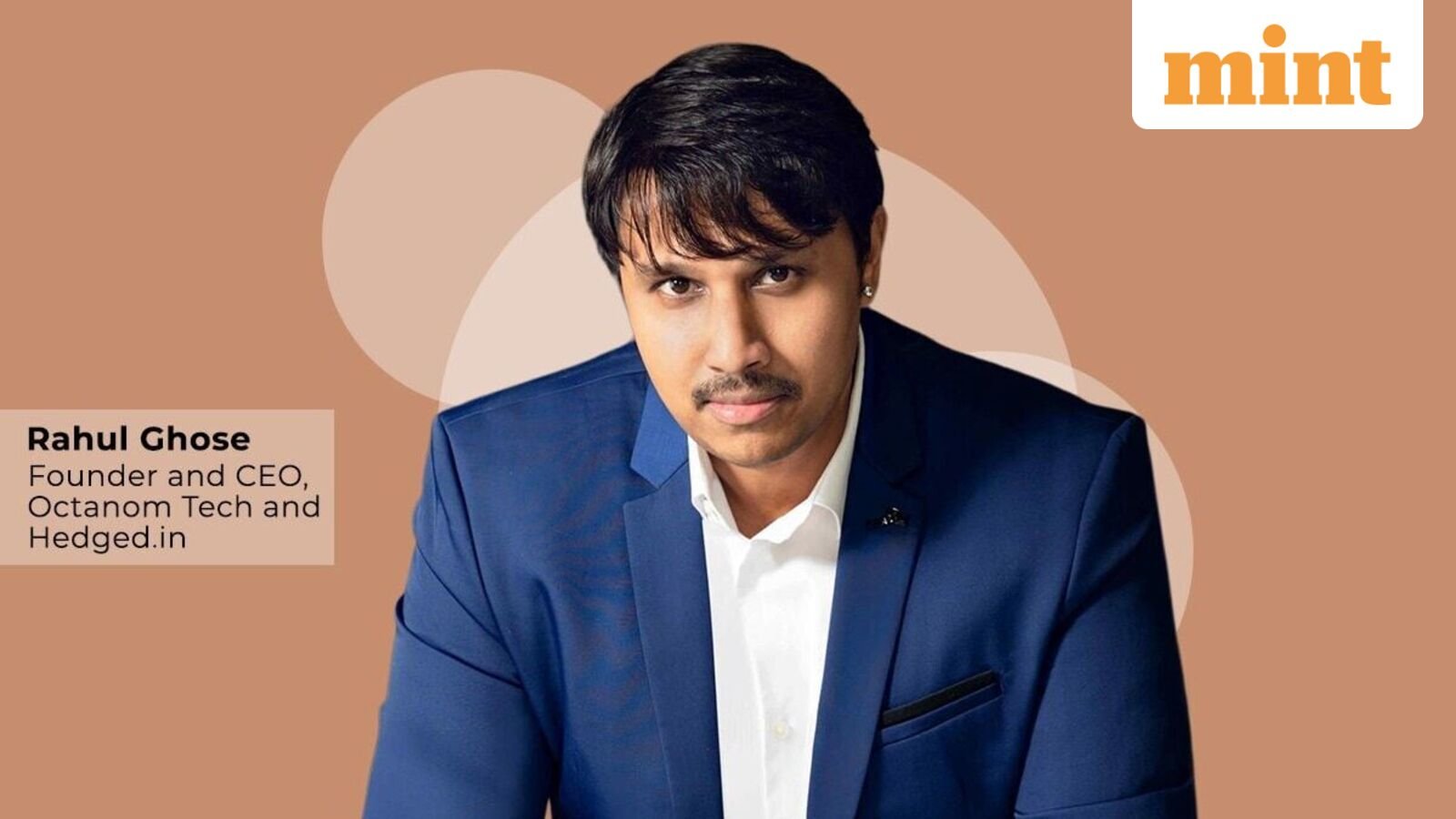
Expert view: Rahul Ghose, Founder and CEO of Octanom Tech and Hedged.in, sees a chance that the Nifty 50 will end the year in the red, with a better December than October. In an interview with Mint, Ghose said the market is oversold, so a sharp relief rally toward 23,800–24,200 is possible. Talking about foreign capital flows, he said FPIs will come back when the dollar and US yields peak, not before. Edited excerpts:
Nifty looks set to end the year in the red. Do you expect a miracle rally?
Getting back into the green would need a rally of about 15% in ten weeks. The Nifty ended 2025 at a solid close above 26,100 and stood at 22,888.95 on 19 October.
I wouldn’t bet on that. The market is oversold, though, and sentiment is very washed out, so a sharp relief rally toward 23,800–24,200 is quite possible.
That would need two triggers: a credible de-escalation around Hormuz that pulls Brent back below $90, and a peak in US yields.
On the charts, 22,000–22,300 is the zone the bulls must hold, and the index needs to close above 23,200 before we can talk about a trend change. My base case is a negative year with a better December than October.
I would use the volatility to build positions in quality names rather than chase a “miracle”.
The economy is resilient, so why isn’t it attracting foreign investors?
Foreign investors are reacting to the global price of money and to relative opportunity, not to India’s growth story. India’s growth is genuine.
Real GDP grew 7.8% in Q1 FY27, and the IMF has revised India’s growth outlook up to 7%. But the 10-year US Treasury yield is above 5.2%.
When a global investor can earn that risk-free in dollars, an Indian equity that also carries currency risk has to clear a very high bar. Two other forces are at work.
Money has been chasing the AI trade, and flows have shifted toward North Asian markets where the AI- led rally has drawn foreign interest.
A weak rupee also eats into dollar returns. The scale shows how strong these forces are: FPIs withdrew ₹3.08 trillion in CY26, nearly double the ₹1.66 trillion pulled out in all of 2025.
Domestic SIP money has kept the market steady. Foreign flows will come back when the dollar and US yields peak, not before.
Q2 has started well after a healthy Q1. Will the market reward it, or focus on the second- and third-order effects of oil?
Both, but at the level of individual stocks rather than the index. The early numbers are encouraging. TCS’s consolidated net profit rose about 15% year-on-year. HCLTech’s net income grew 21.2%, and its shares jumped over 8%. Trent rose 12.64% after a strong Q2 business update.
The market is clearly rewarding companies that beat expectations.
The index, however, will keep looking at oil’s knock-on effects. The Indian crude basket has averaged roughly $120 a barrel in October, while retail petrol and diesel prices have been frozen since June.
That means losses for oil marketing companies, pressure on the fiscal maths, and squeezed margins in paints, chemicals, tyres and aviation.
The third-order effect is already visible: the RBI raised the repo rate by 25 bps to 5.50%, its first hike since February 2023. Earnings upgrades will drive individual stocks, but oil will cap how much the market as a whole re-rates.
Which sectors and themes are you betting on, and what are your top picks?
I’m positioning for a market where staying selective matters more than chasing the whole index:
Large private banks: Credit growth is healthy, and valuations are reasonable after the correction. Top picks: HDFC Bank, ICICI Bank.
IT services: Demand is bottoming, AI-led deal wins are coming through, and a weak rupee helps margins. Top picks: HCL Tech, TCS.
Capex and electrical equipment: Gross fixed capital formation rose 11.9%, with electrical equipment production up 27%. Top picks: Larsen & Toubro, Bharat Electronics.
Upstream energy as a hedge in case oil stays high. Top pick: ONGC.
I’m underweight oil marketing companies, paints, aviation and rate-sensitive mid-cap financials until crude settles.
There is chatter around LTCG tax. Can removing it attract FPIs back? Can it offset rising yields, a weak rupee and costly oil?
SBI Research, in its October 12 Ecowrap, called on the government to reconsider the LTCG tax.
In July, the government told Parliament there was no proposal to scrap it.
If it were removed, it would send a strong signal and would help long-only, tax-sensitive funds at the margin.
The bond market shows that tax incentives can work: record foreign inflows into government bonds followed tax incentives for overseas investors. But the effect is small compared with the macro forces.
Today, FPIs, domestic and retail investors all pay the same 12.5% LTCG rate.
A 12.5% tax on gains matters far less than a 5%-plus risk-free US yield, rupee depreciation, or oil above $100. Scrapping it could speed up a return of foreign money once the global cycle turns, but it cannot cause that turn by itself.
Disclaimer: This article is for educational purposes only and does not constitute investment advice. The views and recommendations expressed are those of individual analysts or broking firms, not Mint. We advise investors to consult with certified experts before making any investment decisions, as market conditions can change rapidly and circumstances may vary.
About The Author