How investors can position ahead of into the Fed's next policy decision
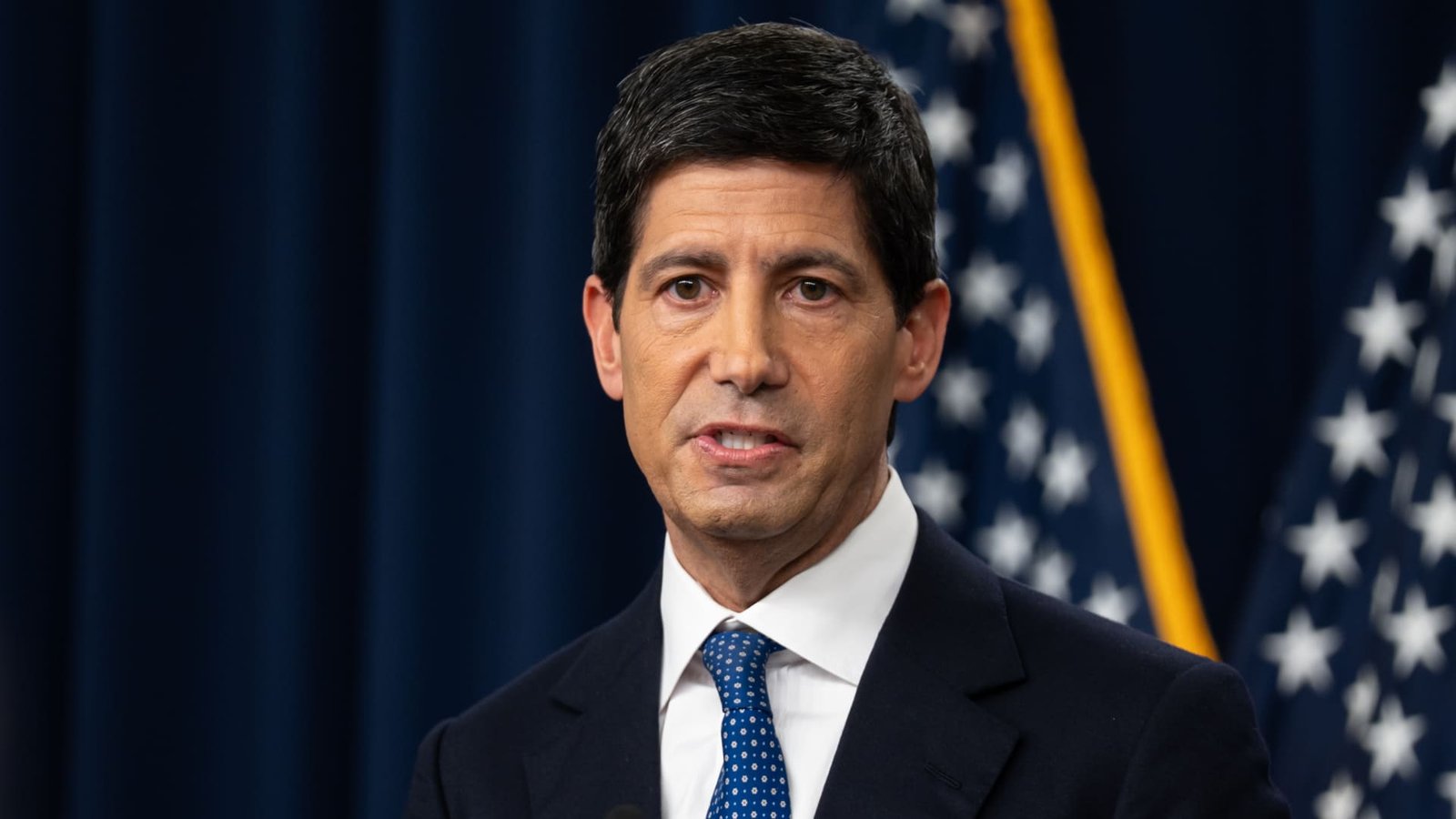
The Federal Reserve’s October rate decision has been a focus for investors and economists as Chairman Kevin Warsh has rejected traditional forward guidance. Fed officials are widely expected to keep rates unchanged, with the CME Group’s FedWatch tool showing a roughly 90% chance the central bank’s target range for the federal funds rate remains at 3.75% to 4%. But Warsh’s tone and commentary in the news conference following Wednesday’s announcement will be closely watched, with EY-Parthenon chief economist Gregory Daco calling it a “delicate balancing exercise” with real implications for the markets. “Warsh will have to dispel any impression that the policy decision was political, ahead of the midterms. Then, he will be pushed to justify a pause following the September insurance rate hike and three hotter-than-expected inflation reports,” wrote Daco in an Oct. 23 note. “While he will want to avoid forward guidance, he cannot risk the Fed’s credibility by saying the Fed simply wants more time to assess the data, as that would undermine the urgency of the September move and could lead to a bond market selloff.” Here is how a select group of investors see the Fed and the market opportunities and challenges going into the decision. The case for commodities SoFi chief market strategist Liz Thomas said investors should increase exposure to commodities regardless of the Fed’s rate path going forward. “I think what you want to do right now is have exposure to all the different scenarios,” said Thomas. “If we have a scenario where inflation stays high, [and] we’ve got weird weather patterns through the rest of the year, commodities are a place to hedge that.” Thomas said the Invesco Optimum Yield Diversified Commodity Strategy ETF (PDBC) is one way to play the commodity market. PDBC has a net expense ratio of 0.59% and is up 51% year to date. PDBC YTD mountain PDBC year to date Phil Rosen, chief market strategist at Silvia, is also bullish on oil and energy regardless of the Fed decision. “XLE, I think that’s a great play for the fourth quarter and going into 2027,” said Rosen. “If you believe AI is going to be even half as good as the bulls think it is, we are going to need way more power and energy,” he said, adding: “I don’t see the Iran conflict stopping tomorrow or even in the coming weeks or months. That is also a tailwind.” Energy is the best-performing sector in the S & P 500 in 2026, surging 55% in that time, as oil prices stay elevated due to the Iran war. Marathon Petroleum , Valero , Phillips 66 and APA have more than doubled year to date to lead the gains. Playing defense George Acheampong, founder of Capitalwize, sees opportunity in defensive sectors such as healthcare and consumer staples going into the Fed decision. “My preference is for businesses with durable demand, strong cash flow and the ability to protect margins if inflation stays elevated,” he said. “My filter is pretty simple, can the business create shareholder value if the Fed offers no relief. I want companies that fund their own growth.” The State Street Consumer Staples Select Sector SPDR ETF (XLP) and the State Street Health Care Select Sector SPDR ETF (XLV) are two ways Acheampong is playing those two sectors. The former is up 8% in October, and the latter has rallied 6%. Thomas also sees upside in healthcare as a beneficiary of shifts in market sentiment and portfolio rotation . “Healthcare has been and will continue to be one of the beneficiaries as investors get nervous about technology,” said Thomas. “Places like biotech and pharma have been that beneficiary for a while in this cycle and I think that continues to be the case.” In healthcare, Rosen said Eli Lilly is his top pick. “They are best in class at GLP-1 pharmaceutical research and they are also a massive AI beneficiary and AI adopter.” Eli Lilly shares are up 19% for the year, outpacing the S & P 500’s 13% advance in that time. The stock is also on pace for its 10th consecutive annual gain. Ultra high net worth perspective Charlie Garcia, founder of R360, a group for investors with net worths of more than $100 million, said the group is very bullish on the upside of artificial intelligence and the AI build-out, but is focused on a simplified investment approach. “There are about 600 stocks with AI somewhere in the pitch and nobody can sort that out. So our members asked three plain questions:’Who powers it?’, ‘Who pays for it?’ and ‘who houses it?’,” said Garcia. The group has three top picks under that framework: Constellation Energy , Blackstone and Equinix . “These data centers eat electricity like a small city, so you look at Constellation Energy. Somebody has to finance hundreds of billions of dollars of buildings and data centers, so you look at Blackstone. The computers have to live somewhere so you look at Equinix — which is the biggest data center landlord in the world. If it’s the ‘gold rush’ you don’t have to know which miner strikes gold, you just sell the picks and shovels and the land,” said Garcia. Tad Fallows, founder of Long Angle, a group that holds portfolios between $5 million and $100 million, said members are divided on the impact of the Fed decision on the market.A poll of members conducted Oct. 21-22 with more than 200 respondents showed 52% are rebalancing toward safe asset with 48% saying they are not. However, sentiment toward parts of AI trade is turning more bearish, according to Fallows. In the survey,13% of members said the AI trade is “significantly overvalued,” and 46% said it is ‘somewhat overvalued’. “I would say the stocks that have seen the massive runup as part of the AI bubble,” said Fallows citing names such Sandisk and Oracle as two stocks the group is bearish about and members may be looking to sell. Fallows added SpaceX and Tesla are also falling out of favor with Long Angle members.”There is a consensus bearishness on the Elon trade, you’ve got a quarter of people who are big time fanboys, but then three quarters of people saying this is absurd.”