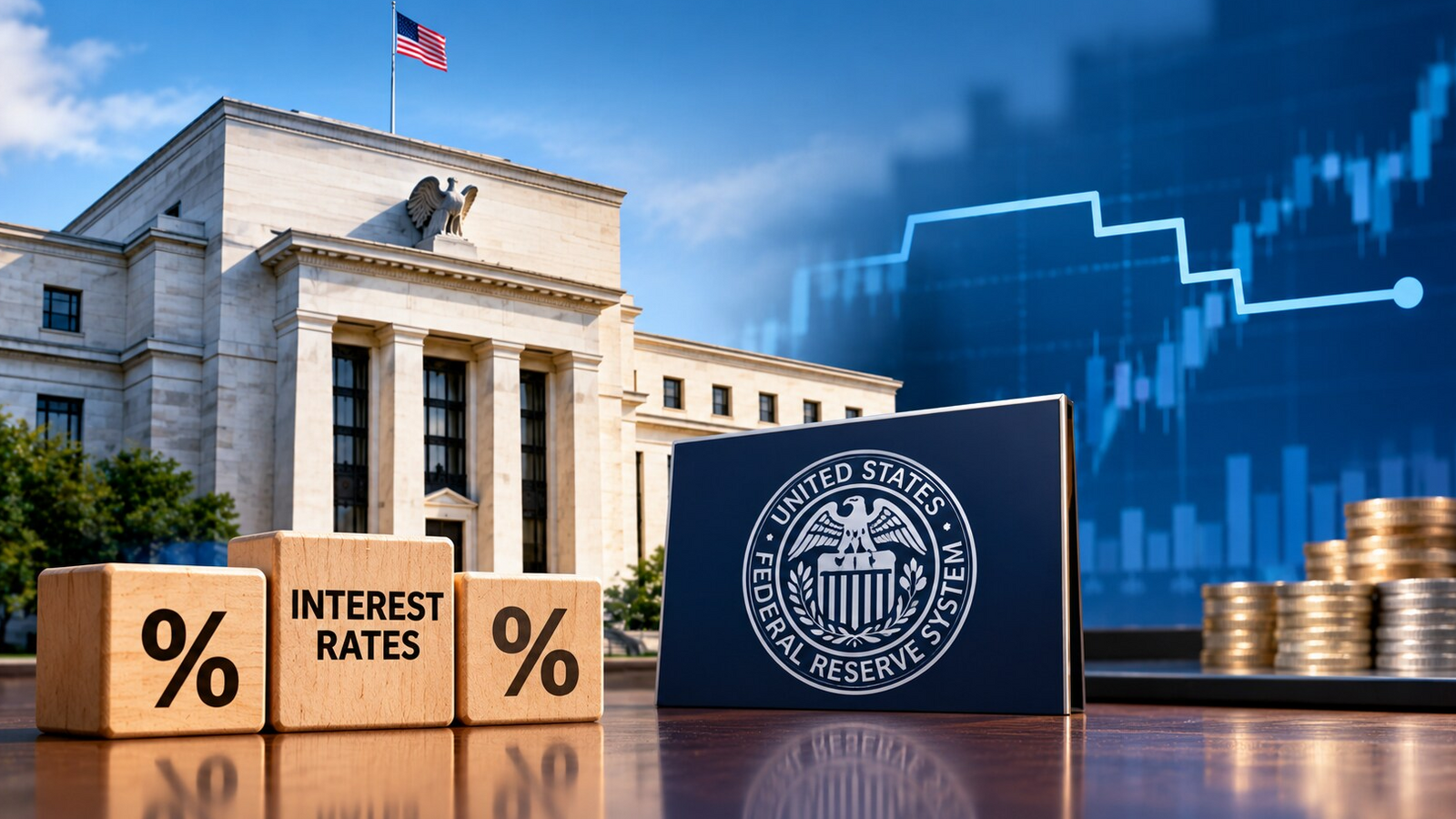
As widely anticipated, the US Federal Reserve left interest rates unchanged on Wednesday, October 28, giving policymakers more time to assess the impact of the previous rate hike on the economy and financial conditions, even as inflation remained above the central bank’s target.
The Federal Reserve voted 10-2 to keep interest rates unchanged at 3.75%–4%, with two policymakers dissenting in favour of a 25-basis-point hike. Fed Governor Lisa Cook and Cleveland Fed President Beth Hammack dissented from the policy decision, favouring a 25-basis-point interest rate hike.
“Inflation remains elevated,” the Fed said in a statement released after its two-day policy meeting. Holding off on an increase will allow “the accumulation of more information” that will help determine what policy the Fed should pursue “to ensure a timely return of inflation” to the central bank’s 2% inflation target, the statement said.
The latest decision also comes less than a week before the US midterm elections, with the cost of living and affordability among the key concerns for voters.
Fed seeks more data to assess inflation and future policy path
The policymakers need more information to assess the economic outlook and determine the future course of monetary policy. Persistent inflationary pressures, alongside signs of moderation in the labour market, remain key factors shaping the central bank’s policy outlook.
The economic activity continued to expand at a solid pace, with consumer spending remaining resilient, productivity staying strong and capital expenditure holding up. The inflation remained elevated, while job gains slowed in September. Workforce growth and the unemployment rate changed little over the period.
The US Federal Reserve and other major central banks are grappling with growing inflationary pressures as the war in the Middle East shows no signs of easing, keeping oil and gas prices elevated.
At its September meeting, the Federal Open Market Committee (FOMC) voted unanimously to raise the benchmark interest rate by 25 basis points, marking its first-rate hike since July 2023. The move took the federal funds target range to 3.75%–4%, as policymakers sought to rein in persistently elevated inflation.
Latest inflation readings show prices rising
The consumer inflation accelerated in September as goods and services became more expensive, underscoring the persistent challenge of rising prices just days before midterm elections in which affordability has emerged as a key issue.
The consumer price index (CPI) rose 3.7% in September from a year earlier, up from 3.4% in August, according to the Labor Department. On a monthly basis, prices increased 0.6% between August and September, marking the biggest gain in five months.
The latest available reading of the Federal Reserve’s preferred inflation gauge, the personal consumption expenditures (PCE) price index, showed that prices rose 3.4% in August from a year earlier. This was below July’s year-on-year increase of 3.7% but above the 2.8% recorded before the Iran war began on February 28. Inflation stood at 2.5% when Trump took office in January 2025, according to the Associated Press.
Attention has now turned to the US PCE inflation data due on Thursday, which could offer further insight into the trajectory of monetary policy.
About The Author