
GM is shifting gears to the Nasdaq, trying to draft behind Walmarts lead
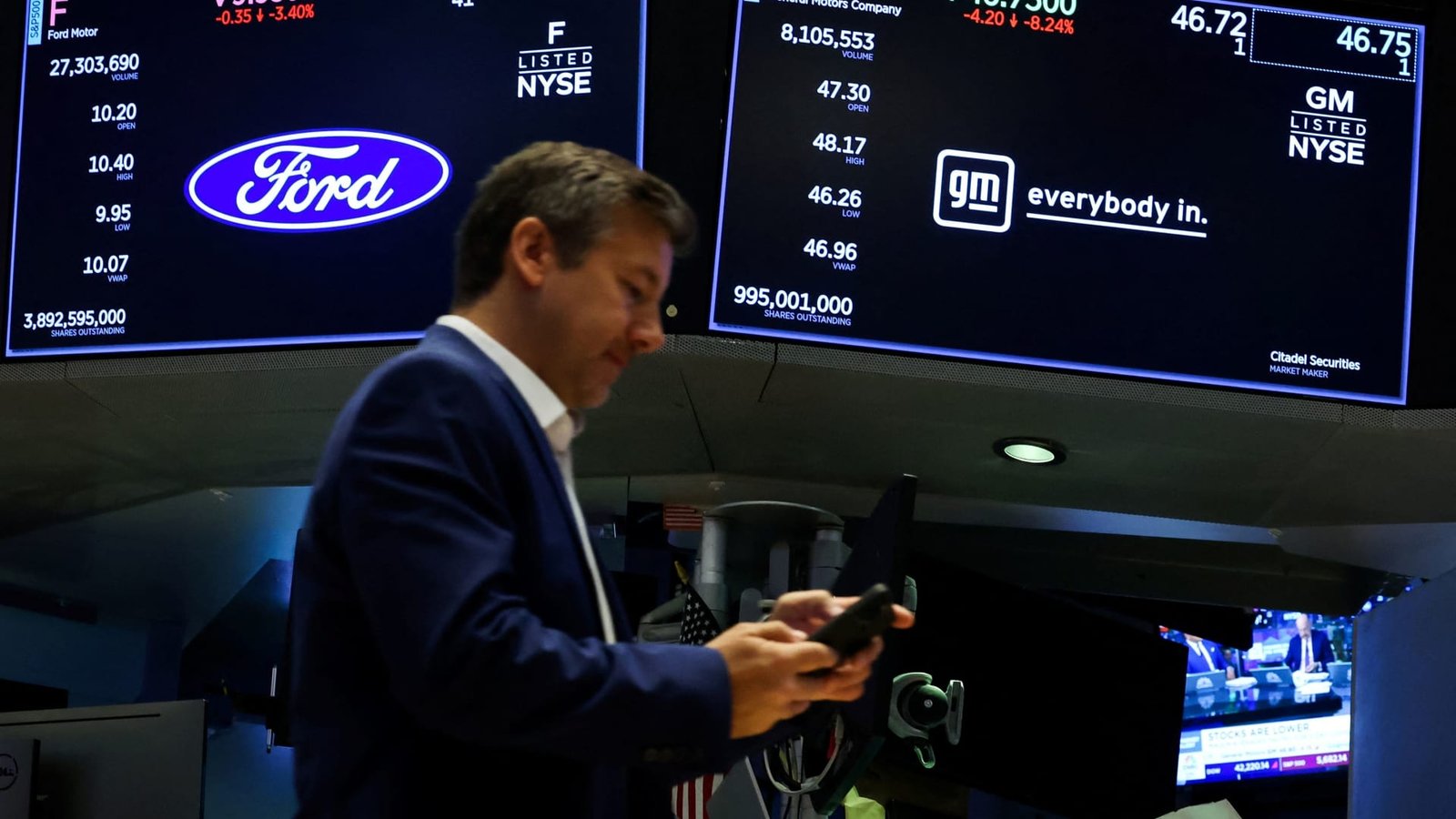
General Motors planned migration to the tech-heavy Nasdaq is an effort to raise its valuation, reframe its brand identity and boost passive capital inflows. It worked for Walmart as the discount retailer embraced artificial intelligence, robotics and digitization. Can it work for GM as the automaker shifts further away from the internal combustion engine toward electric and autonomous vehicles? Shares of GM closed higher by 5.5% on Tuesday, its largest move since Jan. 27, after announcing it would switch its listing from the NYSE to the Nasdaq effective Nov. 17. On Wednesday, the stock gained another 2.4%. This could be a start in reaching these goals. The valuation perception gap Stuck with an unduly depressed valuation of just five times forward earnings, GM’s leadership has been facing one core question: what is it going to take to earn Wall Street’s attention? A new $20 billion share repurchase plan — equal to roughly 30% of its market cap — announced along with last week’s third-quarter earnings report , failed to win over investors. Instead, shares tumbled 7% amid worries of rising costs and pricing headwinds. This was despite the buyback being funded by $11.5 billion to $12.5 billion in expected 2026 adjusted automotive free cash flow, up from an earlier forecast of $9.5 billion to $11.5 billion. “Whatever headwinds GM faces right now, these multiples seem outrageously low for a company that generates as much cash as GM does, and uses that cash to buy back stock trading at such puny multiples,” Gordon Haskett analyst Don Bilson wrote in a post-earnings note. A new brand identity Many investors still remember 2009 when legacy pension costs pushed GM into bankruptcy. But now, pensions have been replaced by 401(k)s. More importantly, GM has two high-growth software and service-based business units under its hood that generate high margins and recurring revenue. So now, GM is becoming its own activist. By shifting its listing to the tech-focused Nasdaq, it is positioning its brand for a future that includes autonomous driving and electrification. OnStar delivers GM’s core navigation, safety, and connected services, serving as the critical backbone for Super Cruise as it progresses from current hands-free capabilities toward eyes-off and fully autonomous operation. Together these two digital businesses, which have gross margins of around 70%, ended the third quarter with $6.8 billion in deferred revenue, up 40% year-on-year. Compare that with a traditional software business like Snowflake , which has $9 billion in remaining performance obligations, up 30% year-on-year; a GAAP gross margin of about 71%, and still trades at about 120 times forward earnings. With this lofty valuation, Snowflake’s $119.92 billion market cap dwarfs GM’s $69.58 billion value. This comparison makes one wonder whether GM’s stock is getting any credit for its digital business? The index inclusion boost A switch to the Nasdaq will also make GM eligible for potential inclusion into the Nasdaq-100 index, which boosts passive capital flows, increases stock liquidity and lowers the cost of capital. Inclusion is worth an average of 1% above the market’s return, according to a 2021 study by Nasdaq, with $1.4 trillion in assets tied to the index. SpaceX has been a recent high-profile beneficiary of this effect thanks to Nasdaq’s new fast-track rules for fresh listings. Its near-immediate inclusion in the index unlocked a wave of forced buying from ETFs, and offered a perfect exit ramp for insiders looking to sell their holdings as shares were unlocked on a staggered schedule. GM could be a “prime candidate” for the Nasdaq-100’s annual index reconstitution, which will be announced on Dec. 11, according to Barclays analyst Dan Levy. He also sees the potential for a “stickier” shareholder base as a result. The Walmart blueprint Walmart offers a perfect example of the benefits of switching to Nasdaq . It announced the swap in November 2025 as part of a broader effort to build an AI-enabled e-commerce platform. Since the announcement, its stock has risen by about 11%. But perhaps more importantly, it has garnered a premium valuation, averaging a forward 12-month price-to-earnings ratio of 39 times since then, compared with an average of 23 times for the prior 10-year period. Walmart continues to lean into technology. Maren Waggoner, its chief people officer for associate experience and digital, told CNBC’s Leslie Picker at the 2026 CNBC Workforce Executive Council Summit in New York City on Tuesday that the company is giving its 2.1 million employees the training and tools necessary to integrate AI into their workflow. Similarly, GM is trying to ease its customers into what can be a scary technologically powered future with the introduction of new hybrid models that could serve as the bridge for drivers that are not yet ready for a fully electric vehicle.