
Kimberly-Clark closes its acquisition of Tylenol maker Kenvue. What to expect next
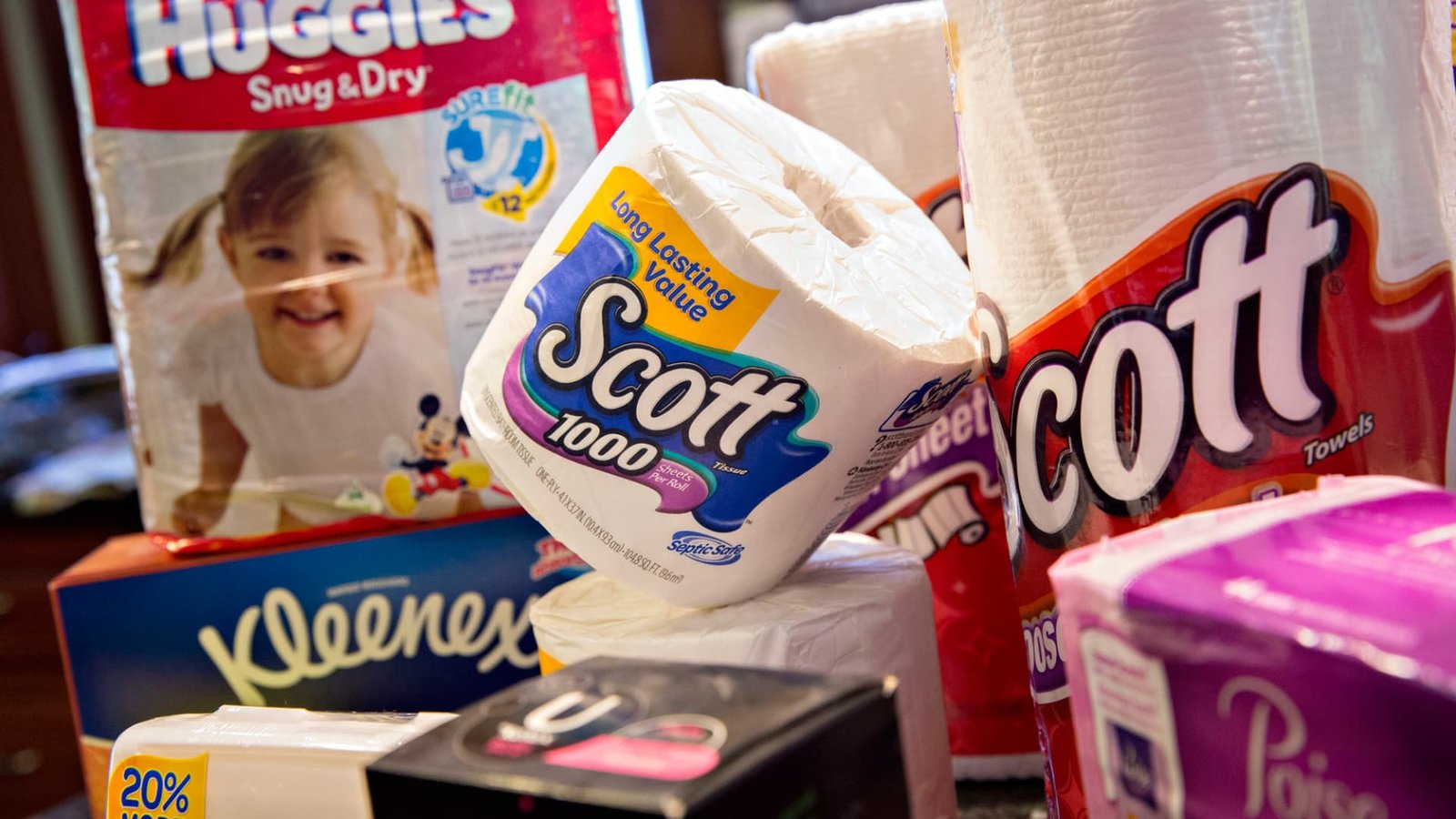
Kimberly-Clark on Monday completed its blockbuster acquisition of Tylenol maker Kenvue, giving investors new reasons to believe in the company behind Huggies, Kleenex and Cottonelle. The acquisition broadens Kimberly-Clark’s reach into the health and wellness category, at a time when consumers are placing a greater emphasis on healthy lifestyles. And it’s a major reason why Jim Cramer added the stock to the Club’s portfolio in early September . We’ve since added to the position three times, including twice in October below $98 a share. Shares of Kimberly-Clark rose 0.3% in Monday’s session, closing at $108.25. With the stock’s strong performance of late, Jim said on Monday’s Morning Meeting he would wait for weakness before looking to buy more shares. The Kenvue takeover closed almost a year to the day that it was announced , valuing the company at almost $49 billion when including debt. On Monday, Kimberly-Clark reaffirmed its financial goals for the deal, including $1.9 billion in reduced costs and expenses within three years. It also includes $500 million in incremental profits resulting from increased revenue, partially offset by $300 million in reinvestments. Still, there are lingering questions about how Kimberly-Clark will integrate Kenvue, navigate higher input costs, and manage the legal troubles surrounding popular over-the-counter pain reliever, Tylenol. Kimberly-Clark CEO Michael Hsu joined Jim on CNBC earlier Monday, where he laid out his vision for the combined company moving forward and addressed these key debates. Accelerating Kenvue’s growth One of Kimberly-Clark’s biggest priorities is to accelerate growth at Kenvue by strengthening key pieces of the business. Jim has previously pointed out weakness in Kenvue’s operations, particularly its e-commerce strategy, which creates an opportunity for Kimberly-Clark to step in and make improvements. “We’ve been really focused the last 10 years at [Kimberly-Clark] to fundamentally build what I kind of term world-class CPG capability,” Hsu said, using an abbreviation for consumer packaged goods, or everyday products that consumers regularly use and replace. Those efforts have included strengthening Kimberly-Clark’s relationships with retailers, digital capabilities, advertising and product innovation. Though Kimberly-Clark’s work isn’t done in these areas, Hsu said the company is on stronger footing than Kenvue. Previously the consumer health division of Johnson & Johnson, Kenvue was spun out into a stand-alone company in May 2023. “I still would say we’re in the early innings of developing that capability, but I think we’re further along than Kenvue,” Hsu said. “And I think [by] combining, we can bring some of those capabilities together and help us accelerate growth.” Hsu also sees considerable room for expansion across Kenvue’s existing product categories, which he described as “very, very underdeveloped.” Besides Tylenol, Kenvue’s brands include Band-Aid, Zyrtec, Neutrogena and Listerine. “There’s a lot of growth left in those hills,” he said. KMB YTD mountain Kimberly-Clark’s year-to-date stock performance. Dealing with inflation Kimberly-Clark also has another challenge on its hands: managing higher input costs due to the Iran war, while keeping prices affordable for cash-strapped lower- and middle-income consumers.Hsu acknowledged that it’s a delicate balancing act, given the risk that high prices could turn customers toward cheaper alternatives. Nevertheless, Hsu painted the current situation as manageable, particularly considering what Kimberly-Clark faced coming out of the Covid-19 pandemic, when the U.S. inflation rate surged to multi-decade highs. “Back in post-Covid, the inflation that we took on, just in Kimberly-Clark, was about $3.4 billion over two years,” Hsu said. “We’re talking, at this point, between the two companies combined, a few hundred million. While it’s significant, we know how to navigate this.” Hsu said the company generally aims to offset higher commodity costs through pricing over time. “We’re very sensitive to the plight of the average consumer. We know middle-income and lower-income consumers are cash strapped, trying to make difficult choices. They’re very discerning,” Hsu said. For Hsu, this means maintaining price discipline. “More importantly, I think we’re really focused on reducing our cost so that we can afford to provide great products at an affordable price.” In touting Kimberly-Clark’s focus on value, Hsu mentioned the company recently brought some innovation to its value-tier Huggies Snug & Dry. The technology improves softness in the diapers. “We put our best technology into our value tier diaper,” Hsu said. “We know consumers really value performance and they’re very discerning about it. And that’s where we want to earn the trust of the average consumer. ” Tylenol’s legal troubles In acquiring Kenvue, Kimberly-Clark also inherits legal and reputational risks over Tylenol, which has faced litigation and controversy over allegations concerning its use during pregnancy. Back in July, a federal appeals court resurrected more than 500 lawsuits that alleged prenatal Tylenol use contributed to autism or ADHD in children, citing improper exclusion of expert testimony. Kenvue fought the decision, but about two weeks ago, a U.S. appeals court said it wouldn’t reconsider the ruling. Hsu defended the pain and fever reliever, saying Kimberly-Clark conducted extensive research and consulted with medical and legal experts as it pursued the acquisition. In September 2025, more than a month before Kimberly-Clark announced the Kenvue deal, the Trump administration drew an unproven link between autism and pregnant women’s use of the active ingredient in Tylenol, acetaminophen. Shares of Kenvue got crushed that month and continued sliding through October. Then the takeover was unveiled. “Our perspective is the science supporting the efficacy and the safety of Tylenol has been proven out, I think, consistently, even with multiple new studies coming out over the past year,” Hsu said. “We feel really good that we stand on the right side of science.” Hsu said the elevated controversy in 2025 had a “modest” impact on Tylenol sales at that time, but he argued that the brand has recovered and has momentum on its side. He pointed to recent consumption data up double-digits. Hsu also highlighted Tylenol with Naproxen , which in July became the first and only FDA-approved over-the-counter pain reliever combining acetaminophen and naproxen sodium. Aleve, which is owned by Germany’s Bayer, is a brand name of naproxen sodium. Protecting the dividend and balance sheet Kimberly-Clark’s dividend is another reason that Jim likes the stock. The company is a “dividend aristocrat,” meaning it has increased its dividend payout for at least 25 consecutive years. In fact, it actually belongs to more rarefied “dividend king” territory, having boosted its payout for at least 50 years in a row. Based on Monday’s close, the stock has a dividend yield of 4.73%. With Kimberly-Clark issuing some debt to help fund the cash-and-stock Kenvue takeover, Jim asked Hsu whether the company’s dividend was safe. Hsu was quick to assure investors that it is. “Oh, yeah,” Hsu responded. That commitment is particularly important for income-focused investors who have long viewed Kimberly-Clark as a reliable dividend-paying stock. “We believe we’re going to create generational value creation on shareholder friendly terms,” Hsu said. “I think by year two, we expect earnings to be accretive and to reduce our leverage back to about 2.0,” Hsu added. “And so our goal is … we’re going to maintain our dividend aristocracy.” Hsu also said Kimberly-Clark intends to maintain its single-A credit rating. (Jim Cramer’s Charitable Trust is long KMB. See here for a full list of the stocks.) As a subscriber to the CNBC Investing Club with Jim Cramer, you will receive a trade alert before Jim makes a trade. Jim waits 45 minutes after sending a trade alert before buying or selling a stock in his charitable trust’s portfolio. If Jim has talked about a stock on CNBC TV, he waits 72 hours after issuing the trade alert before executing the trade. THE ABOVE INVESTING CLUB INFORMATION IS SUBJECT TO OUR TERMS AND CONDITIONS AND PRIVACY POLICY , TOGETHER WITH OUR DISCLAIMER . NO FIDUCIARY OBLIGATION OR DUTY EXISTS, OR IS CREATED, BY VIRTUE OF YOUR RECEIPT OF ANY INFORMATION PROVIDED IN CONNECTION WITH THE INVESTING CLUB. NO SPECIFIC OUTCOME OR PROFIT IS GUARANTEED.