
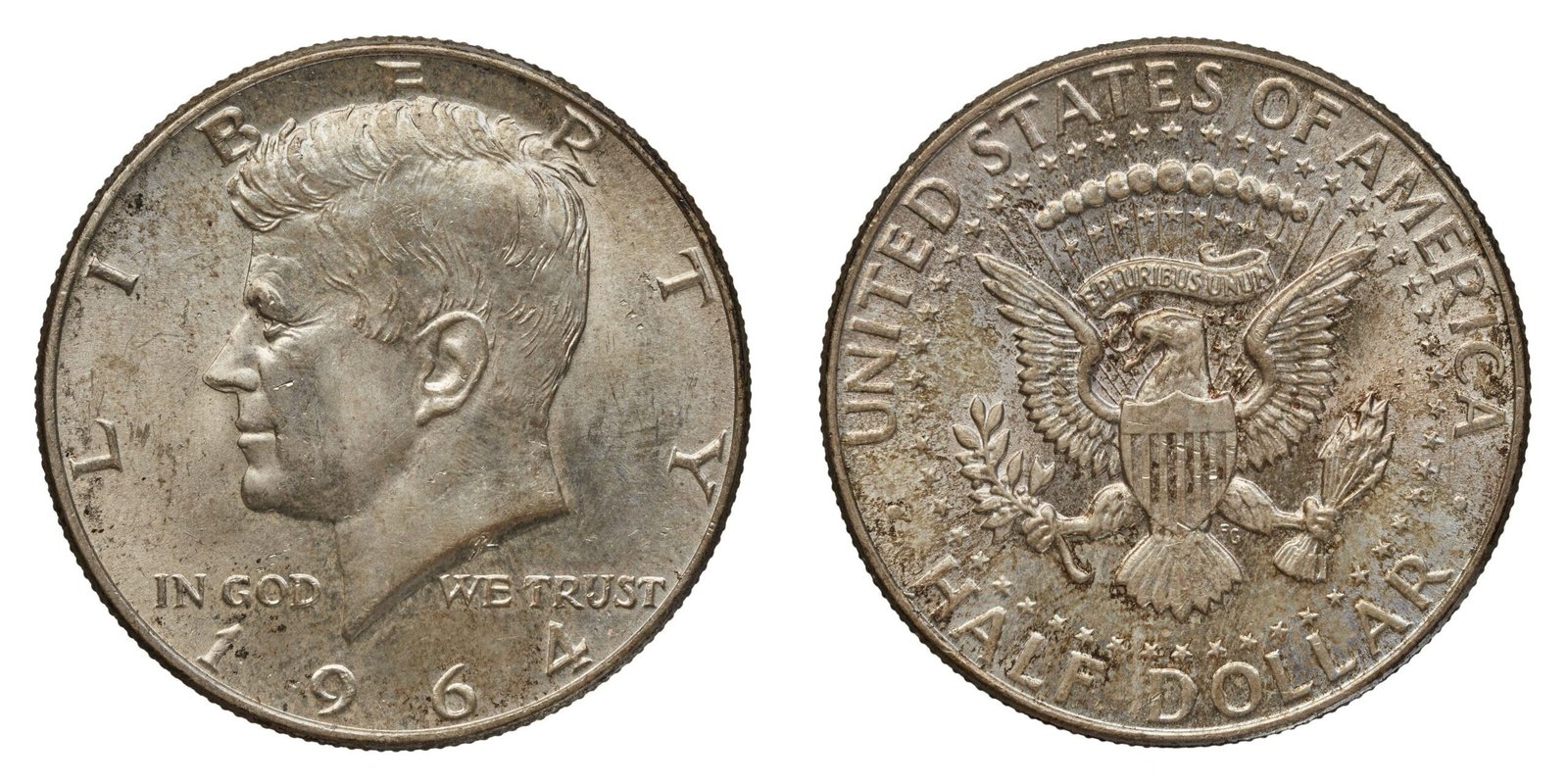
Days after President Kennedy’s assassination in November 1963, the engravers at the U.S. Mint began work on a coin in his memory. When the Kennedy half dollar reached the public on March 24, 1964, the first 26 million coins vanished so fast that the Mint’s director told Congress they “went up in smoke in 1 day.”
More than 429 million 1964-dated halves were struck for circulation, and hundreds of millions more since, which is why most are worth their silver or face value. This article explains what determines Kennedy half dollar value, which years contain silver, which rare strikes command real money, and how to check your coin.
Key Takeaways
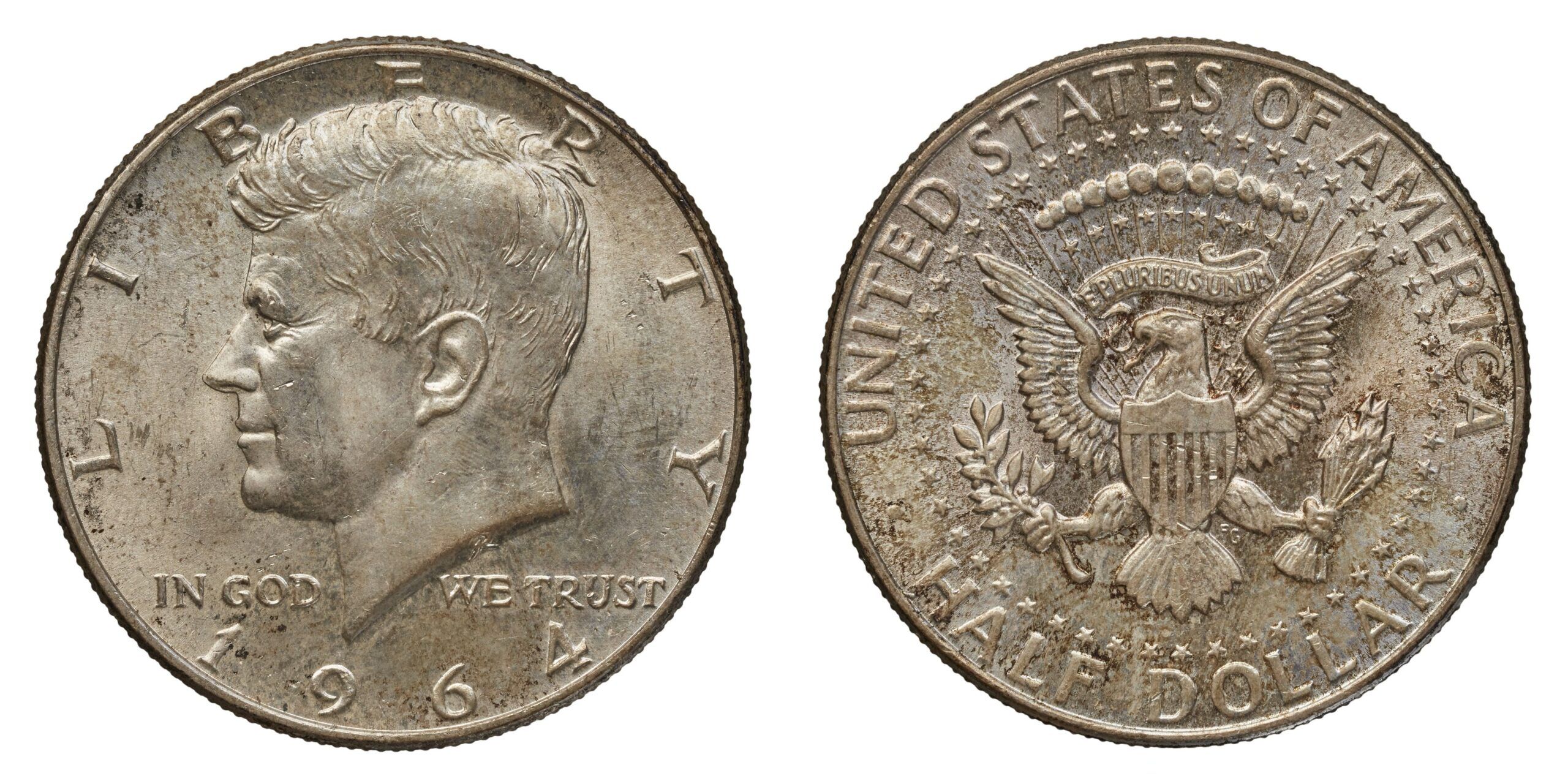
- Only 1964 Kennedy halves are 90% silver, about $22 of metal with silver at $60.60 (October 2026).
- 1965-1970 halves are 40% silver, about $9; circulated halves from 1971 on contain no silver and are worth face value.
- No mint mark is normal: Philadelphia added its “P” only in 1980, and no 1965-1967 half carries a letter.
- Uncirculated 1964s bring roughly $30 to $60; the real premiums start at MS-67.
- The record: a 1964 Special Mint Set half sold for $156,000 in 2019.
A Memorial in Silver: Background and History
Five Weeks From Grief to a New Coin
President John F. Kennedy was assassinated on November 22, 1963. Within days the Mint was receiving hundreds of suggestions to honor him on a coin, and officials weighed the quarter, the half dollar, and the dollar.
The half had a long tradition behind it, reaching back through the classic half dollars collectors prize today.
Around November 27, Mint Director Eva Adams called Chief Engraver Gilroy Roberts with the decision. It would be the half dollar, because, as Roberts recalled her explaining, “Mrs. Kennedy did not want to replace Washington’s portrait on the Quarter Dollar.”
There was no time to start from scratch. Roberts adapted the Kennedy portrait from the Mint’s presidential medal, issued after the 1961 inauguration with Kennedy’s personal approval, and his assistant Frank Gasparro adapted the Presidential Seal from the same medal for the reverse.
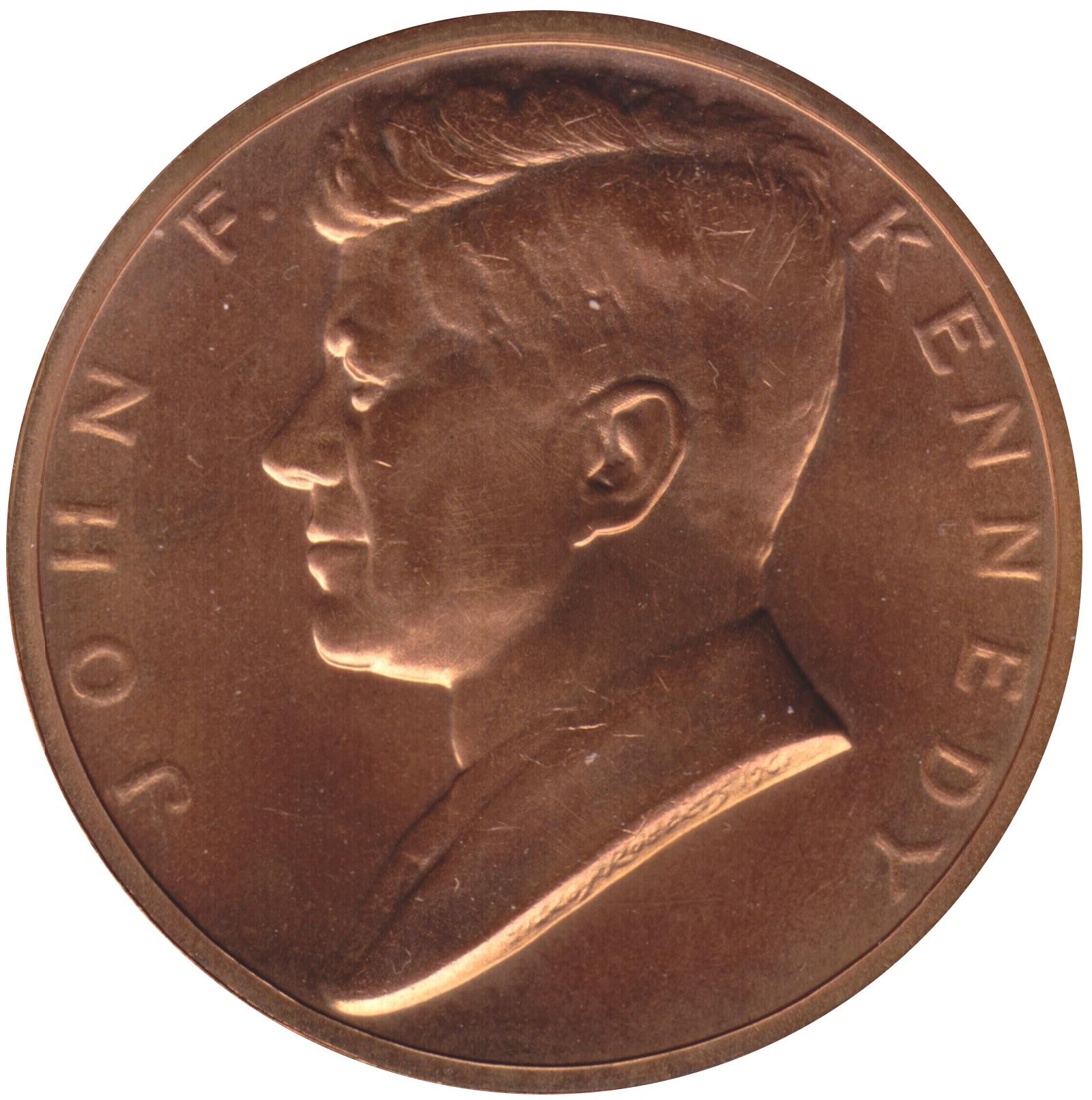
Trial pieces came off the press at 9:00 a.m. on December 13. Four days later, Jacqueline Kennedy and Attorney General Robert Kennedy reviewed them, and she asked that the part in the hair be made less pronounced.
Because the law barred redesigning a coin within 25 years and the Franklin half dated only from 1948, Congress had to act; President Johnson signed Public Law 88-256 on December 30, 1963. Denver was striking the new halves by late January 1964, and the official first-strike ceremony followed on February 11.
The Year the Halves Disappeared
The Mint shipped its first 26 million coins to the Federal Reserve in plain, unmarked bags and asked bankers to keep them from speculators.
It didn’t work. Months after the March 24, 1964 release, Adams told Congress, “We have been making them like hotcakes ever since. They are still not in circulation.”
Dealers advertised the coins by the thousand, and they turned up mounted in jewelry.
Admirers at home and abroad kept the JFK half dollar as a keepsake, and the Mint answered with volume: Philadelphia struck 273,304,004 halves dated 1964 and Denver 156,205,446, plus 3,950,762 proofs. During the national coin shortage Congress froze the date, so Philadelphia was still striking “1964” halves in 1966.
The same silver squeeze explains another strange episode of the period, the 1964 Peace dollar that never was.
Silver Leaves the Half
Silver itself was the problem. Through 1964 the Treasury held silver at $1.293 an ounce, and Treasury Secretary Henry Fowler later put the melting point of 90% silver coins at $1.38, the price at which they became worth more as metal than as money.
The Coinage Act of 1965, signed July 23, 1965, cut the half to 40% silver: outer layers of 80% silver bonded to a core of about 21% silver. The first 40% halves were struck at Denver on December 30, 1965, and none dated 1965 through 1967 carries a mint mark, because the same law suspended them.
Silver left the circulating half for good on January 1, 1971, when copper-nickel clad took over. In 1970 the only business-strike halves, the 1970-D, were made solely for collectors’ Mint Sets.
The Kennedy design ran from 1964 through 2025. For 2026 only, the half dollar carries an Enduring Liberty design marking the nation’s 250th anniversary.
Historical context America in 1964
- A half dollar bought ten first-class stamps at 5 cents each.
- The federal minimum wage was $1.25 an hour.
- Coin collecting was booming: Adams told Congress there were about 8 million collectors, and the Mint sold 3,950,762 proof sets that year.
- President Johnson signed the Civil Rights Act on July 2, 1964.
What Determines Kennedy Half Dollar Value Today?
Start with the honest baseline: most Kennedy halves are worth their silver or their face value, and nothing more.
Value comes from three places: the silver in the early years, exceptional preservation, and a short list of special strikes and varieties.
Silver Content: The Floor Under Every 1964
The single biggest factor in Kennedy half dollar value is the year, because the year tells you the metal.
| Years | Composition | Silver per coin | Melt value |
|---|---|---|---|
| 1964 | 90% silver, 10% copper | 0.3617 troy oz | about $22 |
| 1965-1970 | 40% silver (silver-clad) | 0.1479 troy oz | about $9 |
| 1971 to date (circulation) | Copper-nickel clad | None | Face value, 50 cents |
That melt figure is the floor under every 1964 and, for most circulated examples, the ceiling as well: a price quoted on a worn 1964 moves with the silver market.
1964 Kennedy Half Dollar Value
Circulated 1964 halves trade at melt. Uncirculated coins carry a modest premium: MS-63 to MS-65 examples run roughly $30 to $60, and MS-66 pieces about $90 to $120.
The jump comes at MS-67, where certified 1964s sold for $317 and $488 at Heritage in 2026, and the guides list $475 (PCGS) to $950 (NGC). Plus-graded MS-67+ coins list near $4,650-$5,200.
At the very top, an NGC MS-68★ example brought $57,600 in May 2024; at PCGS, the top grade on record for the Philadelphia coin is MS-67+.
The 1964-D tracks the Philadelphia coin through MS-65, then pulls ahead in top grades. PCGS lists it at $500 in MS-67, and the finest PCGS-graded example, an MS-68, sold for $22,325 in 2016.
If you want to understand why two uncirculated halves that look alike can differ tenfold in price, professional grading is the whole answer.
Mint Marks: Where to Look
Mint mark location depends on the date:
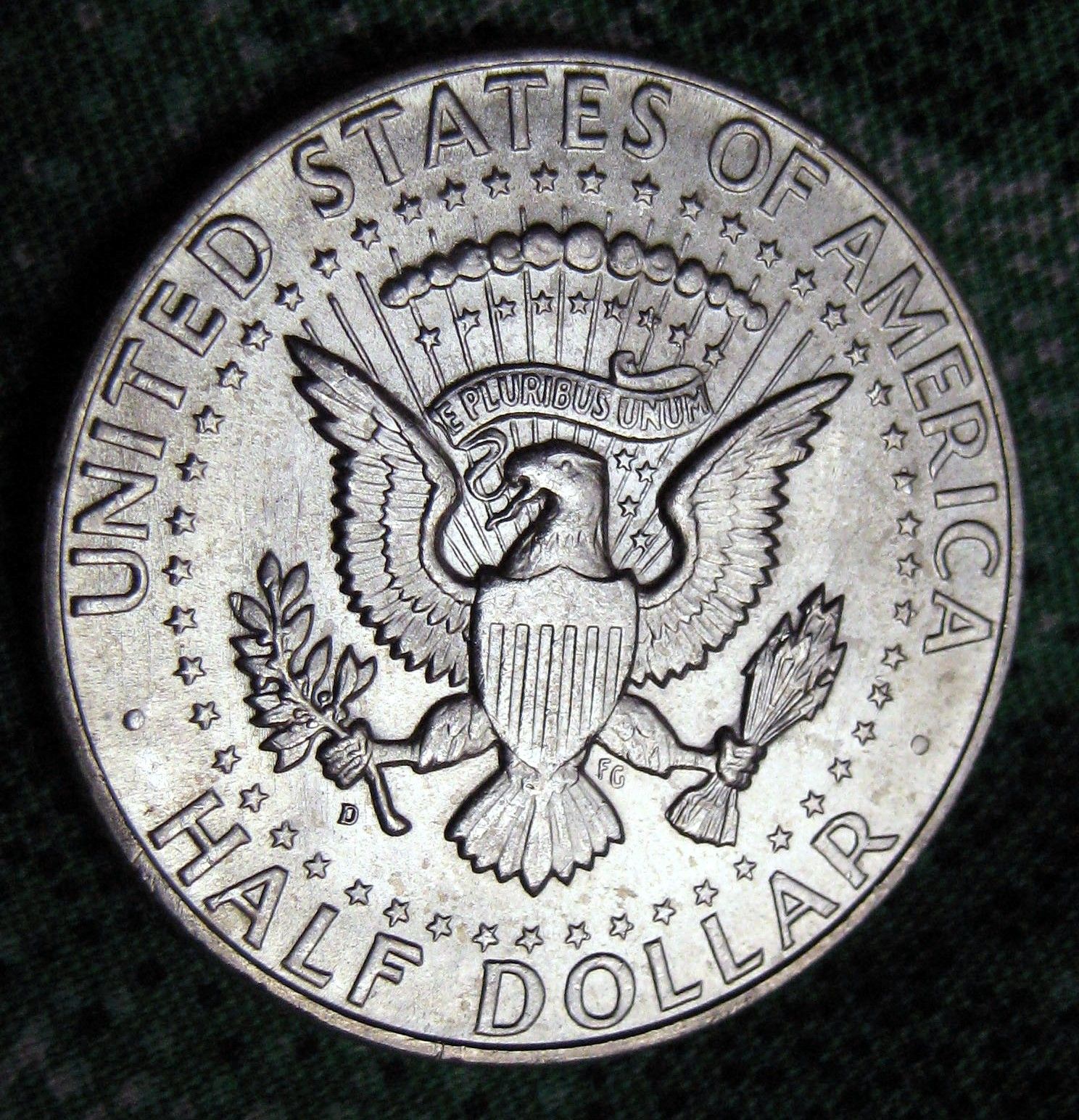
- 1964: on the reverse, in the angle between the eagle’s claw and the olive branch, to the left of the tail. Denver coins show a D; Philadelphia coins have no mark.
- 1965-1967: no mint mark at all.
- 1968 onward: on the obverse, at the truncation of Kennedy’s bust, just above the date. Philadelphia added a P in 1980.
The 40% Silver Years and the Clad Era
Halves dated 1965 through 1970 hold about $9 of silver each. The common dates, 1965, 1966, 1967, 1968-D, and 1969-D, run $20 to $50 in MS-65 depending on the date.
Top grades are where these coins surprise. PCGS lists MS-67 examples at $500 to $3,000, and a 1965 in MS-67+ sold for $11,400 at Heritage in July 2025.
The scarcest silver-era date is the 1970-D. Only 2,150,000 were struck, all for that year’s Mint Sets, which sold for about $2.50. Today the 1970-D runs about $20 to $65 in MS-63 to MS-65, about $375 in MS-66, and $6,750 to $7,500 in MS-67.
From 1971 on, a circulated half is worth 50 cents, whether it’s dated 1971, 1972, 1973, or 1974. Typical gem examples bring about $16 to $40 in MS-65, and only the very finest grades, or a recognized variety, reach real money.
The Bicentennial Half: 1776-1976
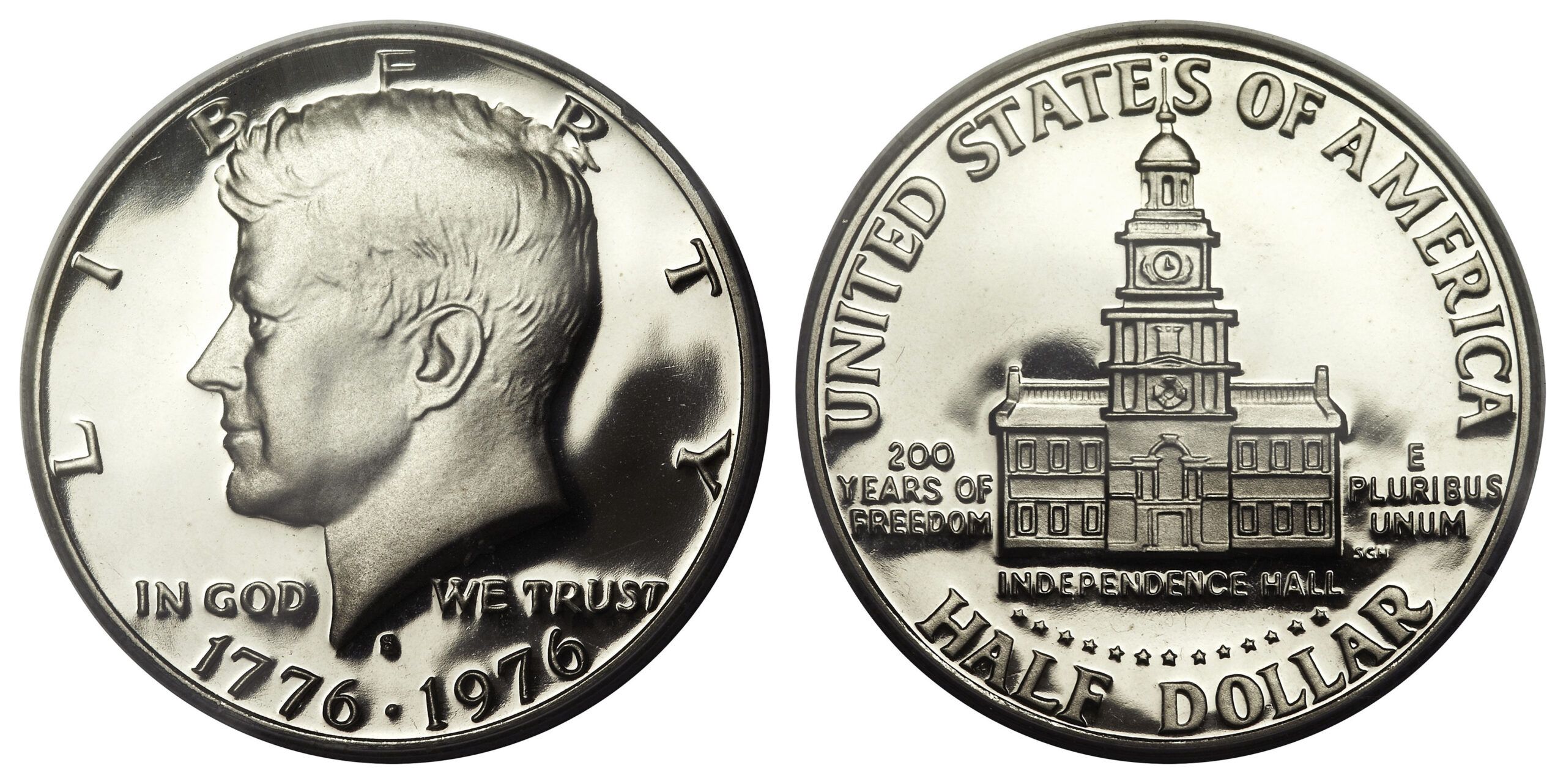
Halves issued from July 1975 through the end of 1976 carry the dual date 1776-1976, so no half is dated 1975. Seth G. Huntington of Minneapolis won the Treasury’s design competition with the Independence Hall reverse.
Philadelphia and Denver struck 521,873,248 Bicentennial halves for circulation, which is why a circulated example is worth face value. Uncirculated clad coins run about $30 in MS-65.
The exception is the 40% silver version struck at San Francisco and sold only in collector sets. It holds about $9 of silver and brings roughly $22 in MS-65. Online listings asking thousands for an ordinary Bicentennial half have no support in the auction record.
Varieties and Special Strikes Worth Knowing
1964 Special Mint Set (SMS) halves. About a dozen are known, with satin surfaces and sharp, square rims, and their origin has never been documented. PCGS lists them at $25,000 in SP-65 and $150,000 in SP-68.
1964 Accented Hair proofs. A small fraction of 1964 proofs show heavier hair lines just above Kennedy’s ear and a partly missing lower-left serif on the I in LIBERTY. The change is commonly tied to Mrs. Kennedy’s review of the portrait, though the record is unclear. Ordinary examples run $80 to $140 in PR-65 to PR-67; deep-cameo coins list at $47,000 in PR-69.
No FG halves. On some 1972-D halves (FS-901), Gasparro’s FG initials disappeared, most likely when the dies were ground down to remove clash marks. They bring about $1,600 to $3,400 in MS-63 to MS-65. Similar coins exist for the 1966 Special Mint Set and the 1982-P.
1974-D doubled die obverse (FS-101). The doubling is plainest on TRUST. PCGS lists MS-65 examples at $125 to $300.
1998-S Matte Finish. About 62,000 were sold, only in a set with a Robert F. Kennedy silver dollar, which makes it the lowest-mintage Kennedy half. It runs $120 to $175 in SP-65 to SP-69.
Notable Auction Records
| Coin and Grade | Price Realized | Auction House | Sale Date |
|---|---|---|---|
| 1964 Special Mint Set, SP-68 (PCGS) | $156,000 | Stack’s Bowers Galleries | August 2019 |
| 1964, MS-68★ (NGC) | $57,600 | Heritage Auctions | May 2024 |
| 1964 Accented Hair Proof, PR-69 DCAM (PCGS) | $46,800 | Heritage Auctions | January 2024 |
| 1964-D, MS-68 (PCGS) | $22,325 | Legend Rare Coin Auctions | February 2016 |
| 1970-D, MS-67+ (PCGS) | $14,287.50 | GreatCollections | December 2024 |
| 1965, MS-67+ (PCGS) | $11,400 | Heritage Auctions | July 2025 |
How to Check Your Kennedy Half Dollar
Four Checks That Sort Any Kennedy Half
- The date. A 1964 is 90% silver, 1965 through 1970 is 40% silver, and a circulation coin dated 1971 or later contains none.
- The edge. Turn the coin on its side. A bright copper stripe means copper-nickel clad, struck in 1971 or later. A 1964 shows solid silver from face to face.
- The weight. A 1964 weighs 12.50 grams, at least a full gram more than later halves (11.50 grams for 40% silver, 11.34 for clad).
- The finish. Mirror-like fields with frosted devices mean a proof, struck for collectors and sold in sets. Proofs carry their own price ladder, and the Accented Hair variety exists only in proof.
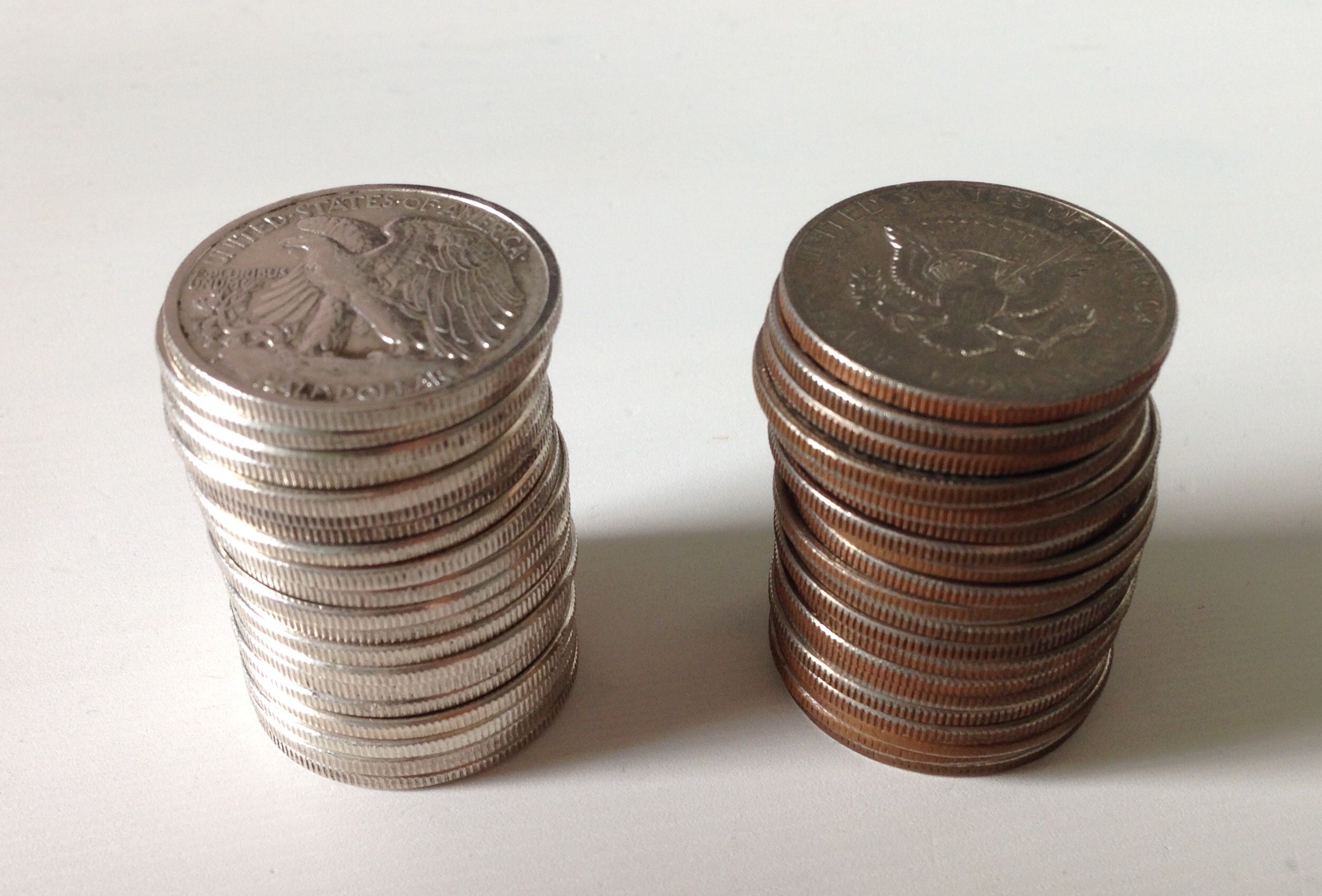
A genuine Kennedy half measures 30.61 millimeters across, with a reeded edge of 150 reeds. Gilroy Roberts’ GR monogram sits on the truncation of the bust, and Frank Gasparro’s FG at the lower right of the shield on the reverse.
Spotting Fakes, Fantasies, and Novelties
The common traps around this series are misdescribed coins:
- Gold-plated halves. Aftermarket plating turns ordinary halves into “gold” novelties. They are not U.S. Mint products, and their value rests on the underlying coin. The Mint’s own gold Kennedy is a collector issue, the 2014-W 50th-anniversary proof: three-quarters of an ounce of 24-karat gold, dual-dated 1964-2014, with 73,772 struck.
- “Rare hair detail” listings. Online listings often describe circulated 1964s as Accented Hair coins. The variety is a proof, so a worn circulation-strike coin cannot be one.
- Altered surfaces. Polished or chemically brightened coins can look uncirculated in photographs, but in hand they show fine hairlines or an unnatural shine.
When Professional Appraisal Makes Sense
For a circulated half, an appraisal costs more than the coin is worth. Certification earns its fee in three cases:
- An uncirculated 1964-1970 half with full, original luster and no visible marks
- A 1964 proof that might be an Accented Hair coin, or a 1964 half with the satin surfaces of a Special Mint Set strike
- Suspected varieties like the 1972-D without Gasparro’s initials or the 1974-D doubled die
Professional services like PCGS or NGC provide authentication and a grade the market trusts. If you’ve inherited rolls or sets of halves and aren’t sure which coins deserve a second look, Blanchard’s numismatists can evaluate coins like these.
What Collectors and Investors Watch
The Kennedy half sits in two markets. The 1964 and 40% halves behave like silver, and collectors and investors have long accumulated them by face value as a small-denomination way to hold the metal. Top-grade coins and special strikes trade on scarcity, priced by certified populations more than by silver.
The tradeoffs are real. Silver-priced coins move with the metal in both directions, carry a dealer premium over melt, and need secure storage.
At the top of the grading scale, one grade point can swing value by thousands of dollars.
Misdescribed coins are common enough online that buying certified coins from an established dealer is the practical safeguard. Blanchard offers 90% silver half dollars by face value alongside certified rarities, the same standard any reputable dealer should meet.
Frequently Asked Questions
1. Which Kennedy half dollars are silver?
Circulation halves dated 1964 are 90% silver, and those dated 1965 through 1970 are 40% silver. Halves made for circulation from 1971 on are copper-nickel clad with no silver. The exceptions are collector issues, such as the 40% silver 1976-S Bicentennial halves and the 90% silver proofs the Mint has offered since 1992.
2. How much is a 1964 Kennedy half dollar worth?
A circulated 1964 Kennedy half dollar is worth its silver, about $22 with silver at $60.60 per ounce (October 2026). Uncirculated examples bring roughly $30 to $60 in MS-63 to MS-65; top-grade coins and special strikes reach four to six figures.
3. Is a Kennedy half dollar with no mint mark rare?
No. Philadelphia halves carried no mint mark until the “P” was added in 1980, and halves dated 1965 through 1967 carry no mint mark at all. A missing letter on those dates is normal and adds no premium.
4. How much is a 1776-1976 half dollar worth?
A circulated Bicentennial half is worth face value, 50 cents; more than 521 million were struck for circulation. Uncirculated clad examples run about $30 in MS-65, and the 40% silver collector version holds about $9 of silver.
5. Is a gold Kennedy half dollar real?
Most “gold” Kennedy halves are ordinary coins with aftermarket gold plating, worth no more than the underlying coin. The U.S. Mint did strike a genuine 24-karat gold Kennedy half in 2014 for the coin’s 50th anniversary, a three-quarter-ounce proof dated 1964-2014.
6. What are the most valuable Kennedy half dollars?
The 1964 Special Mint Set halves top the series: one graded SP-68 sold for $156,000 in August 2019. Top-grade 1964 business strikes, deep-cameo Accented Hair proofs, and the finest 1970-D halves follow, with records from about $14,000 to $57,600. Claims of Kennedy halves worth millions have no support in any auction record.
Conclusion
Kennedy half dollar value follows a clear hierarchy: 1964 coins worth their 90% silver, 1965-1970 coins worth their 40%, clad halves worth face value, and above them a short list of top-grade coins, special strikes, and proof varieties.
The checks take minutes: read the date, look at the edge, weigh the coin, and judge the surfaces honestly. Most halves will prove to be exactly what their date says; the few that aren’t are worth the time it takes to find out.
Ready to add 90% silver halves or certified rarities to your collection? Explore Blanchard’s inventory of rare half dollars to see what authenticated quality looks like.
Want to read more? Subscribe to the Blanchard Newsletter and get our tales from the vault, our favorite stories from around the world and the latest tangible assets news delivered to your inbox weekly.
About The Author